
Standard Cartridge Heater for Industrial Applications
Looking for suitable cartridge heater applications for industrial manufacturing? Cartridge heaters provide compact, localized heating for molds, dies, hot runner systems, packaging equipment, heating blocks, and other machinery that requires controlled heat input. They are commonly installed in drilled holes or heating blocks to transfer heat directly to the surrounding components.
When combined with compatible temperature sensors and controllers, cartridge heaters can be used in systems designed for precise cartridge heater temperature control. The heater generates heat, the sensor measures temperature, and the controller regulates power according to the required operating conditions.
EaseWise supplies standard and custom cartridge heaters with different diameters, heated lengths, wattages, voltages, sheath materials, and lead configurations. We coordinate suitable solutions through our supply partners according to equipment drawings, installation dimensions, heating requirements, and operating conditions.
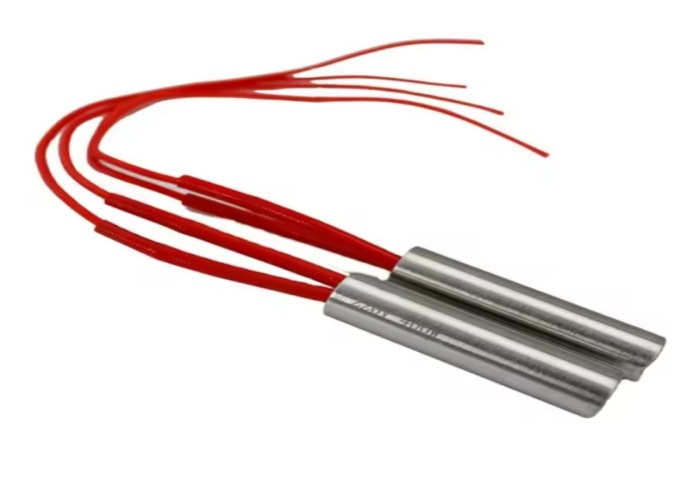
Cartridge Heater Applications — Standard Type
Standard cartridge heaters are widely used in industrial equipment that requires localized heating and controlled heat transfer. Typical cartridge heater applications include injection mold cores, hot runner manifolds, packaging sealing bars, heating blocks, dies, and other embedded heating components. Their cylindrical construction allows installation into properly machined holes and compact assemblies, making them suitable for continuous production and space-limited equipment.
For effective cartridge heater temperature control, the heater must fit the installation bore appropriately to support efficient heat transfer. An oversized clearance between the heater and the bore can increase thermal resistance, while unsuitable operating conditions may contribute to localized overheating or premature heater failure. Proper temperature sensor placement and a compatible controller also help regulate the heating cycle and maintain the required operating temperature.
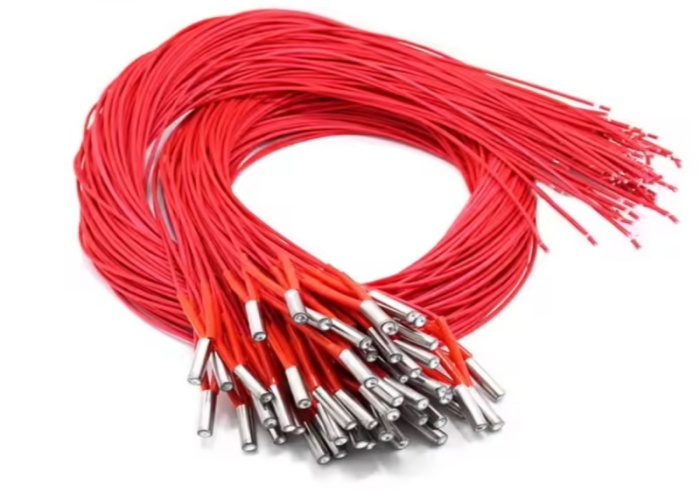
Cartridge Heater Applications —3D printer Type
3D Printing
Cartridge heaters are commonly used in compatible 3D printer hot ends and extruder heating assemblies to provide localized heat within compact components. Their cylindrical design allows installation into dedicated heater bores, where heat is transferred to the surrounding metal block or hot-end assembly. This makes them suitable for applications where controlled heating is required within a limited installation space.
For stable printing performance, the cartridge heater should be matched to the hot-end block in terms of diameter, heated length, voltage, and wattage. A properly positioned temperature sensor measures the block temperature, while a compatible controller regulates heater power to maintain the target operating temperature. This coordinated setup helps support consistent extrusion and reduce temperature fluctuations during printing.
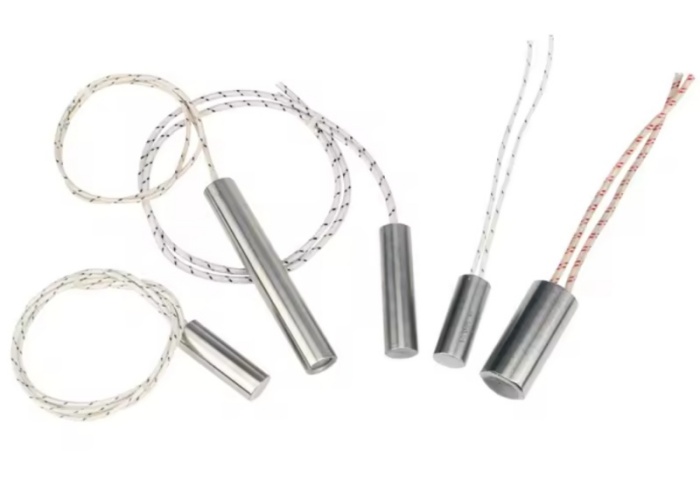
Cartridge Heater Applications — Internal wiring Type
Enclosed Lead Design
Cartridge heaters with enclosed lead designs are suitable for industrial equipment where electrical connections require additional mechanical protection. Depending on the heater construction, an enclosed lead arrangement can help reduce direct exposure of the lead connections to abrasion, accidental contact, vibration, and surrounding contaminants. This design can be useful in compact heating assemblies, automated machinery, and installations where exposed lead connections may be vulnerable to damage.
When selecting a cartridge heater with enclosed leads, check the lead insulation temperature rating, connection structure, available installation space, and required lead length. The lead arrangement should also be compatible with the operating environment and any nearby temperature sensors or control components. For custom applications, provide the installation drawing and operating temperature requirements so the appropriate lead configuration can be evaluated.
Cartridge Heater Specifications for Industrial Applications
Cartridge heaters can be configured for different industrial heating requirements, including operating temperature, watt density, dimensions, voltage, sheath materials, and lead configurations. The specifications below show common options for injection molding, hot runner systems, packaging equipment, heating blocks, and other industrial applications. Actual specifications depend on the heater construction, installation conditions, and required heating performance. Please confirm the available range for your specific design.
| Parameter | Specification / Options |
|---|---|
| Operating Temperature | Application-dependent; maximum operating temperature must be confirmed according to heater construction, sheath material, lead insulation, and installation conditions. |
| Watt Density | Selected according to heater dimensions, material, heat transfer, operating temperature, and application requirements. |
| Voltage | 110V / 220V / 230V / 380V / Custom, subject to model availability. |
| Diameter Range | 3mm–25mm (approximately 1/8″–1″), subject to model availability and manufacturing tolerances. |
| Length Range | 30mm–500mm, depending on the heater design and model availability. Specify heated length and overall length when requesting a custom design. |
| Sheath Material | 304 stainless steel / 316 stainless steel / Incoloy 800, depending on temperature, environment, and application requirements. |
| Insulation | High-purity magnesium oxide (MgO) electrical insulation. |
| Heating Wire | NiCr 80/20 resistance wire, subject to product design. |
| Termination | PTFE leads / fiberglass leads / stainless-steel braided leads / ring terminals / other custom configurations. |
Temperature Control Considerations for Cartridge Heaters
For applications requiring reliable cartridge heater temperature control, selecting the correct heater specifications is only one part of the system design. A compatible temperature sensor measures the relevant process or component temperature, while a controller regulates electrical power supplied to the heater according to the selected control settings.
- Heater wattage and watt density: Match the heating output to the component size, required heat-up time, heat loss, and heat-transfer conditions.
- Temperature sensor: Select a suitable sensor type and installation position to measure the relevant component or process temperature.
- Controller compatibility: Confirm that the controller supports the selected sensor type and is compatible with the heater’s voltage, current, and power-switching requirements.
- Lead and insulation ratings: Ensure that the lead configuration and insulation materials can withstand the temperatures and environmental conditions around the installation.
- Overtemperature protection: Where required, consider an independent overtemperature protection device in addition to the normal temperature-control system.
The heater sheath temperature, the temperature of the heated component, and the temperature measured by the sensor are not necessarily the same. Proper heater sizing, bore fit, sensor placement, and controller configuration all contribute to stable heating performance and help reduce the risk of localized overheating.
For application-specific sizing and configuration, explore our Cartridge Heater product range or request a custom heater quote. You can provide a drawing, required voltage, wattage, dimensions, operating temperature, and order quantity so the suitable specifications can be evaluated.
Common Cartridge Heater Applications
Cartridge heaters are used across a wide range of industrial equipment where localized heating, controlled heat transfer, and stable operating temperatures are required. Their cylindrical design allows installation in properly sized bores in molds, dies, heating blocks, sealing equipment, and other compact components. With suitable temperature sensors and controllers, they can support effective cartridge heater temperature control in different industrial processes.
Injection Molding
Cartridge heaters are commonly installed in injection mold cores, mold plates, dies, and other tooling components that require localized heating. The heater diameter, heated length, wattage, and bore fit should be matched to the mold design. Suitable sensor placement and temperature regulation help maintain the required mold temperature during production.
3D Printing
Cartridge heaters are used in compatible 3D printer hot ends and extruder heating assemblies. Installed inside a dedicated heater bore, they transfer heat to the surrounding metal block. A compatible temperature sensor and controller regulate the hot-end temperature to support stable filament melting and consistent extrusion.
Hot Runner Systems
Cartridge heaters provide localized heating for compatible hot runner manifolds, nozzles, and other plastic injection molding components. Correct heater dimensions, power selection, and installation fit are important for heat transfer. Suitable temperature sensing and control help maintain the required processing conditions across the heating assembly.
Packaging & Sealing
Cartridge heaters are suitable for sealing bars, heat-sealing equipment, and packaging machinery that require controlled heating. Heater wattage, heated length, and installation position should be selected according to the sealing component and production cycle. A compatible temperature controller helps regulate heater output to maintain the required sealing temperature.
Heating Blocks
Cartridge heaters are installed inside compatible aluminum, brass, or steel heating blocks to heat tools, components, and process assemblies. Proper bore dimensions, heater positioning, and sensor location help transfer heat through the block and support stable temperature regulation. The heater design should account for the block material, required temperature, and operating cycle.
Industrial Equipment
Cartridge heaters are also used in compact industrial machinery, process equipment, and custom heating assemblies that require embedded heat sources. Heater dimensions, wattage, sheath material, lead configuration, and temperature-control arrangements should be selected according to the equipment design, installation environment, and operating conditions.
How to Choose the Right Cartridge Heater for Your Application
Selecting the right cartridge heater depends on the heating requirements, installation space, and operating conditions of your equipment. For applications requiring reliable cartridge heater temperature control, consider both the heater specifications and the temperature-monitoring and control system.
- Operating temperature: Determine the required process or component temperature and confirm that the heater construction and materials are suitable for the operating conditions.
- Watt density: Match the heater's watt density to the heated material, available heat-transfer area, heat loss, and required heat-up time.
- Voltage and wattage: Select electrical specifications that match the available power supply and required heating output.
- Diameter and heated length: Match the heater dimensions to the bore, mold, heating block, or available installation space. Confirm both heated length and overall length.
- Sheath material: Choose a suitable material based on operating temperature, surrounding environment, corrosion resistance, and service conditions.
- Temperature sensor: Select a compatible sensor type and measurement location for the component or process temperature that needs to be monitored.
- Temperature controller: Confirm compatibility with the selected sensor, power supply, and required heater power-regulation method.
- Lead and termination: Select a lead configuration and insulation rating suitable for the installation space, local temperature, and mechanical environment.
For equipment with specific dimensional, electrical, or temperature requirements, custom cartridge heaters can be configured according to the application and installation conditions. When requesting a recommendation, provide the equipment drawing, bore diameter, required heated length, voltage, wattage, target operating temperature, lead arrangement, and order quantity.
Explore our Cartridge Heater product range for standard options, or visit our Custom Cartridge Heater page for application-specific configurations.
Read the Cartridge Heater Selection Guide →
Need a Cartridge Heater for Your Application?
Send us your equipment drawing or required specifications. EaseWise can coordinate suitable standard or custom cartridge heater options through our supply partners.
For a quotation, please provide:
- Drawing or installation dimensions (DXF / PDF preferred)
- Required voltage and wattage
- Operating temperature and application
- Lead and termination requirements
- Order quantity
Our sales team aims to respond to inquiries within 12 hours.
Request a Quote
Tell us your diameter / width / watt density / voltage. We reply within 12 hours.
Amy: +86 18883188154 | amy-easewise@tzheater.com
Hanna: +86 17351636811 | hanna-easewise@tzheater.com
Learn More From
Frequently Asked Questions
Cartridge heaters provide precise, localized heating for injection molds, hot runner nozzles, packaging sealing bars, 3D printer hot ends, and industrial platens where compact, high-density heat is required.
Yes. We customize diameter (3mm–25mm), length, wattage, voltage, sheath material (304 SS, 316 SS, Incoloy 800), lead wire type, and termination. Send your specs for a quote.
Up to 800°C with high watt density configurations and proper heat dissipation. Standard models operate reliably at 400–600°C for continuous production.
Standard cartridge heaters have external lead wires exiting from one end. Internal wiring models enclose the connection points within the sheath, offering better protection, cleaner appearance, and longer service life in high-vibration environments.
Explore Our Cartridge Heater Solutions
EaseWise provides a wide range of cartridge heaters designed for different industrial heating applications, including injection molding, packaging machinery, medical equipment, and custom heating systems. Choose the right cartridge heater solution based on your required size, power rating, voltage, and operating conditions.
Learn more about our complete range of Cartridge Heater products including standard cartridge heaters, high-density cartridge heaters, miniature cartridge heaters, and custom heating solutions.