
Thermocouple Applications
Thermocouple Applications
Thermocouples are widely used for temperature measurement in industrial heating and process control systems, including injection molding, extrusion, furnace heat treatment, and glass processing. EaseWise thermocouples use two dissimilar metal wires joined at a sensing junction to generate a voltage signal corresponding to temperature.
Common thermocouple applications include K Type for general-purpose industrial temperature measurement, J Type for suitable mid-range applications, and Platinum-Rhodium S, R, and B Types for high-temperature processes. T, E, and N Types are also available for application-specific temperature measurement.
Thermocouple assemblies can be customized according to the application, including probe diameter, sheath material, thread type, junction style, connector, and lead wire configuration.
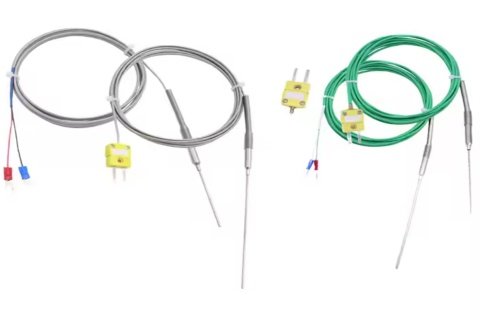
K Type Thermocouple Applications
- Broad temperature capability for general industrial applications
- Cost-effective and widely available
- Available with applicable IEC 60584 accuracy classifications
- Available in grounded, ungrounded, and exposed junction configurations
- Sheath options include SS304, SS316, and Inconel 600
J Type Thermocouple Applications
- Suitable for low-to-mid temperature industrial applications
- Cost-effective for extrusion, drying, sealing, and packaging equipment
- Available with applicable IEC 60584 accuracy classifications
- Available in grounded and ungrounded junction configurations
- Sheath options include SS304 and SS316
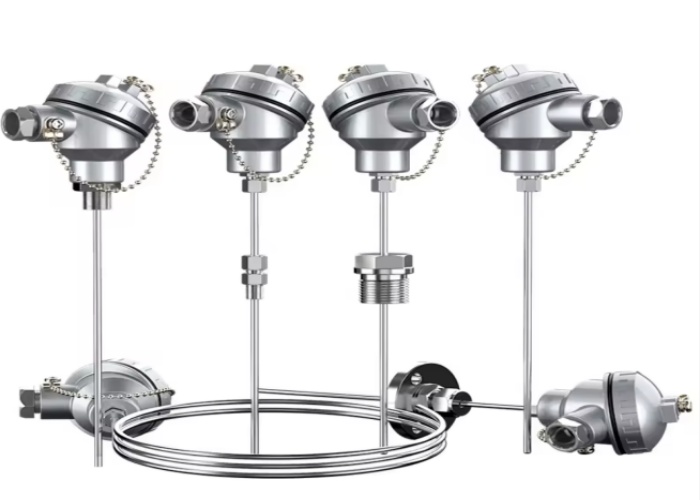
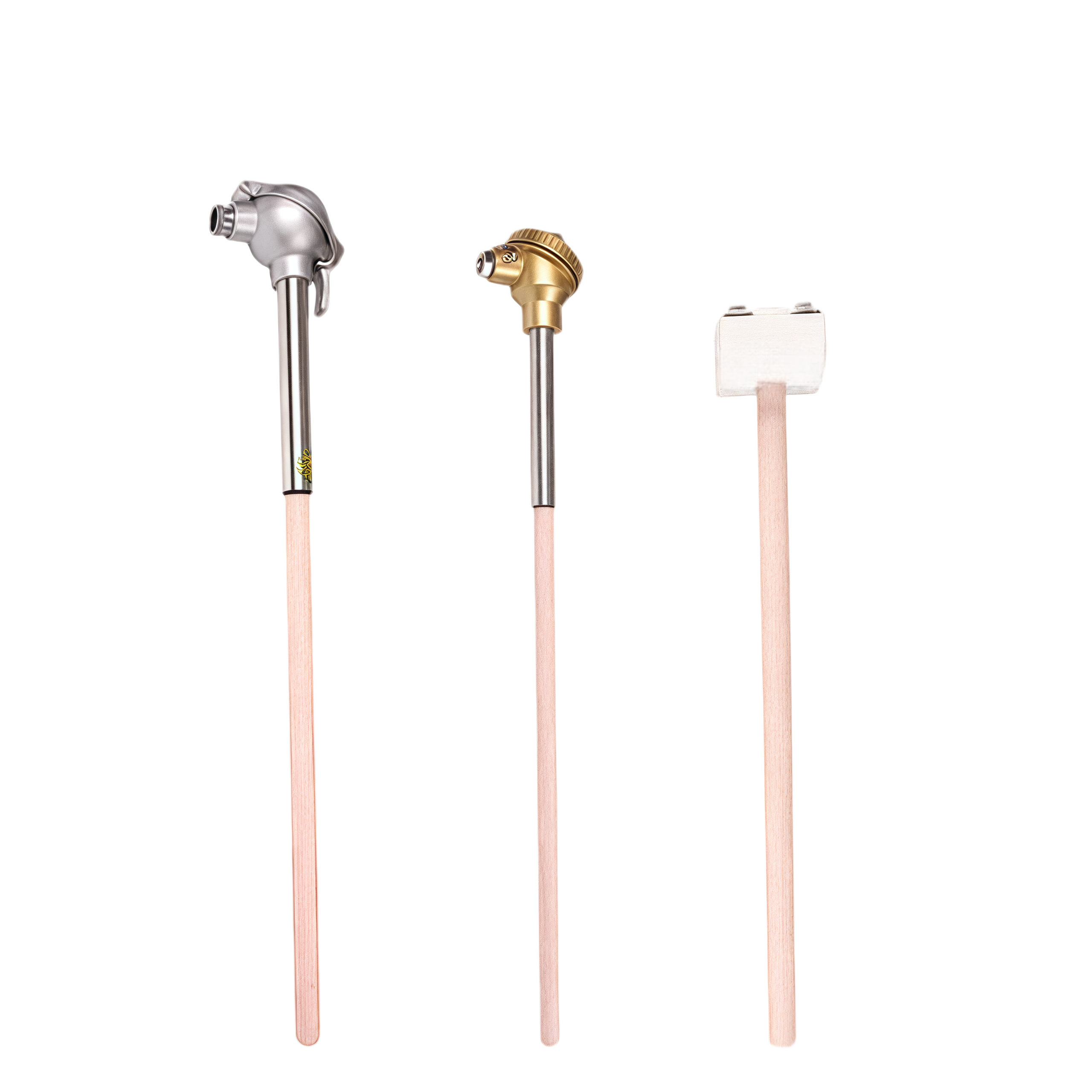
Platinum-Rhodium Thermocouple Applications
- Suitable for high-temperature measurement, with the usable range depending on thermocouple type and construction
- Platinum-rhodium alloy elements for demanding high-temperature applications
- 99% alumina ceramic protection tubes available for suitable high-temperature service
- Good oxidation resistance under suitable operating atmospheres
- Suitable for furnaces, kilns, glass melting, metallurgy, and ceramic sintering applications
- Available in S, R, and B Type configurations for different high-temperature measurement requirements
| Parameter | K Type | J Type | Platinum-Rhodium S / R / B |
|---|---|---|---|
| Temperature Capability | Broad range; depends on construction and application | Low-to-mid temperature applications; depends on construction | High-temperature applications; depends on Type and construction |
| Accuracy | Available to applicable IEC 60584 accuracy classifications | Available to applicable IEC 60584 accuracy classifications | Available to applicable IEC 60584 accuracy classifications |
| Element Material | NiCr (+) / NiSi (-) | Fe (+) / CuNi (-) | Pt-Rh alloy (+) / Pt or Pt-Rh (-) |
| Typical Applications | Injection molding, extrusion, ovens, furnaces, and general industrial heating | Plastic processing, extrusion, packaging, drying, and sealing equipment | Furnaces, kilns, glass melting, metallurgy, and ceramic sintering |
Explore Our Thermocouple Solutions
EaseWise provides thermocouple sensors for temperature measurement and control in heating equipment, plastic processing machines, industrial furnaces, and automation systems. Our thermocouples are available in different types, probe designs, sheath materials, and mounting options to meet various application requirements.
Explore our complete Thermocouple Solutions including K, J, T, E, N, S, R, and B Types, different probe designs, high-temperature thermocouples, and customized temperature sensors for industrial heating applications.
Request a Quote
Tell us your thermocouple type (K/J/Platinum-Rhodium), probe diameter, length, sheath material, and thread requirement. We’ll provide a custom solution and quotation within 12 hours.
Amy: +86 18883188154 | amy-easewise@tzheater.com
Hanna: +86 17351636811 | hanna-easewise@tzheater.com
Learn More From
Frequently Asked Questions
Thermocouples are used in injection molding machine barrels, extruder die heads, industrial ovens, furnaces, kilns, glass melting tanks, food processing equipment, chemical reactors, and HVAC systems — anywhere precise temperature measurement and control is required across diverse thermocouple applications.
K Type covers -200°C to 1260°C for general industrial use. J Type covers -40°C to 750°C with higher mid-range sensitivity. Platinum-Rhodium (S/R/B) covers 0°C to 1800°C with ceramic tube protection for furnaces, kilns, and metallurgy.
Choose platinum-rhodium when your process exceeds 1200°C — glass melting, steel heat treatment, ceramic sintering, or high-temperature furnace applications. The corundum ceramic tube provides superior thermal shock resistance and chemical inertness at extreme temperatures.
Grounded junction for fastest response and general use. Ungrounded junction when electrical isolation from the sheath is required. Exposed junction for the fastest response in clean, dry gas environments (K Type only).
Yes. We customize thermocouple type, probe diameter, sheath material, probe length, thread type, junction style, cable insulation, and connector type to match your equipment.
B Type (double platinum-rhodium) does not require compensation wire — its thermal EMF below 50°C is less than 3μV, negligible for most applications. S and R Types do require matched compensation wire.