
Silicone Rubber Heater Applications
EaseWise silicone rubber heaters are flexible heating elements designed for uniform heating on flat, curved, and irregular surfaces. Made with nickel-chromium resistance wire laminated between layers of high-quality silicone rubber, these flexible heaters can be customized in wattage, voltage, shape, size, and sensor integration. With a continuous operating range of -60°C to 200°C, they provide reliable heating for industrial tanks, medical and laboratory equipment, food processing, 3D printing, EV battery thermal management, and other OEM applications.
What Is a Silicone Rubber Heater?
A silicone rubber heater is a flexible electric heating element designed to provide uniform surface heating on flat, curved, and irregular surfaces. It typically uses nickel-chromium resistance wire or etched-foil heating elements laminated within a silicone rubber insulation structure. Compared with rigid heating elements, silicone rubber heaters are thin, lightweight, conformable, and easy to customize for different shapes, sizes, voltages, watt densities, and temperature-control requirements. They are widely used for tanks, drums, pipes, batteries, medical equipment, laboratory devices, 3D printers, and other industrial and OEM applications.
Key Features of Silicone Rubber Heater
- EaseWise silicone rubber heaters are flexible heating elements designed for uniform heating on flat, curved, and irregular surfaces. Made with nickel-chromium resistance wire laminated between layers of high-quality silicone rubber, these heaters provide reliable and consistent surface heating while adapting to different equipment and installation requirements. With a continuous operating range of -60°C to 200°C, customizable wattage, voltage, shape, size, and sensor integration, EaseWise silicone rubber heaters are suitable for industrial tanks, medical and laboratory equipment, food processing, 3D printing, EV battery thermal management, and other OEM applications.
Silicone Rubber Heater Applications by Industry
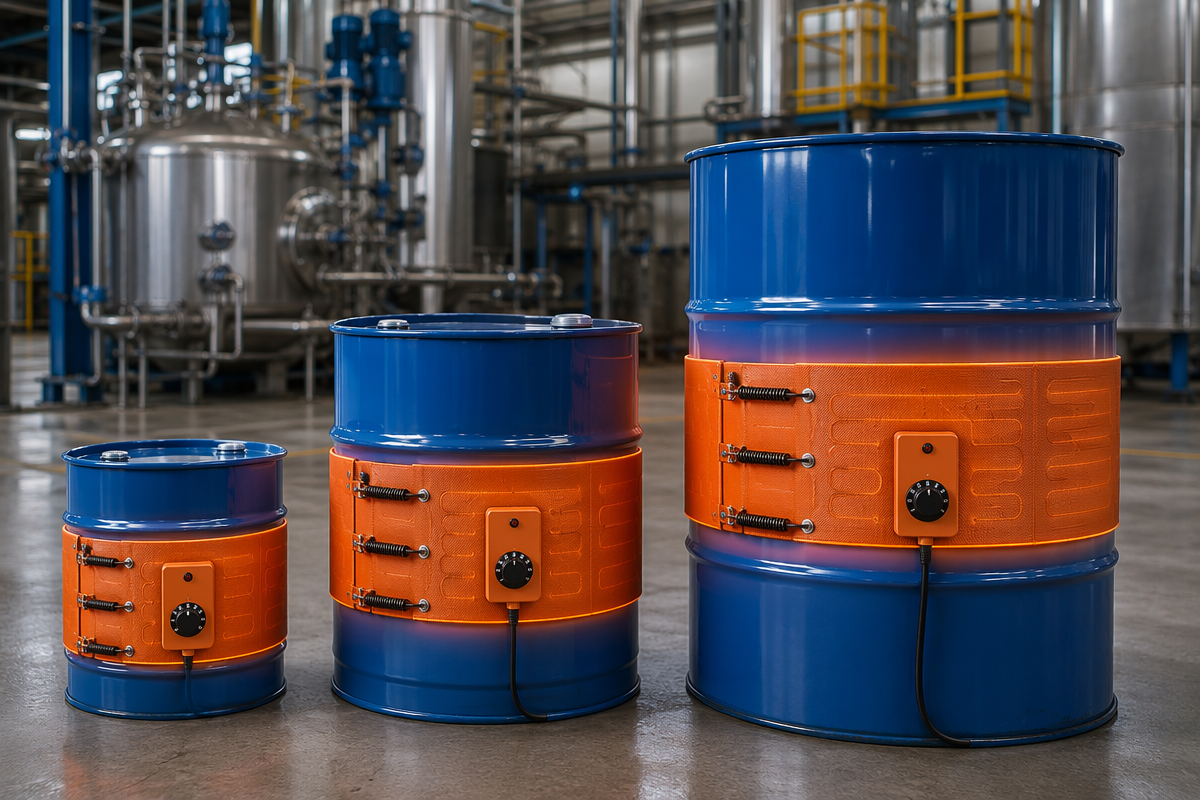
Drum & Tank Heating
Silicone rubber heaters provide reliable surface heating for drums, tanks, and other containers where maintaining fluid temperature is essential. Their flexible construction conforms to curved metal surfaces, helping provide uniform heat distribution and prevent freezing or excessive viscosity in materials such as oil, grease, adhesives, and chemicals. Available with customized dimensions, wattage, voltage, and temperature sensors, these heaters can be configured for industrial storage, chemical processing, food production, and other applications requiring consistent temperature control.
Medical & Laboratory Equipment
Silicone rubber heaters provide precise and consistent heating for medical and laboratory equipment such as incubators, analyzers, sterilizers, and sample heaters. Their thin, lightweight construction makes them easy to integrate into compact devices where installation space is limited, while the silicone insulation provides good moisture and environmental resistance. For applications requiring accurate temperature control, custom silicone rubber heaters can incorporate PT100, NTC, thermocouple, or other temperature-sensing options to monitor and regulate heating performance.


Electronics, Battery, and 3D Printing Systems
Flexible silicone rubber heaters provide reliable temperature control for EV battery systems, 3D printer build plates, and electronic equipment enclosures. Their thin, conformable construction helps maintain consistent operating temperatures, reduce condensation, and support reliable equipment performance in low-temperature environments. With customizable size, shape, watt density, voltage, and sensor options, these silicone rubber heaters can be designed to meet the specific heating requirements of battery systems, additive manufacturing equipment, and electronic devices.
How to Choose a Silicone Rubber Heater
Selecting the right silicone rubber heater depends on the heating surface, required temperature, available power, installation method, and operating environment. Key factors include:
- Heating size and shape — Match the heater to the available surface area and installation space.
- Voltage and wattage — Select the electrical specifications according to the equipment and required heating performance.
- Watt density — Choose an appropriate watt density based on the material being heated and the required temperature.
- Temperature control — PT100, NTC, thermocouples, or thermostats can be integrated for temperature monitoring and control.
- Mounting method — Adhesive backing, mounting holes, mechanical fastening, or other installation methods can be selected according to the application.
EaseWise can recommend a suitable silicone rubber heater configuration based on your heating dimensions, voltage, power, operating temperature, and installation requirements.
Silicone Rubber Heater Specifications
| Parameter | Specification |
|---|---|
| Operating Temperature | -60°C to 200°C continuous; up to 230°C short-term |
| Voltage Options | 12V / 24V / 36V / 110V / 220V / 380V AC/DC |
| Watt Density | 0.4–1.2 W/cm²; custom options available |
| Thickness | 1.5–3.0 mm, with fiberglass reinforcement |
| Maximum Size | Up to 1200 × 5000 mm |
| Heating Element | NiCr resistance wire; etched foil optional |
| Insulation | Silicone rubber with fiberglass reinforcement |
| Sensor Options | PT100 / NTC / K-Type / J-Type thermocouple / thermostat |
| Adhesive / Mounting | 3M PSA / silicone adhesive / mechanical grommets |
| Protection Rating | IP54 / IP65 optional |
Silicone Rubber Heater Applications
Tank and Pipe Heating
Flexible silicone heaters can be attached to tanks, drums, pipes, valves, and containers to maintain material temperature, reduce viscosity, or provide freeze protection.
Battery and EV Heating
Custom silicone heating pads can provide auxiliary heating for batteries and battery packs in cold environments. Heating area, voltage, power, and temperature sensors can be selected according to the application.
Industrial Equipment
These heaters are suitable for machine components, instrument enclosures, processing equipment, and other applications requiring localized or surface heating.
Medical and Laboratory Equipment
Flexible heating elements can provide controlled surface heating for medical devices, laboratory instruments, analytical equipment, and other systems requiring stable auxiliary heat.
Request a Quote
Tell us your dimensions, wattage, voltage, and target temperature. We’ll provide a custom solution and quotation within 12 hours.
Amy: +86 18883188154 | amy-easewise@tzheater.com
Hanna: +86 17351636811 | hanna-easewise@tzheater.com
Learn More From
Frequently Asked Questions
Silicone rubber heaters are used for drum and tank heating, food processing equipment, medical devices, laboratory instruments, EV battery warming, 3D printer build plates, and outdoor electronics freeze protection — anywhere flexible surface heating is needed.
Continuous operation up to 200°C, with short-term peaks up to 230°C. The maximum temperature depends on watt density and ambient conditions — we help specify the right configuration for your target.
Yes. Silicone rubber is inherently UV and moisture resistant. With IP65-rated sealing and stainless steel hardware, they perform reliably in outdoor industrial and washdown environments.
Absolutely. We fabricate silicone rubber heaters to any outline — including holes, notches, and irregular shapes — up to 1200mm × 5000mm. Send a drawing and we’ll match it.
Wire-wound (NiCr wire) is more durable and cost-effective for most industrial applications. Etched foil offers higher watt density and faster response for precision applications. We recommend based on your use case.