
Silicone Heater Mounting Methods: A Practical Guide
Choosing the right silicone heater mounting methods helps improve heat transfer, maintain reliable contact, and extend heater service life. The best option depends on the mounting surface, operating temperature, working environment, and maintenance requirements.
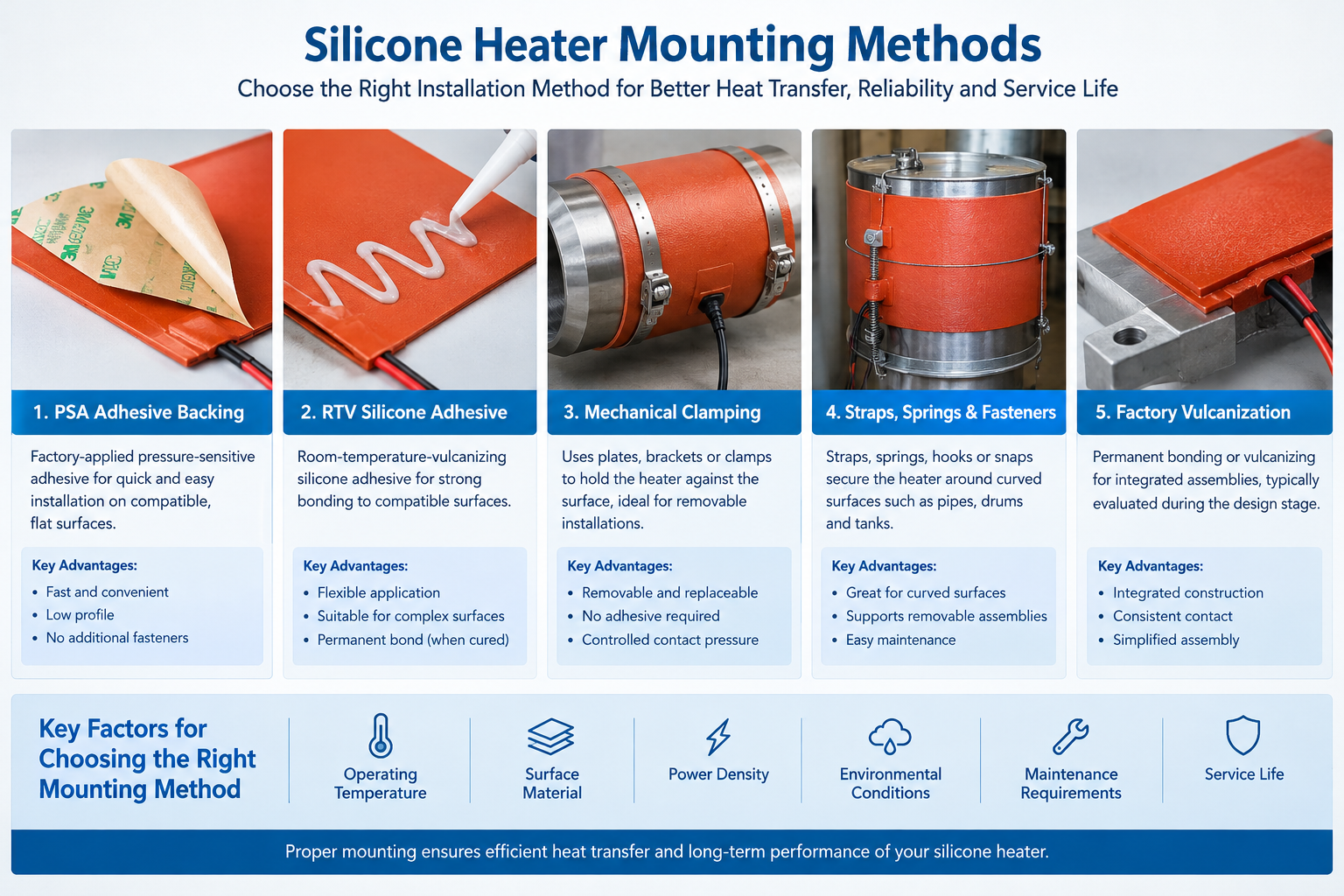
5 Common Silicone Heater Mounting Methods
1. PSA Adhesive Backing
Pressure-sensitive adhesive (PSA) backing provides quick, low-profile installation on compatible, clean, flat surfaces.
- Best for: Flat surfaces and permanent or semi-permanent installation.
- Advantages: Easy installation, no additional clamps, and minimal added thickness.
- Consider: Surface cleanliness, temperature limits, and adhesive compatibility.
2. RTV Silicone Adhesive
RTV silicone adhesive bonds the heater to compatible surfaces and can accommodate some irregular or curved shapes.
- Best for: Applications requiring flexible bonding.
- Advantages: Flexible application and good surface conformity.
- Consider: Adhesive compatibility, curing time, and service temperature.
3. Mechanical Clamping
Clamps, plates, or brackets hold the heater against the target surface without relying on adhesive.
- Best for: Removable heaters and equipment requiring maintenance.
- Advantages: Easier replacement and adjustable mounting.
- Consider: Even contact pressure and avoiding damage to the heater.
4. Straps, Springs, and Fasteners
Straps, springs, or fasteners can secure silicone heaters around pipes, drums, tanks, and other curved surfaces.
- Best for: Cylindrical equipment and removable assemblies.
- Advantages: Flexible installation and convenient maintenance.
- Consider: Secure fit, uniform contact, and thermal expansion.
5. Factory Vulcanization or Integrated Bonding
Factory bonding or vulcanization can integrate the heater into a custom assembly. Feasibility depends on the product design and manufacturing process.
- Best for: Custom equipment and integrated heating assemblies.
- Advantages: A purpose-designed assembly with consistent heater positioning.
- Consider: Design requirements, repairability, and production feasibility.
How to Choose the Right Silicone Heater Mounting Method
Before selecting a mounting method, evaluate these key factors:
- Operating temperature: Confirm that the adhesive or mounting hardware suits the working temperature.
- Surface material: Check surface flatness, cleanliness, and material compatibility.
- Power density: Consider the heater’s wattage and heat distribution requirements.
- Environment: Account for moisture, vibration, chemicals, and other operating conditions.
- Maintenance: Decide whether the heater needs to be removable or permanently installed.
Silicone Heater Installation Steps for PSA Backing
- Clean and dry the mounting surface.
- Check the heater dimensions and position before installation.
- Peel off the release liner without contaminating the adhesive.
- Apply the heater gradually, avoiding wrinkles and trapped air.
- Press evenly to achieve good contact, following the manufacturer’s instructions.
- Verify the electrical connections and test the heater according to the approved installation procedure.
Always follow the heater manufacturer’s temperature, electrical, and installation requirements. Do not cut, puncture, or excessively stretch the heater unless the design specifically permits it.
Common Silicone Heater Mounting Mistakes
- Installing adhesive backing on dirty, wet, or incompatible surfaces.
- Choosing an adhesive that cannot withstand the operating temperature.
- Using uneven clamping pressure that creates poor contact or damages the heater.
- Ignoring the need for removal, inspection, or future maintenance.
- Operating the heater without confirming electrical and temperature requirements.
Silicone Heater Mounting Methods: FAQs
Which mounting method is best for a flat metal surface?
PSA adhesive backing may be suitable when the surface is clean, compatible, and within the adhesive’s temperature limits. Mechanical mounting may be preferable when regular removal is required.
Can a silicone heater be installed on a curved surface?
Yes. Depending on the design, RTV bonding, straps, or mechanical fasteners may be suitable for curved surfaces.
Can a silicone heater be removed for maintenance?
Mechanical clamping and straps generally make removal easier. Adhesive-bonded heaters may be more difficult to remove without damaging the heater or mounting surface.
Need a Custom Silicone Heater?
EaseWise supplies custom silicone rubber heaters with mounting options selected for your application. We can help assess heater dimensions, voltage, wattage, surface conditions, and installation requirements.
To request a quotation, please provide your drawing (PDF or DXF), required voltage, wattage, and quantity.
Amy – Sales
Email: amy-EaseWise@tzheater.com
WhatsApp: +86 188 8318 8154
Hanna – Sales
Email: Hanna-EaseWise@tzheater.com
WhatsApp: +86 173 5163 6811
Explore Wire-Wound Silicone Heaters | Explore Etched-Foil Silicone Heaters | Request a Quote