
The ceramic heater working principle is based on electrical resistance heating. An internal nickel-chromium resistance wire converts electrical energy into heat, while the ceramic insulation helps transfer heat toward the machine barrel.
This heating method is widely used in injection molding machines, plastic extruders, blow molding machines and other industrial equipment that requires stable high-temperature barrel heating.
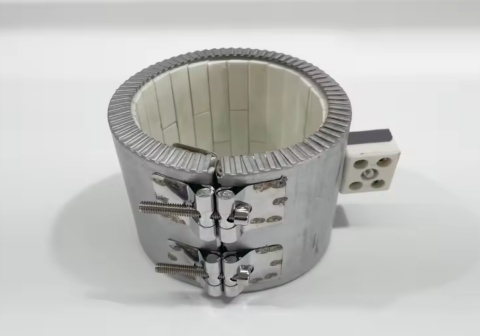
Ceramic Heater Working Principle
When electrical power is supplied, current passes through the nickel-chromium heating wire. Electrical resistance causes the wire to generate heat. The heat then moves through the ceramic structure and stainless steel outer sheath before reaching the machine barrel.
The basic process is: Generate heat → Conduct heat → Heat the barrel
Three Main Components
Nickel-Chromium Heating Wire
The resistance wire is the main heat-generating component. It converts electrical energy into thermal energy and is designed for repeated high-temperature operation.
High-Temperature Ceramic Blocks
Ceramic blocks surround the heating wire and provide electrical insulation while helping conduct heat toward the barrel. They also help distribute heat across the heating area.
Stainless Steel Outer Sheath
The stainless steel sheath protects the internal structure and transfers heat to the machine barrel. Stainless steel 304 and 321 are commonly used for high-temperature applications.
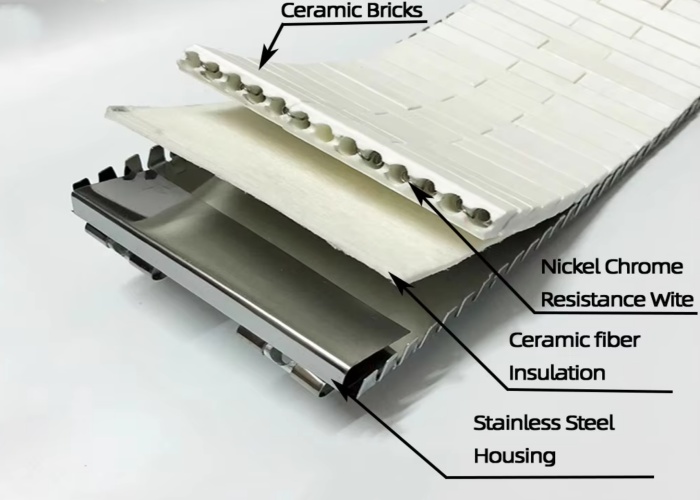
How Ceramic Insulation Improves Heating
The ceramic structure provides electrical insulation and supports stable heat transfer. It helps move heat toward the barrel while reducing unnecessary heat loss toward the outside of the heater.
An optional thermal-insulation layer can further reduce heat loss and improve energy efficiency during continuous industrial operation.
Factors That Affect Heating Performance
- Correct inside diameter and barrel fit
- Suitable heater width and heated area
- Correct voltage and power
- Appropriate power density
- Proper installation and temperature control
Correct selection and installation are important for stable heating performance and long service life.
Industrial Applications
This working principle is used in ceramic heating solutions for cylindrical equipment, including:
- Injection molding machine barrels
- Plastic extruder barrels
- Blow molding machines
- Plastic granulators
Frequently Asked Questions
How hot can this type of heater get?
Our ceramic band heaters can reach a maximum working temperature of up to 760°C, depending on the heater design and operating conditions.
Can it operate continuously?
Yes. These heaters are designed for demanding industrial applications and can operate through repeated heating cycles when correctly selected, installed and temperature-controlled.
Can the heater be customized?
Yes. Inside diameter, width, voltage, power, power density and terminal configuration can be customized according to equipment requirements.
Conclusion
The heating process is simple: the resistance wire generates heat, the ceramic structure transfers and insulates the heat, and the stainless steel sheath delivers the heat to the machine barrel.
This construction provides reliable high-temperature heating for plastic processing equipment and other industrial cylindrical heating applications.
For specifications, stock sizes and customization options, see our product specifications .
Further Reading
For a basic explanation of electrical resistance, see the Encyclopaedia Britannica explanation of electrical resistance .