
Finned vs Standard Tubular Heaters: Which Is Right for Your Application?
Choosing between finned and standard tubular heaters depends on what you are heating and how heat needs to be transferred. Finned tubular heaters are commonly used for air and gas heating, while standard tubular heaters are widely used for direct, contact, and immersion heating.
1. What Is the Main Difference?
The main difference is the heating surface.
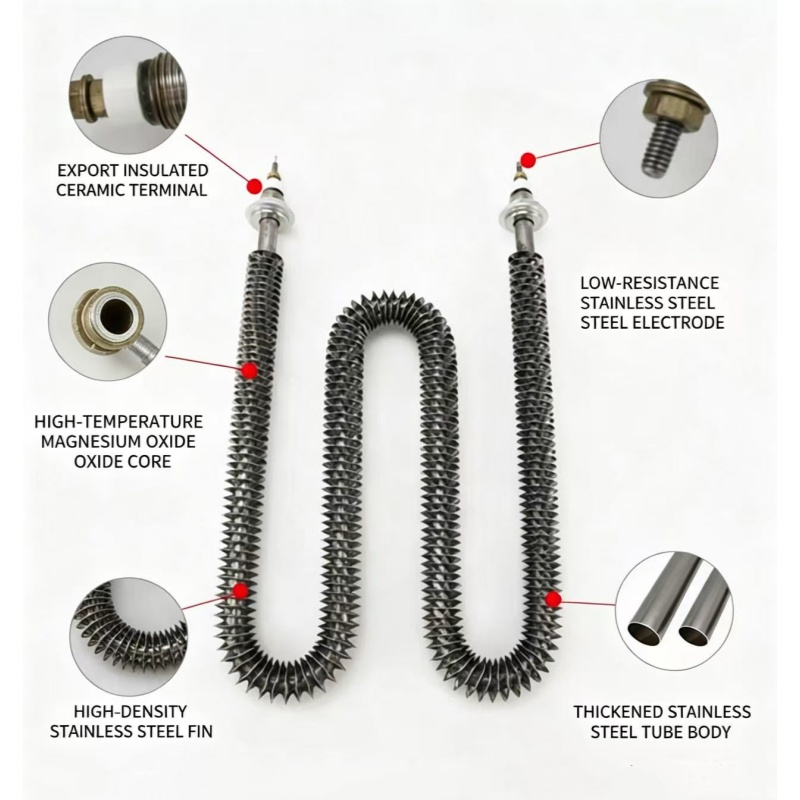
Finned tubular heaters have metal fins around the heating tube. The fins increase the effective surface area and help transfer heat to moving air or gas.
Standard tubular heaters have a smooth tubular surface and are commonly used for direct heating of solids, liquids, or metal components.
Neither design is suitable for every application. The choice depends on the heating medium, installation space, airflow, temperature, and required heating capacity.
2. Air Heating or Direct Heating?
Finned Tubular Heater for Air Heating
If the application requires air or gas heating, a finned tubular heater can provide increased heat transfer surface for moving airflow.
Common applications include:
- Industrial ovens and dryers
- Air ducts
- Heat tunnels
- Forced-air heating equipment
Standard Tubular Heater for Direct Heating
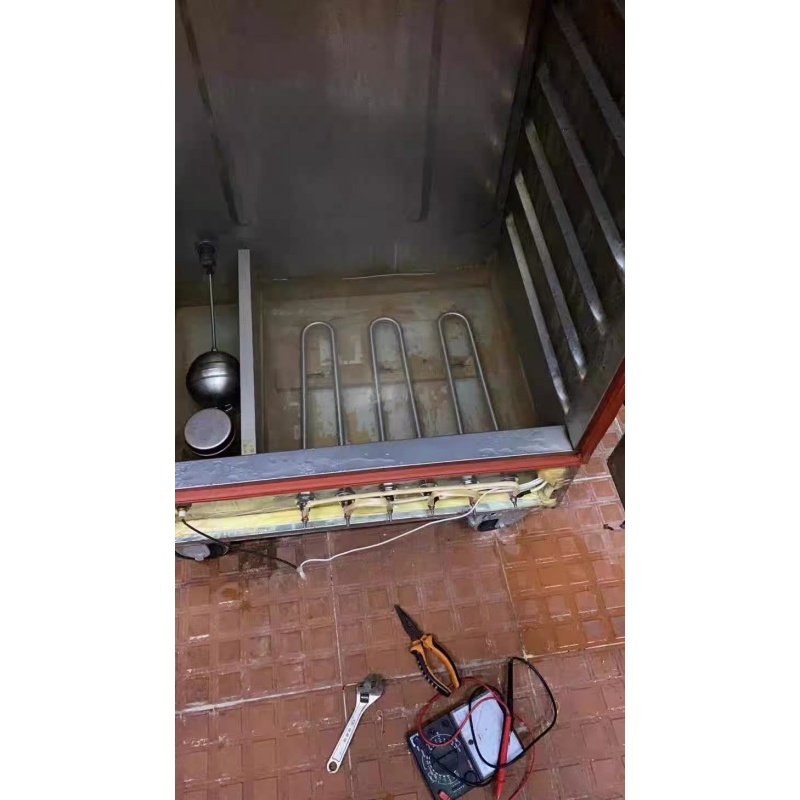
For direct or contact heating, a standard tubular heater can be configured for heating plates, molds, machinery, or liquid heating applications.
Typical applications include:
- Heating plates and molds
- Industrial machinery
- Direct-contact heating
- Liquid heating
Simple rule: For moving air or gas, consider a finned tubular heater. For direct contact, solid, or liquid heating, a standard tubular heater may be more suitable.
3. Space and Heat Transfer
Fins increase the effective heating surface without requiring a proportionally larger heating tube. This can be useful for air heating where efficient heat transfer is required within limited equipment space.
Standard tubular heaters have a smooth surface and flexible construction. They can be supplied in straight or bent configurations for different equipment and installation requirements.
| Feature | Finned Tubular Heater | Standard Tubular Heater |
|---|---|---|
| Best for | Air and gas heating | Direct and contact heating |
| Heat transfer | Convection | Conduction / contact / immersion |
| Surface | Extended with fins | Smooth tube |
| Typical applications | Ovens, dryers, air ducts | Molds, plates, machinery, liquid heating |
For detailed specifications and configurations, see our Finned Tubular Heater product solution.
4. Standard Sizes or Custom Solutions?
EaseWise supplies both standard and custom tubular heating solutions.
If you already know the required dimensions, you can review our Standard Tubular Heater options or our Finned Tubular Heating Element.
Custom options can include tube diameter, length, voltage, wattage, bending shape, terminals, mounting dimensions, and other installation requirements.
5. For Distributors and Traders
If you are a distributor or heating equipment trader, EaseWise can support both standard and customized requirements.
- Standard tubular heaters in common sizes
- Finned tubular heaters for air heating
- Custom sizes and configurations
- OEM heating solutions
This allows distributors to source different tubular heater configurations from one supplier and request custom designs when required.
6. For End Users: Replacement or Heating Improvement
When replacing a failed heater, matching the original dimensions may be sufficient. However, if the heater repeatedly fails, heats too slowly, or produces uneven temperatures, the original specification may not be the most suitable solution.
EaseWise can review issues such as:
- Slow heating
- Uneven temperature
- Frequent heater burnout
- Insufficient heat transfer
- Limited installation space
Based on the application and operating conditions, we can recommend a suitable heater design or manufacture a custom replacement.
7. A Practical Example
An industrial air-circulation oven uses standard tubular heaters but experiences slow heating and frequent heater replacement.
Because the application depends on moving air, the airflow, installation space, operating temperature, and existing heater specifications should be reviewed. A finned design may provide a more suitable heating surface for this type of application.
If the available standard size does not fit, a custom finned heater can be manufactured to match the equipment.
Conclusion
There is no universal answer when comparing finned and standard tubular heaters. The appropriate design depends on the heating medium, heat transfer method, installation space, and operating requirements.
- Finned tubular heater: Suitable for air and gas heating where increased heat transfer surface is useful.
- Standard tubular heater: Suitable for direct heating, contact heating, immersion, and flexible equipment configurations.
EaseWise supplies both standard and custom tubular heating solutions for distributors and end users.
Send us your application, heater dimensions, drawing, or existing heater photo. We can check standard sizes or recommend a custom heating solution.
Contact EaseWise
Amy – Sales
Email: amy-easewise@tzheater.com
WhatsApp: +86 188 8318 8154
Hanna – Sales
Email: hanna-easewise@tzheater.com
WhatsApp: +86 173 5163 6811
Request a Tubular Heater Quote