Cartridge Heater Selection Guide: How to Choose the Right Heater

Cartridge Heater Selection Guide: How to Choose the Right Heater

Choosing the right cartridge heater depends on more than voltage and wattage. Application, heater diameter and length, operating temperature, watt density, installation space, and heat distribution all affect heating performance and service life.

EaseWise supplies both standard cartridge heaters and custom heating solutions for industrial equipment. When a standard size matches the application, it can provide a simple and cost-effective solution. For non-standard dimensions or specific heating requirements, a custom design can be developed around the equipment.

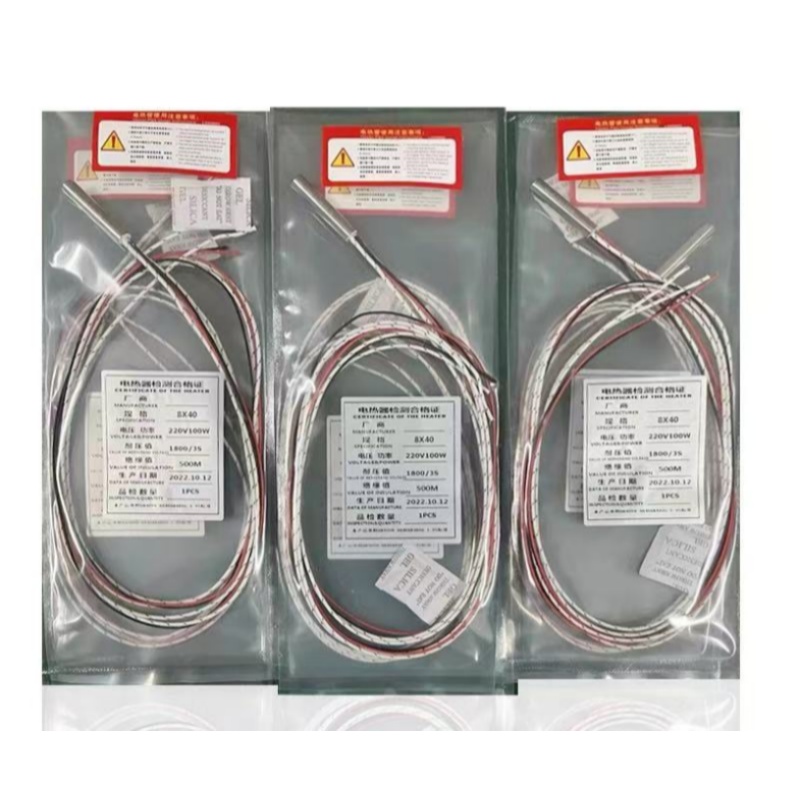
cartridge heater selection with built-in K-type thermocouple
Cartridge heater with built-in K-type thermocouple for industrial heating applications.

What Should You Consider When Selecting a Cartridge Heater?

The most important selection factors are the heating application, available installation space, required temperature, heating power, and operating conditions.

  • What material or component needs to be heated?
  • What diameter and length can fit the installation hole?
  • What voltage and wattage are required?
  • What is the normal and maximum working temperature?
  • How quickly does the system need to reach temperature?
  • Will the heater operate continuously or intermittently?
  • Is a standard heater suitable, or is a custom configuration required?

These factors should be considered together rather than selecting a heater based on a single specification.

Cartridge Heater Selection by Application

Cartridge heaters are commonly installed directly into drilled holes in metal blocks, molds, dies, and other components where concentrated heat is required.

  • Plastic injection molds
  • Heating blocks and dies
  • Packaging and sealing equipment
  • Industrial machinery
  • Food processing equipment
  • Laboratory and testing equipment

The application determines how the heater should be configured. A heater used in an aluminum heating block may require a different power distribution from one used in a compact mold or sealing machine.

Diameter, Length and Installation Space

Diameter and length are often the first specifications to confirm because the heater must physically fit the available installation space.

The cartridge heater should fit the drilled hole correctly while maintaining suitable heat transfer to the surrounding material. The available heated length, unheated section, lead configuration, and installation depth can also affect the final design.

If the equipment uses an existing heater, providing its diameter, length, hole dimensions, or a sample can make replacement or customization much easier.

Voltage, Wattage and Working Temperature

Voltage and wattage should be selected according to the electrical system and the required heating performance. The target temperature, heating time, heat loss, and installation conditions also influence the required power.

For a detailed explanation of how these parameters relate to each other, see our Cartridge Heater Voltage, Wattage & Temperature Guide.

When requesting a heater, it is useful to provide:

  • Rated voltage
  • Required wattage
  • Normal working temperature
  • Maximum operating temperature
  • Required heat-up time
  • Heating material and component
  • Continuous or intermittent operation

This information helps determine a suitable heater construction and heating configuration rather than simply matching a wattage number.

Watt Density and Heating Performance

Watt density describes the heating power applied over the active surface area of the heater. It can have a significant effect on surface temperature, heat transfer, heating speed, and heater life.

A high watt density may be useful when a large amount of heat is required from a compact heater, but excessive watt density can create localized overheating or reduce service life when heat transfer conditions are poor.

For a more detailed discussion of this factor, see our Cartridge Heater Watt Density Guide.

Standard or Custom Cartridge Heater?

Standard cartridge heaters are suitable for many common industrial applications and can simplify replacement and ordering. Custom heaters become more useful when the equipment has specific dimensional, electrical, or installation requirements.

Standard Cartridge Heater Custom Cartridge Heater
Available standard dimensions Non-standard diameter or length
Common industrial applications Application-specific requirements
Simple replacement OEM equipment and new machine designs
Faster and cost-effective Special lead, mounting, or heating requirements

When Do You Need a Custom Cartridge Heater?

Customization may be appropriate when a standard heater cannot meet the equipment requirements. Common reasons include limited installation space, unusual dimensions, specific heating zones, special lead configurations, or integrated temperature sensing.

Custom cartridge heaters can be manufactured according to requirements such as:

  • Diameter and overall length
  • Voltage and wattage
  • Heated and unheated sections
  • Lead wire length and direction
  • Thermocouple position
  • Mounting configuration
  • Sheath material

You do not need to design the complete heater yourself. An existing heater sample, drawing, dimensions, or basic application information can give our team enough information to evaluate a suitable configuration.

Cartridge Heater Selection Example

Application: An industrial machine uses cartridge heaters to heat an aluminum block.

  • Block weight: 8 kg
  • Initial temperature: 25°C
  • Target temperature: 180°C
  • Required heating time: 30 minutes
  • Installation: Cartridge heaters inserted into drilled holes

The required heating power depends not only on the temperature rise and heating time, but also on heat loss, block dimensions, installation conditions, and the efficiency of heat transfer from the heaters to the aluminum block.

Instead of automatically selecting one very high-power heater, a better design may use multiple cartridge heaters distributed throughout the block. This can improve heat distribution and provide better control over the heating zones.

The final heater specification would therefore consider the available hole dimensions, heater diameter and length, total wattage, watt density, temperature requirements, and electrical system together.

If the required hole dimensions do not match available standard sizes, custom cartridge heaters can be manufactured to fit the equipment.

Related Cartridge Heater Solutions

Different equipment designs may require different cartridge heater configurations. Explore our related products:

Choose the Right Cartridge Heater Solution

The right cartridge heater should match the equipment rather than simply match a standard wattage or size. Application, installation space, electrical requirements, temperature, watt density, and operating conditions should all be considered before finalizing the specification.

If you already have a heater drawing, dimensions, electrical specifications, or an existing heater sample, EaseWise can review the information and recommend a suitable standard or custom solution.

Need help selecting a cartridge heater for your equipment?

Send us your application details, heater dimensions, drawing, or existing heater sample. Our team can review the requirements and provide a suitable heating solution and quotation.

Contact EaseWise

Amy – Sales
Email: amy-easewise@tzheater.com
WhatsApp: +86 188 8318 8154

Hanna – Sales
Email: hanna-easewise@tzheater.com
WhatsApp: +86 173 5163 6811

Contact EaseWise for a Cartridge Heater Solution


← Back to Blog

发表评论

您的邮箱地址不会被公开。 必填项已用 * 标注