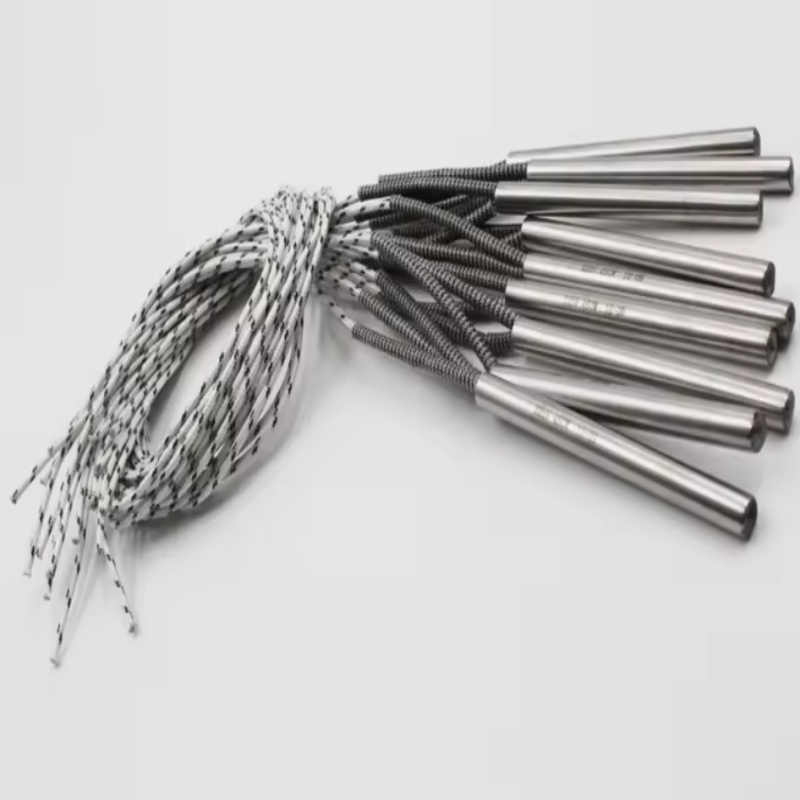
cartridge heater

```html

Cartridge Heater Applications: A Complete Guide to Industrial Heating Uses

Cartridge heater applications cover a wide range of industrial equipment where compact construction, localized heating, fast heat transfer and precise temperature control are required. Cartridge heaters are commonly used in injection molding, plastic extrusion, hot runner systems, packaging machinery, laboratory equipment, die casting and other industrial heating applications.

cartridge heater product overview for industrial heating applications
Cartridge heater product overview for industrial heating applications.

What Is a Cartridge Heater?

A cartridge heater is a cylindrical electric heating element designed to transfer heat efficiently to a surrounding metal component. It typically consists of a resistance heating wire, electrically insulating material, a metal sheath and electrical leads. When electrical current passes through the resistance wire, electrical energy is converted into heat.

Because cartridge heaters can be installed inside drilled holes or bores, they are particularly useful when a heating element needs to be positioned close to the area requiring heat. This design provides localized heating without taking up significant space in the surrounding equipment.

Depending on the application, cartridge heaters can be manufactured with different diameters, lengths, wattages, voltages, sheath materials, watt densities, lead configurations and temperature ratings. These options allow the heater to be adapted to specific equipment and operating conditions.

For information about cartridge heater construction and material selection, see our Cartridge Heater Materials and Performance Guide .

Why Are Cartridge Heaters Used in Industrial Applications?

Cartridge heaters are widely used in industrial equipment because they combine compact construction with concentrated heating power and controllable temperature performance. Unlike heating methods that heat a large surrounding area, a cartridge heater can deliver heat directly to a specific mold, die, block, plate or tooling component.

  • Localized heating: Heat can be concentrated in a specific mold, die, block, plate or tooling component.
  • Compact design: The cylindrical form allows installation in limited spaces.
  • Fast heating: Appropriate watt density can provide rapid heat-up when properly matched to the application.
  • Temperature control: Cartridge heaters can be combined with thermocouples, temperature sensors and controllers.
  • Custom configurations: Diameter, length, voltage, wattage, watt density, leads and other specifications can be customized.
  • Industrial durability: Properly selected sheath materials and construction can support demanding operating environments.

Cartridge Heater Applications and Industrial Uses

The most common cartridge heater applications involve equipment that requires localized heating, stable operating temperatures and reliable heat transfer. The following applications represent some of the major industrial uses for cartridge heating elements.

Cartridge Heaters for Injection Molding

Injection molding machines require accurate temperature control to process thermoplastic materials consistently. Cartridge heaters can be installed inside molds, mold inserts, hot runner components, nozzles, manifolds and other tooling components where localized heating is required.

In injection molding applications, the heater should be matched to the available installation space, required temperature, heating area, watt density and power requirements. Proper heater placement can help maintain a stable temperature in the target component and support consistent plastic processing.

For injection molding equipment, custom cartridge heaters can be manufactured according to specific dimensional and electrical requirements.

Cartridge Heaters for Plastic Extrusion

Plastic extrusion equipment often requires heating around dies, tooling, adapters and other components through which molten plastic passes. Cartridge heaters can provide localized heat to these components and help maintain the temperature required for the extrusion process.

Extrusion applications can require different heater lengths, diameters, watt densities and sheath materials depending on equipment design and operating temperature. A properly selected heater should provide sufficient heat output while maintaining reliable operation under continuous use.

Cartridge Heaters for Hot Runner Systems

Hot runner systems require accurate heating to keep plastic material at the required processing temperature as it moves through the mold. Cartridge heaters are commonly used in hot runner components where compact heating elements and precise temperature control are needed.

When selecting a heater for a hot runner system, engineers should consider the available bore size, heating length, watt density, operating temperature and temperature sensing requirements.

high density cartridge heater for hot runner and injection molding applications
High density cartridge heater for hot runner systems and injection molding applications.

For more information, see our High-Density Cartridge Heater and Cartridge Heater product range .

You can also learn more about hot runner heaters for injection molding systems.

Cartridge Heaters for Packaging and Sealing Equipment

Packaging machinery often requires controlled heat for sealing, cutting, forming and other processes. Cartridge heaters can be installed inside sealing bars, heating blocks, jaws, dies and other components where concentrated heat is required.

The heater specification should be selected according to the size of the heated component, required operating temperature, heat-up time and available electrical supply. Uniform temperature across the heating surface is particularly important for processes that depend on consistent sealing or forming.

Cartridge Heaters for Food Processing Equipment

Food processing equipment can use cartridge heaters for localized heating in machinery, heating blocks, sealing systems and temperature-controlled components. The heater design should be selected according to the equipment construction, operating environment, required temperature and applicable industry requirements.

For applications involving moisture, cleaning processes or demanding operating conditions, the sheath material, sealing method, electrical connections and overall heater construction should be carefully considered.

Cartridge Heaters for Laboratory and Scientific Equipment

Laboratory and scientific equipment often requires accurate and repeatable heating within a compact assembly. Cartridge heaters can be used in heating blocks, testing equipment, analytical instruments, sample preparation systems and other temperature-controlled devices.

Because these applications may involve relatively small heating areas, heater dimensions and temperature control can be especially important. A properly designed heater can provide controlled heat without requiring a large external heating system.

Cartridge Heaters for Die Casting and Metal Processing

Die casting and other metal processing equipment can require localized heating of molds, dies, tooling and related components. Cartridge heaters can be installed directly into drilled holes in metal components to provide concentrated heat where it is needed.

High-temperature applications require careful consideration of sheath materials, watt density, insulation, operating temperature and installation conditions. Heater specifications should always be selected according to the actual thermal requirements of the equipment.

Cartridge Heater Applications Requiring Temperature Control

Many industrial heating applications require not only heat generation but also accurate temperature monitoring. A cartridge heater can be combined with a thermocouple or other temperature sensor to provide feedback close to the heated component.

cartridge heater with built-in K-type thermocouple for temperature control
Cartridge heater with built-in K-type thermocouple for precise temperature monitoring.

A Cartridge Heater with Built-in Thermocouple can combine heating and temperature sensing in one compact component. This configuration is useful for precision molds, laboratory equipment, automation heating modules and other applications requiring closed-loop temperature control.

How Cartridge Heaters Work in Different Applications

Although the basic operating principle remains the same, the required heater design can vary significantly from one application to another. The heating element converts electrical energy into heat, while the surrounding metal component transfers that heat to the target area.

For example, a heater installed inside a mold may need to provide stable localized heating across a relatively small area. A heater used in an extrusion die may require a different length and watt density to maintain the required process temperature. A hot runner application may require compact dimensions and precise temperature control within a limited installation space.

This is why selecting a heater based only on voltage and wattage is not sufficient. Mechanical dimensions, operating temperature, installation conditions, heat transfer requirements and environmental factors should also be evaluated.

For a detailed explanation of the operating principle, see: How Does a Cartridge Heater Work?

How to Choose the Right Cartridge Heater for an Application

Selecting the correct heater starts with understanding the equipment and its thermal requirements. The following factors should be considered when choosing a cartridge heater for an industrial application.

1. Diameter and Length

The heater diameter must match the available bore or installation hole, while the heated length should correspond to the area that needs to be heated. An incorrect fit can reduce heat transfer performance or create installation problems.

2. Voltage and Wattage

Voltage and wattage determine the electrical input and heat output of the heater. The required power should be calculated according to the mass of the component, target temperature, heat loss, warm-up time and operating conditions.

3. Watt Density

Watt density refers to the amount of power generated over the heated surface area. Higher watt density can provide faster heating, but it may also increase the thermal load on the surrounding material. The appropriate watt density depends on the application and heat transfer conditions.

4. Operating Temperature

The required operating temperature affects the selection of heating element construction, insulation, sheath material and electrical components. The heater should be rated appropriately for both normal operating temperature and the expected operating environment.

5. Sheath Material

Sheath material can affect corrosion resistance, temperature capability, durability and compatibility with the application. Stainless steel and nickel-based alloys may be selected depending on the operating environment.

For a detailed comparison, see our Cartridge Heater Materials and Performance Comparison .

6. Lead and Connection Configuration

Lead length, lead orientation, terminal design and connection type should match the equipment layout. Proper electrical connection design is important when the heater is installed in compact machinery or equipment with limited installation space.

Cartridge Heater Materials for Different Applications

Different applications may require different materials depending on temperature, corrosion exposure, mechanical requirements and the surrounding environment.

Common cartridge heater sheath materials include stainless steel and nickel-based alloys. The appropriate material depends on the actual operating conditions rather than simply selecting the most expensive option.

For example, an application exposed to moisture or corrosive substances may require a material with suitable corrosion resistance, while a high-temperature industrial application may require a sheath material designed for higher operating temperatures.

Standard and Custom Cartridge Heater Solutions

Standard cartridge heaters may not always match the exact requirements of industrial equipment. Custom heaters can be designed around the available bore diameter, heating length, voltage, wattage, watt density, lead configuration, temperature requirements and installation conditions.

Custom cartridge heaters are particularly useful when equipment has limited installation space or when the heating profile must match a specific mold, die, block, plate or tooling component.

For standard and OEM requirements, explore our Cartridge Heater Solutions or learn more about our Cartridge Heater Manufacturer and OEM Solutions .

Frequently Asked Questions About Cartridge Heater Applications

What are cartridge heaters commonly used for?

Cartridge heaters are commonly used for localized heating in injection molding, plastic extrusion, hot runner systems, packaging machinery, food processing equipment, laboratory instruments, die casting, molds, dies, heating blocks and other industrial equipment.

Are cartridge heaters suitable for injection molding?

Yes. Cartridge heaters are widely used in injection molding equipment for localized heating of molds, tooling, nozzles, hot runner components and other parts that require controlled temperature.

Can cartridge heaters be customized?

Yes. Cartridge heaters can be customized according to diameter, length, voltage, wattage, watt density, lead configuration, sheath material and other application requirements.

How do I select the right cartridge heater?

Start by determining the available installation space, target temperature, required heat output, voltage, warm-up time, surrounding material, operating environment and temperature control requirements. These factors help determine the appropriate heater dimensions and construction.

What materials are cartridge heaters made from?

Cartridge heaters can use different sheath and internal construction materials depending on the required temperature, corrosion resistance, durability and application environment. Stainless steel and nickel-based alloys are commonly used options.

Can a cartridge heater include a thermocouple?

Yes. Cartridge heaters can be manufactured with built-in thermocouples for applications requiring direct temperature sensing and closed-loop temperature control.

Conclusion

Cartridge heaters are versatile heating elements for applications that require compact construction, localized heat and precise temperature control. From injection molding and plastic extrusion to hot runner systems, packaging, food processing, laboratory equipment and die casting, the right heater can be designed to match a wide range of industrial heating requirements.

Choosing the correct heater requires more than simply selecting a wattage. Diameter, length, watt density, voltage, operating temperature, sheath material, lead configuration and installation conditions should all be considered.

If you need a heater designed for a specific machine, mold, die, heating block or industrial process, explore our cartridge heater solutions or contact EaseWise to discuss your custom requirements.

Looking for the Right Cartridge Heater?

Tell us your required diameter, length, voltage, wattage, operating temperature and application. Our team can help you select or customize a cartridge heater for your equipment.

Standard cartridge heater sizes available. Custom cartridge heaters supported. Contact us for pricing, availability and OEM production.

```

发表评论

您的邮箱地址不会被公开。 必填项已用 * 标注