
Cartridge Heater Watt Density: How to Calculate and Choose
Cartridge heater watt density determines how much heating power is applied to the surface area of a cartridge heater. It affects heating speed, surface temperature, heat transfer, and heater life. A higher watt density can provide faster heating in compact equipment, but the highest value is not always the best choice.
The right watt density depends on the application, heater size, installation fit, operating temperature, and heat transfer conditions.
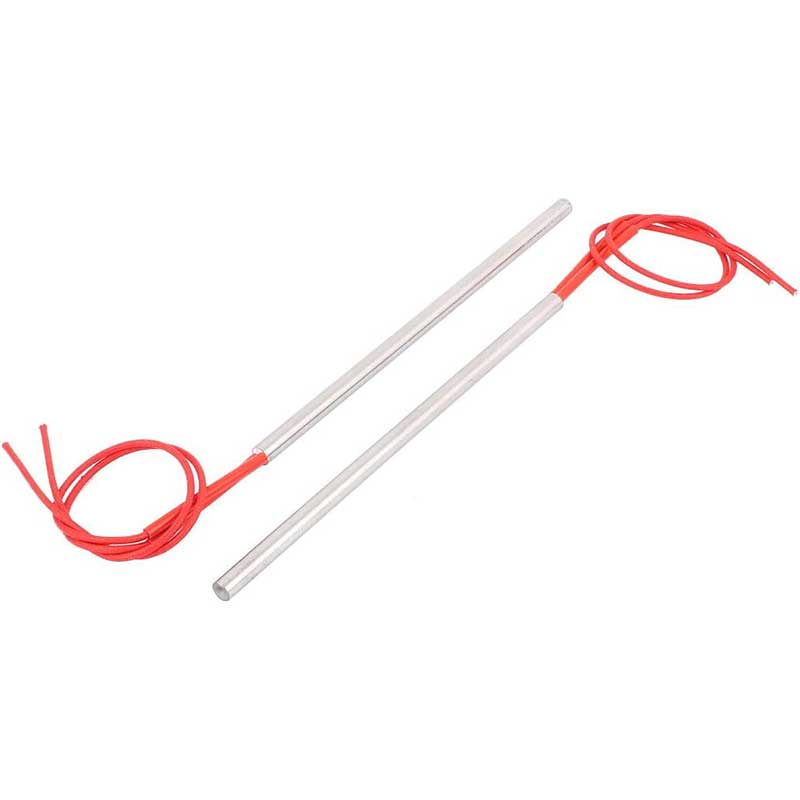
For standard and custom heating solutions, see our Cartridge Heater product range.
Understanding Watt Density
Watt density is the heating power applied per unit of heated surface area. It is commonly expressed in W/in² or W/cm².
Watt Density = Heater Wattage ÷ Heated Surface Area
For a cylindrical cartridge heater, the heated surface area is mainly related to the heater diameter and heated length. A smaller heater with the same power therefore has a higher watt density.
How to Calculate Watt Density
For a cylindrical cartridge heater, the approximate heated surface area can be calculated as:
Surface Area = π × Heater Diameter × Heated Length
Then:
Watt Density = Heater Wattage ÷ Surface Area
For example, increasing the heater wattage while keeping the same diameter and heated length increases watt density. Increasing the heated surface area while keeping the same wattage reduces watt density.
Actual heater selection should also consider installation fit, contact with the heated component, sheath material, operating temperature, and heat transfer conditions.
Watt Density by Heating Application
The following ranges are practical starting points rather than fixed limits. The appropriate value depends on the equipment and operating conditions.
| Application | Typical Watt Density | Key Consideration |
|---|---|---|
| Injection Mold Heating | 15–30 W/in² | Good contact and heat transfer can support higher watt density. |
| Hot Runner Systems | 30–50 W/in² | Higher power density may be required with proper temperature control. |
| Liquid Heating | 10–25 W/in² | Heat transfer conditions vary between water, oil, and other liquids. |
| Air / Gas Heating | 10–20 W/in² | Lower heat transfer can make excessive surface temperature a concern. |
| Sealing / Packaging Equipment | 15–30 W/in² | Short heating cycles may require higher power density. |
When Is High Watt Density Useful?
High watt density cartridge heaters are useful when limited installation space must deliver relatively high heating power. Common applications include:
- Injection molds
- Hot runner systems
- Sealing jaws
- Packaging equipment
- Compact heating blocks
However, high watt density requires effective heat transfer. Poor contact or insufficient heat dissipation can increase surface temperature and shorten heater life.
For applications requiring higher power density, see our High-Density Cartridge Heater solutions.
What Happens When Watt Density Is Too High or Too Low?
Watt density that is too high can cause excessive surface temperature, localized overheating, material degradation, and premature heater failure.
Watt density that is too low may result in slow heat-up, insufficient operating temperature, or a heater that is larger than necessary.
The goal is not to maximize watt density, but to match the heater’s power density to the actual application.
How to Choose the Right Watt Density
Before selecting a cartridge heater, consider:
- What material or component is being heated
- Target operating temperature
- Available heater diameter and installation space
- Required heating power
- Required heat-up time
- Heat transfer and installation conditions
- Available voltage
For a complete heater selection process, see our Cartridge Heater Selection Guide.
For additional technical information about cartridge heater design and high-density heating, see the OMEGA Hi-Density Cartridge Heater Technical Reference .
Need Help Selecting the Right Heating Solution?
EaseWise can help evaluate the required wattage, heater size, and watt density based on your application and operating conditions. We can also provide sample heaters for testing before final production.
Send us your heating requirements, target temperature, available heater space, and voltage if known.