
Straight Tubular Heater Selection Guide
Straight tubular heater selection depends on the application, installation space, heating medium, required temperature, wattage, watt density and sheath material. The right design should provide stable heat transfer without creating unnecessary surface temperature or premature heater failure.
For general tubular heating solutions, see our Tubular Heater product range.
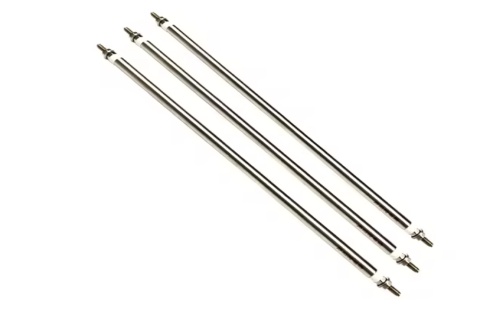
Straight Tubular Heater Selection by Application
| Application | Why Choose a Straight Tubular Heater? |
|---|---|
| Tank Heating | Suitable for direct or indirect heating where the element can be positioned along the required heating area. |
| Air Duct Heating | Useful for air heating when the element is installed across an airflow path. |
| Ovens & Dryers | Provides distributed heat for ovens, dryers and industrial heating chambers. |
| Heating Plates & Blocks | Can be inserted into drilled holes for conduction heating. |
| Industrial Equipment | Custom length, wattage, voltage and lead configuration can match different equipment designs. |
For a broader view of tubular heater applications, see Tubular Heater Applications: Where Are Tubular Heating Elements Used?
Straight vs U-Shaped vs Finned Tubular Heater
| Type | Best For | Main Advantage |
|---|---|---|
| Straight Tubular Heater | Plates, blocks, tanks and industrial equipment | Simple installation and flexible custom dimensions |
| U-Shaped Tubular Heater | Compact heating spaces | More heating length within a limited installation area |
| Finned Tubular Heater | Air heating and ducts | Increased surface area for better air-side heat transfer |
If the main concern is choosing between straight and U-shaped construction, see U-Shaped Tubular Heater vs Straight Tubular Heater: Which Is Better?
For air heating applications, a Finned Tubular Heater may provide better heat transfer. Our comparison of Finned vs Standard Tubular Heater explains the main differences.
Key Specifications for Straight Tubular Heater Selection
Diameter, Length and Installation
The heater diameter and heated length should match the available installation space and heating area. For cartridge-style insertion, the bore should provide a close fit without preventing installation or removal.
Cold sections and lead positions should also be considered when the heater is installed inside a plate, block or enclosed heating system.
Voltage, Wattage and Watt Density
Voltage and wattage determine the electrical output, while watt density affects surface temperature and heat transfer performance. A higher watt density can provide faster heating, but excessive watt density may reduce heater life when heat cannot be transferred efficiently.
For detailed guidance, see Tubular Heater Watt Density & Temperature Guide.
Sheath Material
Sheath material should be selected according to the heating medium, operating temperature and corrosion conditions. Common options include stainless steel and other high-temperature alloys for demanding industrial applications.
How Does the Application Affect Tubular Heater Performance?
- Liquid heating: Heat transfer depends strongly on liquid type, flow and element placement. Poor circulation can create localized overheating.
- Air heating: Air transfers heat less efficiently than most liquids, so element spacing, airflow and surface area become important.
- Ovens and dryers: Heater placement and air circulation affect temperature uniformity and overall heating efficiency.
Uneven temperature can also result from poor installation, incorrect watt density, insufficient heat transfer or unsuitable heater placement. See Why Does a Tubular Heater Have Uneven Heating? Causes and Solutions if uneven heating is already occurring in your equipment.
Common Straight Tubular Heater Selection Mistakes
| Problem | Possible Result |
|---|---|
| Wattage is too high | Excessive surface temperature, overheating or shorter heater life |
| Wattage is too low | Slow heating or failure to reach the target temperature |
| Poor installation fit | Reduced heat transfer and localized overheating |
| Wrong sheath material | Corrosion or reduced service life |
| Incorrect heater length | Uneven heating or installation problems |
When Should You Choose a Custom Straight Tubular Heater?
A custom straight tubular heater is useful when standard dimensions cannot match the equipment. Custom options may include diameter, heated length, total length, voltage, wattage, watt density, sheath material, lead configuration and terminal design.
For applications with limited installation space or specific heat distribution requirements, a custom design can provide better fit and more stable heating performance than a standard element.
What Information Should You Provide for a Straight Tubular Heater Quote?
When requesting a quotation, provide as much of the following information as possible:
- Heater diameter and available installation space
- Heated length or total length
- Required voltage and wattage
- Target working temperature
- Heating medium or application
- Sheath material, if known
- Lead, terminal or mounting requirements
- Existing heater sample or drawing, if available
If some specifications are unknown, you can send the application details and available dimensions first. EaseWise can help evaluate the heater configuration.
Need a Straight Tubular Heater for Your Application?
EaseWise supplies Straight Tubular Heaters for industrial heating equipment, ovens, dryers, tanks, heating plates and custom applications.
For a broader tubular heater solution, visit our Tubular Heater product range.
Send us your application, dimensions, voltage, wattage or existing heater sample. Our team can review the requirements and recommend a suitable design.
Contact EaseWise:
Email: amy-EaseWise@tzheater.com
Email: hanna-easewise@tzheater.com
Phone: +86 17351636811
Need a custom tubular heater? Contact EaseWise for a quote.