
Immersion Heater Applications
Industrial immersion heater applications cover a wide range of liquid heating processes, including water and wastewater treatment, chemical processing, oil and gas operations, food and beverage production, and industrial cleaning systems. Immersion heaters are used to heat or maintain the temperature of liquids in tanks, vessels, boilers, and process equipment. EaseWise helps industrial buyers source electric immersion heaters and customized liquid heating solutions through qualified manufacturing partners for different industrial heating requirements.
Available configurations include screw plug, flanged, and over-the-side immersion heaters. Depending on the selected design and application, sourcing options may cover different heating capacities, immersion lengths, operating voltages, and heating element sheath materials. Suitable configurations should be evaluated according to the liquid properties, tank dimensions, installation method, required heating temperature, and operating conditions.
Whether you need a standard immersion heater or a customized configuration for an industrial tank or process vessel, EaseWise provides one point of contact for sourcing coordination across different industrial heating product requirements. Share your application details, technical specifications, and required quantity with our team to discuss suitable options and request a quotation.
Explore our industrial immersion heater range or request a quotation.
Key Features of Immersion Heater
Key Features of Industrial Immersion Heaters
Industrial immersion heaters are designed for direct heating of liquids in tanks, vessels, and process equipment. Their configuration, materials, and electrical ratings should be selected according to the heating medium and operating conditions.
- Direct Liquid Heating — Immersion heating elements are installed directly in the liquid to transfer heat for industrial water, oil, chemical, and other liquid heating processes. Suitable heater construction depends on the liquid properties and operating conditions.
- Multiple Installation Configurations — Screw plug, flanged, and over-the-side immersion heaters can be sourced for different tank connections, process vessels, and installation requirements, depending on the selected configuration.
- Sheath Material Options — Stainless steel, copper, titanium, and other available sheath materials may be considered according to liquid composition, chemical concentration, corrosion conditions, and operating temperature. Material compatibility should be evaluated for each application.
- Custom Heating Capacity and Voltage — Heating capacity, operating voltage, and immersion length can be coordinated according to liquid volume, tank dimensions, target temperature, and required heating time.
- Watt Density and Heat Transfer Considerations — Watt density should be selected according to the liquid’s thermal properties, viscosity, flow conditions, and tendency to cause scaling or deposits on the heating surface. Appropriate selection helps address overheating and premature element failure risks.
- Temperature Monitoring and Control — Depending on the selected heater design, temperature monitoring and control arrangements may include thermostats, thermocouples, PT100 sensors, or external temperature controllers.
- Application-Specific Safety Options — Overtemperature protection, low-liquid-level protection, and other safety features may be available depending on the heater design and application requirements. The required protection arrangements should be specified when requesting a quotation.
Choosing the right industrial immersion heater requires matching the installation configuration, heating capacity, sheath material, watt density, and temperature control requirements to the liquid being heated and the actual operating conditions. EaseWise helps industrial buyers source suitable standard and customized configurations through qualified manufacturing partners.
Explore our industrial immersion heater product range for available configurations and product specifications, or contact our team to discuss your application and sourcing requirements.
Immersion Heater Applications
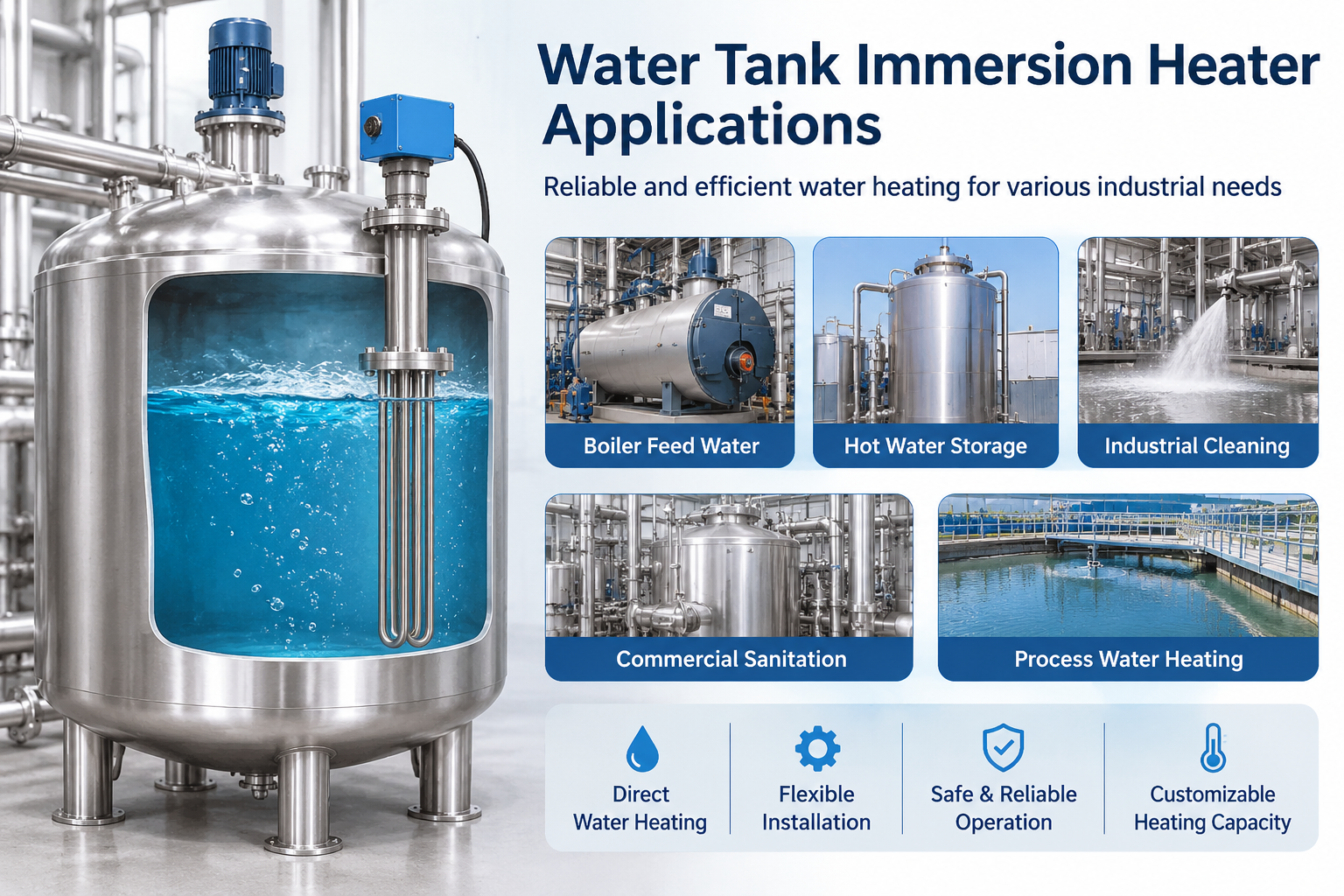
Immersion Heater Applications-Industrial Water Heating
Water Tank Immersion Heater Applications
Water tank immersion heater applications include industrial hot water storage, process water heating, boiler-related water systems, equipment cleaning, washing and rinsing tanks, and commercial or industrial sanitation. An immersion heater for a water tank is installed directly in the water to heat it or maintain the required temperature according to the process requirements.
In industrial water heating systems, screw plug and flanged immersion heaters are common installation configurations. The suitable option depends on the tank connection, water volume, required heating capacity, target temperature, heat-up time, and available installation space. The heater configuration should also allow sufficient liquid circulation around the heating elements.
Key Factors When Selecting a Water Tank Immersion Heater
When sourcing an immersion heater for a water tank, consider the following requirements:
- Tank Capacity and Dimensions: Water volume, tank shape, and available installation space help determine the required heating capacity and immersion length.
- Heating Requirements: Initial water temperature, target temperature, required heat-up time, and expected heat loss affect the heater power calculation.
- Installation Configuration: Screw plug or flanged connections should match the tank opening, mounting position, and operating conditions.
- Water Quality and Sheath Material: Water hardness, mineral content, chloride levels, pH, and treatment chemicals can affect scaling, corrosion, and material compatibility. The sheath material should be selected according to the actual water conditions.
- Watt Density and Heat Transfer: Heating surface watt density should be appropriate for the water quality and operating conditions. Hard water and mineral deposits can form insulating scale on the heating elements, increasing sheath temperature and potentially shortening heater service life.
- Electrical Specifications: Available supply voltage, single-phase or three-phase power, and required heating wattage should be confirmed before selecting a configuration.
- Temperature Control and Protection: Suitable thermostats, temperature sensors, external controllers, and application-specific protection devices may be considered according to the selected heater design.
For help evaluating sheath materials under different water conditions, see our Immersion Heater Materials & Sheath Selection Guide. You can also explore our industrial immersion heater range for available configurations and sourcing options.
Request a Water Tank Immersion Heater Quotation
To help identify suitable sourcing options, please provide your tank capacity and dimensions, initial and target water temperatures, required heating time, supply voltage, installation configuration, and water quality information if available. Please also specify the required quantity and attach a tank or installation drawing when possible.
EaseWise helps buyers coordinate standard and customized immersion heater sourcing through qualified manufacturing partners according to their water heating requirements.
Immersion Heater Applications-Oil & Gas Processing
Oil & Gas Immersion Heater Applications
Oil and gas immersion heater applications include crude oil storage tank heating, fuel oil heating, process liquid temperature maintenance, and selected liquid heating processes in industrial tanks and vessels. Immersion heaters transfer heat directly into the liquid to help achieve or maintain the required temperature during storage, processing, and fluid handling.
For heavy oils, fuel oils, and other high-viscosity fluids, controlled heating can help reduce viscosity and improve pumping and transfer conditions. In applications involving wax formation or low-temperature flow problems, the required heating temperature and heat distribution should be evaluated according to the fluid composition, operating conditions, and process requirements. The appropriate heating arrangement depends on whether the objective is to heat the entire tank contents, maintain liquid temperature, or support a specific process operation.
Key Factors When Selecting an Oil & Gas Immersion Heater
When sourcing an immersion heater for oil and gas liquid heating applications, consider the following factors:
- Fluid Properties: Identify the liquid being heated, such as crude oil, fuel oil, diesel, or other process fluids. Viscosity, chemical composition, density, and material compatibility all affect heater selection.
- Operating Temperature: Specify the initial temperature, target temperature, required temperature maintenance range, and any temperature limitations of the fluid or process.
- Heating Capacity: Determine the required power according to tank volume, fluid properties, initial temperature, desired heat-up time, and estimated heat loss. Tank insulation and operating conditions should also be considered.
- Sheath Material: Select suitable heating element sheath materials according to fluid composition, chemical compatibility, operating temperature, and corrosion conditions. Material suitability should be evaluated for the actual process fluid.
- Surface Watt Density: Evaluate the appropriate watt density according to fluid viscosity, circulation conditions, and allowable heating surface temperature. Proper selection helps reduce the risk of localized overheating and excessive surface temperatures.
- Installation Configuration: Confirm whether a screw plug or flanged immersion heater is suitable for the tank connection, mounting position, immersion length, and available installation space.
- Temperature Monitoring and Safety: Consider temperature sensors, thermostats, overtemperature protection, and other required protection arrangements according to the process and equipment design.
- Hazardous-Area Requirements: Confirm the site classification, applicable electrical protection standards, and certification requirements. Heater assemblies and associated electrical components must be suitable for the specific installation environment.
Immersion Heater Requirements for Hazardous Areas
Oil and gas facilities may contain flammable gases or vapors, making hazardous-area classification an important part of heater selection. Depending on the installation location, requirements may involve ATEX, IECEx, NEC, or other applicable regional and national standards. The required certification and protection method must be confirmed for the complete heater assembly, electrical connections, control equipment, and installation conditions before ordering.
EaseWise helps industrial buyers source immersion heaters through qualified manufacturing partners according to fluid properties, tank dimensions, heating capacity, sheath material, and installation requirements. For projects involving hazardous areas, please provide the applicable area classification and certification requirements so that the available configurations can be evaluated.
Explore our industrial immersion heater range for available configurations, or request a quotation with your application details.
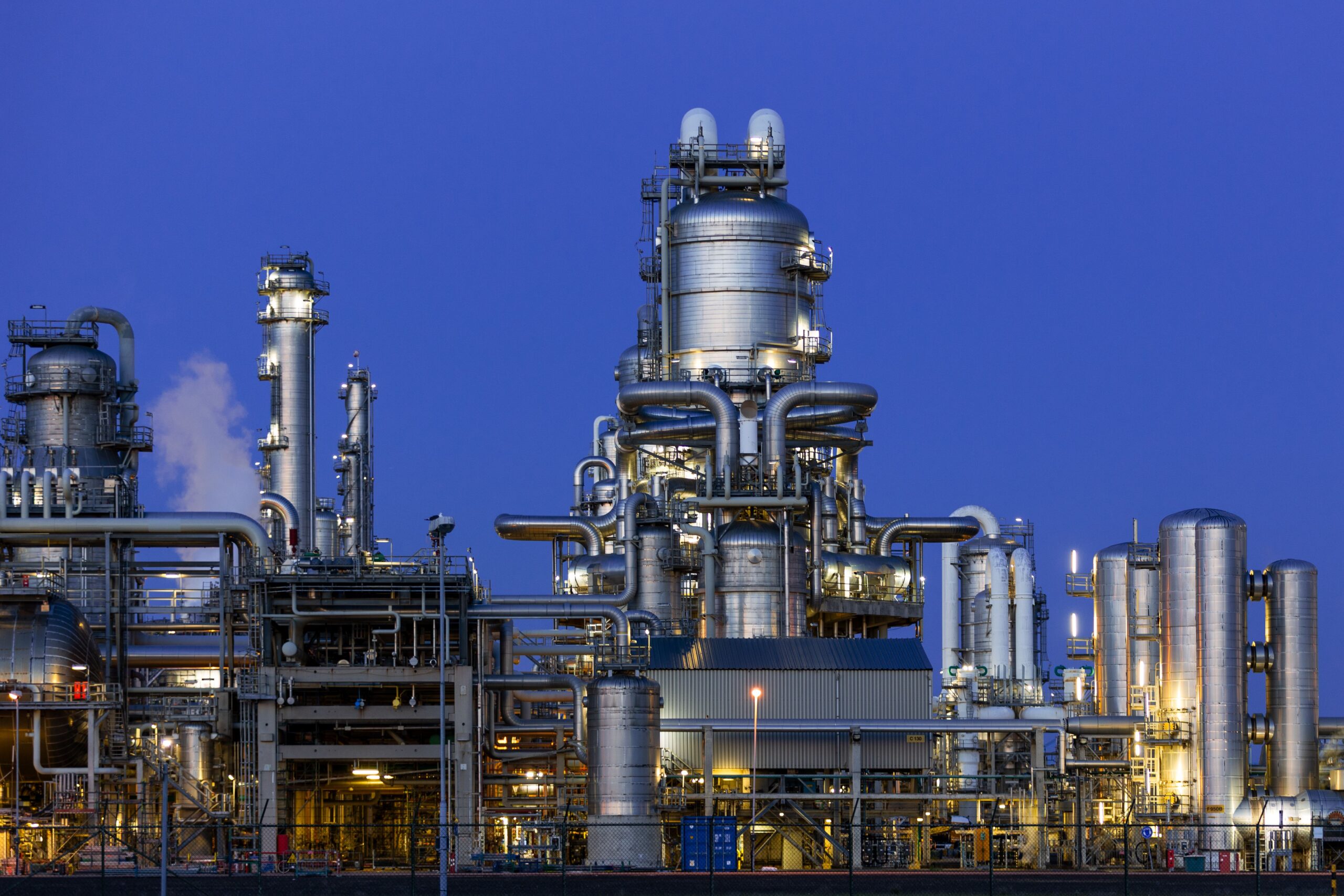

Food & Beverage Immersion Heater Applications
Food and beverage immersion heater applications include heating cooking oils, edible oils, syrups, liquid ingredients, and other compatible process fluids. Industrial immersion heaters can also be used in suitable cleaning and rinsing tanks within food processing facilities. Depending on the equipment design, direct immersion heating can help maintain required liquid temperatures during processing, storage, and handling.
For temperature-sensitive or high-viscosity liquids such as chocolate, syrups, and edible oils, heater selection requires careful consideration of the liquid properties and process conditions. Heating element configuration, surface watt density, sheath material, temperature distribution, and control arrangements should be evaluated according to the required heating capacity, target temperature, tank design, and available liquid circulation.
Key Factors When Selecting a Food & Beverage Immersion Heater
When sourcing an immersion heater for food and beverage processing, consider the following requirements:
- Product Characteristics: Identify the liquid being heated, including its viscosity, composition, thermal properties, and temperature sensitivity. Different products, such as cooking oils, chocolate, syrups, and liquid ingredients, may require different heating arrangements.
- Heating Requirements: Specify the initial temperature, target temperature, required heat-up time, and temperature maintenance range according to the production process.
- Heating Element Configuration: Select a suitable installation type and element arrangement according to the process tank or vessel, available mounting space, and liquid circulation conditions.
- Sheath Material: Confirm material compatibility with the process medium, cleaning chemicals where applicable, and actual operating conditions. Food-contact suitability must be verified for the specific material and complete heater construction.
- Surface Watt Density: Consider an appropriate watt density according to the liquid properties and operating conditions. For viscous or temperature-sensitive products, excessive surface temperatures may contribute to localized overheating, product degradation, or deposits on the heating surface.
- Temperature Control: Consider suitable temperature sensors, thermostats, and controllers to monitor and regulate the heating process according to the required temperature range and process conditions.
- Hygiene and Cleaning Requirements: Where heater surfaces contact food products, confirm applicable food-contact material requirements, surface finish, cleaning procedures, and relevant regulations. For cleaning and rinsing tanks, consider compatibility with the cleaning chemicals and operating temperatures.
Food Contact and Hygienic Design Considerations
For food and beverage applications, material compatibility and equipment construction should be evaluated according to the actual process. A stainless steel heating element should not automatically be assumed to meet food-contact, hygienic, or sanitary equipment requirements. Where direct food contact is involved, the applicable material documentation, surface condition, sealing arrangements, and cleaning requirements should be confirmed for the complete heater assembly.
For applications involving chocolate, syrups, and other high-viscosity products, the installation arrangement and heat distribution also require attention. Suitable liquid circulation or mixing may be necessary to support consistent heating, depending on the product and vessel design.
Request a Food & Beverage Immersion Heater Quotation
EaseWise helps buyers source immersion heaters for compatible food and beverage processing applications through qualified manufacturing partners. To discuss suitable sourcing options, please provide the liquid type, tank dimensions, initial and target temperatures, required heating time, voltage, heating power, installation method, and any food-contact or hygiene requirements.
If the heater will directly contact food products, please specify this when submitting your inquiry so that the applicable material and construction requirements can be reviewed. A tank drawing or equipment specification is also helpful.
Chemical Processing Immersion Heater Applications
Chemical processing immersion heater applications include heating chemical storage tanks, process vessels, chemical feed tanks, and industrial liquid processing systems. Immersion heaters can be used for compatible liquids such as alkaline solutions, selected acids, chemical mixtures, and other process fluids requiring controlled heating.
In chemical processing facilities, liquid temperature can affect viscosity, chemical reaction conditions, fluid transfer, and production processes. Immersion heater selection should therefore consider the chemical composition, concentration, operating temperature, and compatibility of the heating element sheath with the process medium.
Key Factors When Selecting Chemical Immersion Heaters
- Chemical Composition: Identify the chemical name, concentration, and composition of the liquid being heated. Different chemicals may have significantly different corrosion characteristics.
- Sheath Material Compatibility: Evaluate stainless steel, titanium, and other available sheath materials according to chemical concentration, temperature, and operating conditions. No single material is suitable for all chemical solutions.
- Heating Capacity: Determine the required wattage according to liquid volume, initial temperature, target temperature, heat-up time, and process heat losses.
- Surface Watt Density: Consider chemical stability, liquid circulation, and allowable heating surface temperature to help reduce localized overheating and unwanted deposits.
- Installation Configuration: Select a suitable screw plug or flanged configuration according to the tank connection, vessel design, and available installation space.
- Temperature Monitoring: Consider temperature sensors, thermostats, and external controllers according to the process temperature requirements.
For chemical applications, material compatibility should be confirmed for the actual chemical composition, concentration, and operating temperature. Where hazardous or flammable chemicals are involved, applicable electrical protection and installation requirements should also be evaluated.
EaseWise helps industrial buyers source suitable chemical immersion heater configurations through qualified manufacturing partners. Please provide the chemical name, concentration, tank dimensions, target temperature, voltage, heating capacity, and required quantity when requesting a quotation.
Industrial Cleaning & Rinsing Tank Immersion Heater Applications
Industrial cleaning immersion heater applications include parts washing systems, degreasing tanks, industrial rinsing tanks, metal cleaning processes, and equipment washing systems. Immersion heaters provide direct heating of compatible cleaning liquids to help maintain the temperatures required for industrial cleaning and surface preparation operations.
Heated cleaning solutions can support processes involving grease removal, oil cleaning, dirt removal, and surface preparation. Depending on the cleaning process, heating may be required for alkaline cleaning solutions, detergents, rinse water, or other compatible industrial cleaning fluids.
Key Factors When Selecting Cleaning Tank Immersion Heaters
- Cleaning Solution: Identify the cleaning liquid, detergent, chemical additives, and concentration to evaluate material compatibility.
- Tank Dimensions: Provide tank volume, length, width, depth, and available mounting positions to determine suitable heater dimensions and immersion length.
- Operating Temperature: Specify the initial liquid temperature, required cleaning temperature, and temperature maintenance requirements.
- Sheath Material: Select suitable sheath materials according to the cleaning chemicals, concentration, operating temperature, and corrosion conditions.
- Watt Density: Consider the cleaning liquid properties, circulation conditions, and potential deposits on the heating surface when determining suitable watt density.
- Installation and Maintenance: Evaluate heater positioning, accessibility, liquid level, and maintenance requirements within the cleaning tank.
For industrial washing and degreasing equipment, the heater should be positioned to allow adequate liquid circulation around the heating elements. The cleaning chemicals and operating conditions should also be considered when selecting the sheath material and heater construction.
EaseWise helps equipment buyers source immersion heaters for compatible industrial cleaning and rinsing applications through qualified manufacturing partners. When requesting a quotation, please provide the cleaning solution, tank dimensions, operating temperature, required heating power, voltage, and installation details.
Electroplating & Surface Treatment Immersion Heater Applications
Electroplating immersion heater applications include metal plating baths, anodizing tanks, metal finishing solutions, and other surface treatment processes requiring controlled liquid temperatures. Immersion heaters can be used to heat compatible process solutions in plating tanks and surface treatment equipment.
In electroplating and metal finishing operations, bath temperature can influence process conditions, coating quality, and production consistency. The required heater configuration depends on the chemical composition of the bath, operating temperature, tank dimensions, and material compatibility.
Key Factors When Selecting Electroplating Tank Immersion Heaters
- Plating Bath Composition: Identify the plating solution, chemical concentration, additives, and operating conditions to evaluate heater material compatibility.
- Corrosion Resistance: Select suitable sheath materials according to the specific plating chemicals, concentration, and bath temperature. Material selection should be confirmed for the actual solution.
- Bath Temperature: Specify the required operating temperature, initial liquid temperature, and temperature control range.
- Heating Capacity: Determine the required power according to tank volume, bath properties, heat-up time, and heat losses.
- Surface Watt Density: Consider the chemical solution, circulation conditions, and allowable surface temperature to reduce the risk of localized overheating and deposits.
- Installation Configuration: Evaluate screw plug, flanged, or other suitable installation arrangements according to the tank structure and available mounting positions.
- Temperature Control: Consider suitable sensors and controllers to maintain the required bath temperature during the surface treatment process.
Electroplating and anodizing solutions can have demanding corrosion conditions. Standard stainless steel construction should not automatically be assumed suitable for every plating bath. The complete heater construction, including the sheath, seals, connections, and other exposed materials, should be evaluated for the actual chemical environment.
EaseWise helps metal finishing and surface treatment equipment buyers source suitable immersion heater configurations through qualified manufacturing partners. Please provide the plating solution, chemical concentration, bath dimensions, operating temperature, voltage, and required quantity for quotation evaluation.
Heat Transfer Fluids & Industrial Oil Heating Applications
Heat transfer fluid immersion heater applications include thermal oil tanks, hydraulic oil reservoirs, lubrication oil systems, industrial fluid storage tanks, and process heating equipment. Immersion heaters can provide direct heating for compatible industrial oils and heat transfer fluids to help achieve or maintain required operating temperatures.
In industrial equipment, oil heating may be required to maintain suitable fluid viscosity, support circulation, improve pumping conditions, or maintain process temperatures. The appropriate heater configuration depends on the type of oil, viscosity, operating temperature, tank dimensions, and fluid movement around the heating elements.
Key Factors When Selecting Industrial Oil Immersion Heaters
- Oil Type and Properties: Identify the type of oil, including thermal oil, hydraulic oil, lubrication oil, or other process fluids. Viscosity and thermal properties affect heater selection.
- Operating Temperature: Specify the initial temperature, target temperature, and required temperature maintenance range.
- Heating Capacity: Calculate the required wattage according to oil volume, heat-up time, tank insulation, and expected heat losses.
- Sheath Material: Evaluate suitable sheath materials according to oil composition, operating temperature, and compatibility with any additives or contaminants.
- Surface Watt Density: Consider oil viscosity, circulation conditions, and allowable heating surface temperature to help prevent localized overheating and excessive thermal stress on the fluid.
- Installation Configuration: Select suitable screw plug or flanged immersion heaters according to tank connections, immersion length, and available installation space.
- Temperature Monitoring: Consider temperature sensors, thermostats, and external controllers according to the required operating conditions.
For high-viscosity oils or systems with limited natural circulation, heater positioning and heat transfer conditions are particularly important. The heating arrangement should provide adequate liquid movement around the elements and avoid excessive surface temperatures.
EaseWise helps industrial equipment buyers source immersion heaters for compatible oil and heat transfer fluid applications through qualified manufacturing partners. Please provide the oil type, viscosity if available, tank dimensions, required operating temperature, voltage, and heating capacity when requesting a quotation.
Tank Freeze Protection & Liquid Temperature Maintenance Applications
Immersion heaters for tank freeze protection can be used in selected industrial water storage tanks, wastewater tanks, outdoor process liquid tanks, and other liquid storage systems exposed to low ambient temperatures. They can help maintain liquid temperatures above specified minimum levels or support freeze protection where a suitable heating arrangement is provided.
In cold environments, stored liquids may cool down due to low ambient temperatures, wind exposure, insufficient insulation, and prolonged outdoor operation. An appropriately selected immersion heater can provide supplementary heat to compensate for heat losses and maintain the required liquid temperature.
Key Factors When Selecting Tank Freeze Protection Heaters
- Liquid Type: Identify the stored liquid, such as water, wastewater, or another compatible process fluid, including any additives or antifreeze mixtures.
- Minimum Temperature Requirement: Specify the minimum temperature to be maintained and the lowest expected ambient temperature.
- Tank Capacity and Insulation: Provide tank volume, dimensions, insulation details, and outdoor exposure conditions to help estimate heat losses.
- Heating Capacity: Determine the required power according to tank heat loss, liquid volume, temperature difference, and expected operating conditions.
- Installation Configuration: Evaluate suitable screw plug or flanged installation arrangements, immersion length, liquid level, and tank structure.
- Temperature Monitoring and Protection: Consider thermostats, temperature sensors, low-liquid-level protection, and overtemperature protection where supported by the selected design.
Freeze protection requirements should be distinguished from heating a tank from a low initial temperature to a higher process temperature. The required heating capacity depends on the tank's heat loss, insulation, ambient conditions, liquid properties, and temperature maintenance target. Suitable liquid circulation and heater placement should also be considered to reduce the risk of localized freezing or overheating.
EaseWise helps industrial buyers source suitable immersion heater configurations for compatible tank heating and liquid temperature maintenance applications through qualified manufacturing partners. Please provide the liquid type, tank dimensions, insulation details, minimum required liquid temperature, lowest ambient temperature, voltage, and required quantity.
Industrial Immersion Heater Technical Specifications
EaseWise helps industrial buyers source industrial immersion heaters with different power ratings, voltage options, sheath materials, and installation configurations for liquid heating in industrial tanks and process vessels. The following table provides general reference specifications for commonly sourced standard and customized configurations. Actual specifications depend on the selected heater design, liquid properties, tank dimensions, and operating requirements.| Technical Parameter | General Reference Specification |
|---|---|
| Power Rating | 1–100 kW reference range; actual ratings depend on heater configuration and application requirements |
| Voltage | 220V / 380V / customized voltage options, subject to model availability |
| Operating Temperature | Selected according to liquid properties, sheath material, heater design, and application requirements |
| Sheath Material | SUS304 / SUS316 / Copper / Titanium; availability and suitability depend on the selected configuration and liquid compatibility |
| Insulation | Magnesium oxide (MgO) in applicable heating element designs |
| Heating Element | NiCr 80/20 resistance wire in applicable configurations |
| Installation Configuration | Screw plug / Flanged / Over-the-side |
| Thread / Flange Size | Reference screw plug sizes: 1¼” / 1½” / 2″; reference flange sizes: DN40 / DN50. Other dimensions may be available depending on the selected design. |
| Safety Options | Overheat protection and low-liquid-level protection may be available depending on heater design and configuration. |
Explore Our Industrial Immersion Heater Solutions
EaseWise helps industrial buyers source immersion heaters for water, oil, chemical solutions, food and beverage fluids, and other compatible liquid heating applications. Our available sourcing options include different installation configurations, sheath materials, heating capacities, and dimensions to suit industrial tanks and process vessels.
Screw Plug Immersion Heater
Screw plug immersion heaters are suitable for liquid heating tanks and process vessels with compatible threaded connections. They are commonly considered for water heating, oil tanks, and industrial process applications. Selection depends on screw plug size, heating length, required power, liquid properties, and sheath material.
Flanged Immersion Heater
Flanged immersion heaters are suitable for compatible industrial tanks, process vessels, and liquid heating systems with flange-mounted connections. They can be considered for applications requiring specific heating capacities, immersion lengths, and mounting dimensions. The flange specification and heater configuration should match the vessel design and operating conditions.
For tanks where a permanently mounted screw plug or flanged connection is not suitable, over-the-side immersion heaters may also be considered, depending on the tank design and application requirements. Contact EaseWise to discuss available configurations.
Explore the Full Immersion Heater Product Range
Need help estimating the required heating capacity for an industrial tank or process vessel? Read our Immersion Heater Sizing Guide to understand heating energy, wattage, and kW requirements.
Industrial Immersion Heater Installation Considerations
Selecting an industrial immersion heater involves more than choosing the required power rating. The installation configuration, liquid characteristics, electrical supply, and operating conditions should also be considered before ordering.
- Tank Connection and Mounting Position: Confirm whether the tank uses a threaded connection, flanged mounting, or requires an over-the-side heater. Check the available installation space and mounting dimensions.
- Immersion Length and Liquid Level: Confirm the required heating element length and normal operating liquid level. The heating section must be positioned according to the heater design and specified operating conditions.
- Liquid Compatibility: Check the liquid composition, concentration, viscosity, and corrosion characteristics before selecting the sheath material.
- Heating Capacity and Surface Watt Density: Match the heater power and surface watt density to the liquid properties, required heat-up time, and operating temperature to help avoid excessive element surface temperatures.
- Electrical Connection: Confirm the available voltage, phase, current requirements, terminal arrangement, and electrical protection provisions before installation.
- Temperature Monitoring and Protection: Consider suitable temperature sensors, thermostats, controllers, and low-liquid-level or overheat protection where required by the application and supported by the selected design.
- Maintenance Access: Allow sufficient space for inspection, cleaning, and heater replacement where applicable. Maintenance requirements depend on the liquid, tank design, and installation configuration.
Before installation or maintenance, isolate the electrical supply and follow the heater manufacturer's instructions and applicable site safety requirements. Confirm that the heater is operated under its specified liquid-level and temperature conditions.
Frequently Asked Questions About Industrial Immersion Heaters
1. How do I choose the right industrial immersion heater?
Start by identifying the liquid being heated, tank dimensions, initial and target temperatures, required heating time, available voltage, and installation configuration. These details help determine the suitable heater power, sheath material, immersion length, and mounting arrangement.
2. What is the difference between screw plug and flanged immersion heaters?
Screw plug immersion heaters use a threaded connection for installation in compatible tank openings. Flanged immersion heaters use a flange-mounted connection and are commonly considered for larger tanks and process vessels with matching flange arrangements. The appropriate type depends on the vessel design, heating requirements, and maintenance conditions.
3. Which sheath material is suitable for water, oil, or chemical heating?
Sheath material selection depends on the liquid composition, concentration, operating temperature, and corrosion conditions. Stainless steel, copper, and titanium may be considered for different applications, but no single material is suitable for every liquid. Provide the fluid details for a more appropriate material assessment.
4. Can industrial immersion heaters be customized?
Different heater configurations may be sourced with specified power ratings, voltages, immersion lengths, connection dimensions, and sheath materials. EaseWise coordinates customized sourcing requirements with qualified manufacturing partners according to the application and available product designs.
5. Can an immersion heater be used for high-viscosity liquids?
Immersion heaters may be suitable for certain high-viscosity liquids, including heavy oils and syrups. However, heater selection requires careful consideration of liquid viscosity, heat transfer conditions, surface watt density, and the required operating temperature. The specific application should be evaluated before selecting a configuration.
6. What information is needed to request an immersion heater quotation?
To help identify suitable products, provide the following information:
- Liquid type and composition
- Tank or vessel dimensions and capacity
- Initial temperature and target temperature
- Required heating time and heating power, if known
- Available voltage and phase
- Installation type and connection dimensions
- Preferred sheath material and order quantity
- Drawings, photos, or existing heater specifications, if available
If some technical details are not available, you can send the tank photos or existing heater information first. EaseWise can help coordinate the product sourcing requirements with suitable manufacturing partners.
Request a Quote
Contact us for more details. We reply within 12 hours.
Amy: +86 18883188154 | amy-easewise@tzheater.com
Hanna: +86 17351636811 | hanna-easewise@tzheater.com
Learn More From
Frequently Asked Questions
Immersion heaters are used to directly heat water, oil, chemicals, and other liquids in industrial tanks, boilers, process vessels, and cleaning systems. Common applications include water heating, chemical processing, oil & gas, and food & beverage production.
Screw plug immersion heaters thread directly into a tank opening via a standard pipe thread — ideal for smaller tanks and lower power requirements. Flanged immersion heaters bolt onto a matching flange on the tank wall, suited for larger tanks and higher power ratings (3kW–100kW).
304 SS for general water and mild chemical heating. 316 SS for food-grade and corrosive environments. Copper for clean water with excellent thermal conductivity. Titanium for highly corrosive acids, seawater, and chemical processing.
Yes. We customize wattage, voltage, sheath material, flange size, thread diameter, tube length, and safety features to match your tank dimensions and process requirements. Send your specs for a quote.