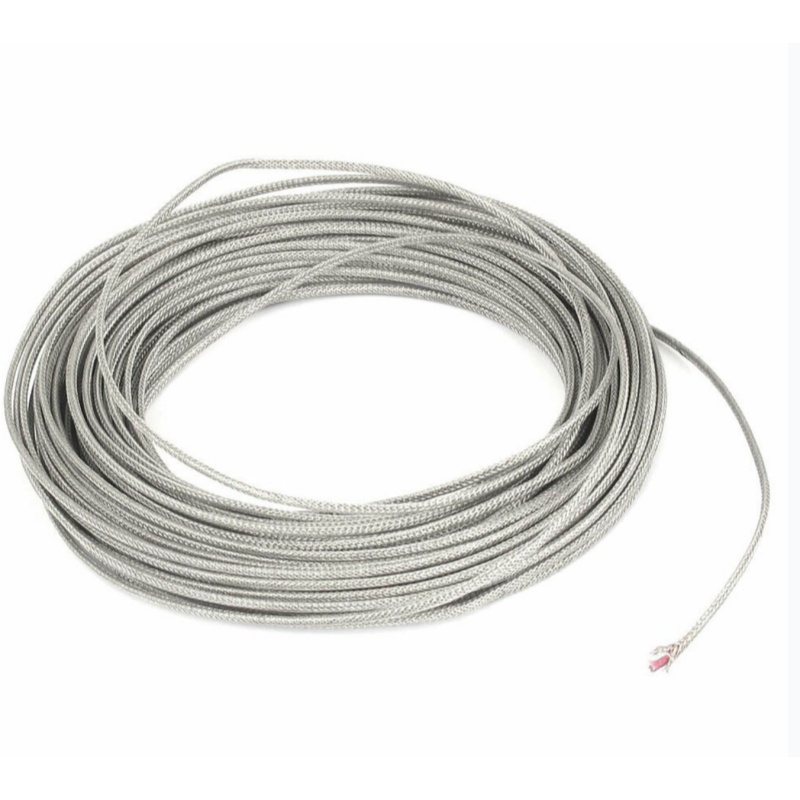
High-Temperature Thermocouple Extension & Compensating Cable

High-Temperature Thermocouple Extension & Compensating Cable

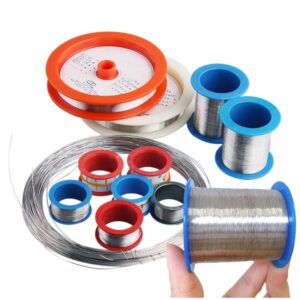
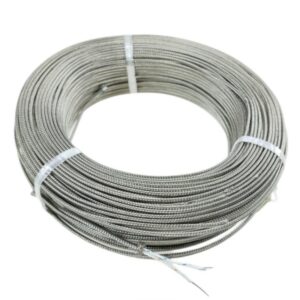
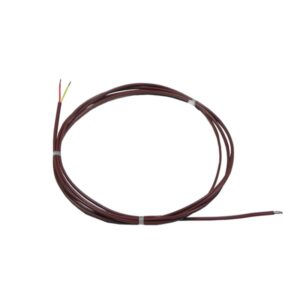
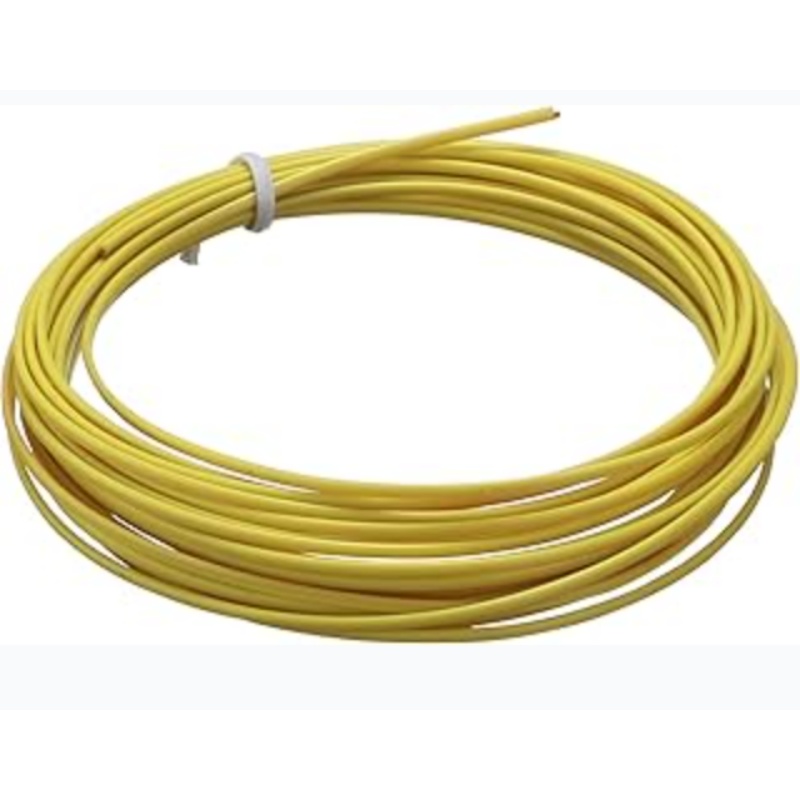
High-Temperature Thermocouple Extension & Compensating Cable is designed to transmit thermoelectric signals from thermocouple sensors installed near furnaces, ovens, kilns, and other high-temperature equipment. It connects thermocouples to temperature controllers, recorders, and transmitters while maintaining the required thermoelectric characteristics for reliable temperature measurement. Extension Grade (-X) and Compensating Grade (-C) options are available for K, N, E, J, T, S, R, and B thermocouple types. High-temperature insulation, shielding, conductor, and custom length options are available for industrial applications.

Thermocouple Cable Features

  • Wide thermocouple compatibility: K, N, E, J, T, S, R, and B types are available.
  • High-temperature insulation: Silicone rubber, PTFE/FEP/PFA, fiberglass braid, and ceramic fiber options are available.
  • Shielding options: Aluminum foil, tinned-copper braid, and stainless-steel braid help reduce electrical interference.
  • Flexible conductor options: Solid and stranded conductor constructions are available.
  • IEC 60584-3 compatible: Cable identification and thermoelectric characteristics can be supplied according to applicable requirements.
  • Custom lengths: Available by roll or cut to the required length for OEM applications.

Extension Grade vs. Compensating Grade

Cable Grade Description Recommended Use
Extension Grade (-X) Uses conductor materials corresponding to the thermocouple type. Near-sensor routing and areas where the connection cable is exposed to elevated temperatures.
Compensating Grade (-C) Uses alternative alloys with matching thermoelectric characteristics within a specified temperature range. Cost-effective signal extension in suitable lower-temperature areas.

Compensating-C cable should only be used within its specified temperature range. For cable sections exposed to elevated ambient temperatures near the thermocouple head, use a suitable Extension-X cable or another cable construction rated for the actual conditions.

Supported Thermocouple Types

For help comparing K, N, E, J, T, S, R, and B thermocouple options, see our thermocouple selection guide.

  • K-Type: KX Extension / KC Compensating
  • N-Type: NX Extension / NC Compensating
  • E-Type: EX Extension
  • J-Type: JX Extension
  • T-Type: TX Extension
  • S-Type: Compensating cable options available according to specification
  • R-Type: Compensating cable options available according to specification
  • B-Type: BC Compensating

Note: Cable grade and designation can vary by thermocouple type and applicable standard. Confirm the thermocouple type, cable grade, and required temperature range when ordering.

Construction Options

Conductor

  • Solid core: Suitable for fixed wiring and standard signal transmission.
  • Stranded flexible core: Suitable for applications requiring easier installation or repeated bending. Common constructions include 7/0.2 mm and 7/0.3 mm.

High-Temperature Insulation & Sheath Material

The temperature ranges below refer to typical continuous service temperatures for the insulation material. They do not represent the maximum measuring temperature of the connected thermocouple.

Material Continuous Temperature Features
Silicone Rubber -40 to +180°C Soft, flexible, and suitable for bending applications.
PTFE / FEP / PFA -60 to +260°C Heat-resistant, moisture-resistant, and suitable for chemical environments.
Fiberglass Braided -40 to +480°C Designed for dry high-temperature furnace environments.
High-Temperature Ceramic Fiber -40 to +700°C For special high-temperature conditions and custom configurations.

Shield Options

  • Unshielded: Standard option for general installations.
  • Aluminum foil shield: Provides additional protection against electrical interference.
  • Tinned-copper braided shield: Suitable for industrial environments with stronger electromagnetic interference.
  • Stainless-steel braided shield: Adds mechanical protection in demanding industrial and furnace environments.

Standard Thermocouple Cable Specifications

Thermocouple Type Cable Grade High-Temperature Insulation Shield Option
K-Type KX / KC Silicone / PTFE / Fiberglass / Ceramic Fiber Unshielded / Foil / Cu Braid / SS Braid
N-Type NX / NC Silicone / PTFE / Fiberglass / Ceramic Fiber Unshielded / Foil / Cu Braid / SS Braid
E-Type EX Silicone / PTFE / Fiberglass Unshielded / Foil / Cu Braid / SS Braid
J-Type JX Silicone / PTFE / Fiberglass Unshielded / Foil / Cu Braid / SS Braid
T-Type TX Silicone / PTFE / Fiberglass Unshielded / Foil / Cu Braid / SS Braid
S-Type Compensating options PTFE / Fiberglass Unshielded / Foil / Cu Braid
R-Type Compensating options PTFE / Fiberglass Unshielded / Foil / Cu Braid
B-Type BC Compensating PTFE / Fiberglass Unshielded / Foil / Cu Braid

Tolerance Grade

Thermocouple extension and compensating cables can be supplied according to the applicable requirements of IEC 60584-3, which specifies identification and manufacturing tolerances for these cables.

  • Class 1: Tighter thermoelectric tolerance for applications requiring improved measurement accuracy.
  • Class 2: Standard tolerance for general industrial temperature measurement.

Actual cable tolerance depends on thermocouple type, cable grade, temperature range, and applicable specification. Confirm the required tolerance class when ordering.

Thermocouple Cable Selection

Working Condition Recommended Cable
Normal ambient temperature Compensating-C or suitable extension cable
Near furnace or hot equipment Extension-X with high-temperature insulation
Strong electromagnetic interference Tinned-copper or stainless-steel braided shield
Dry high-temperature furnace area Fiberglass braided or ceramic-fiber construction
Corrosive or humid environment PTFE / FEP / PFA insulation and sheath
Frequent bending Stranded flexible conductor with suitable insulation

Thermocouple Cable Applications

  • Industrial furnaces and heat-treatment ovens
  • Ceramic and glass kilns
  • Metallurgy and high-temperature processing
  • Ovens and thermal processing machinery
  • Glass manufacturing equipment
  • High-temperature near-sensor signal transmission
  • Thermocouple temperature control systems
  • Industrial automation temperature monitoring

Installation Notice

  1. Match the cable type: Select the cable grade and thermocouple index according to the connected sensor.
  2. Observe polarity: Keep positive and negative conductors correctly matched during wiring.
  3. Ground the shield correctly: For shielded cable, single-end grounding can help reduce ground-loop noise.
  4. Protect fiberglass cable: Fiberglass braided cable is intended for dry high-temperature environments and should not be directly immersed in water, oil, or corrosive liquid.
  5. Use Extension-X near hot zones: Compensating-C cable should only be used within its specified temperature range and should not be installed close to the thermocouple head when the local ambient temperature exceeds its rating.

Related Thermocouple Products

Industrial Thermocouples

Bare Thermocouple Wire

Thermocouple Wire & Extension Cable

Thermocouple Applications

Sheathed Thermocouple

Request Thermocouple Cable Support

For OEM or replacement requirements, please provide the thermocouple type, cable grade, conductor construction, insulation material, shielding option, required length, tolerance class, and working temperature. Drawings, photos, cable samples, and existing specifications are welcome.

Amy – Sales

Email:
Amy-Easewise@tzheater.com

WhatsApp:
+86 188 8318 8154


Hanna – Sales

Email:
Hanna-Easewise@tzheater.com

WhatsApp:
+86 173 5163 6811

High-temperature thermocouple extension and compensating cables are available in custom grades, insulation, shielding, conductor construction, and lengths for OEM and industrial temperature measurement applications.

评价

目前还没有评价

成为第一个“High-Temperature Thermocouple Extension & Compensating Cable” 的评价者

您的邮箱地址不会被公开。 必填项已用 * 标注