
Thermocouple Wire & Extension Cable
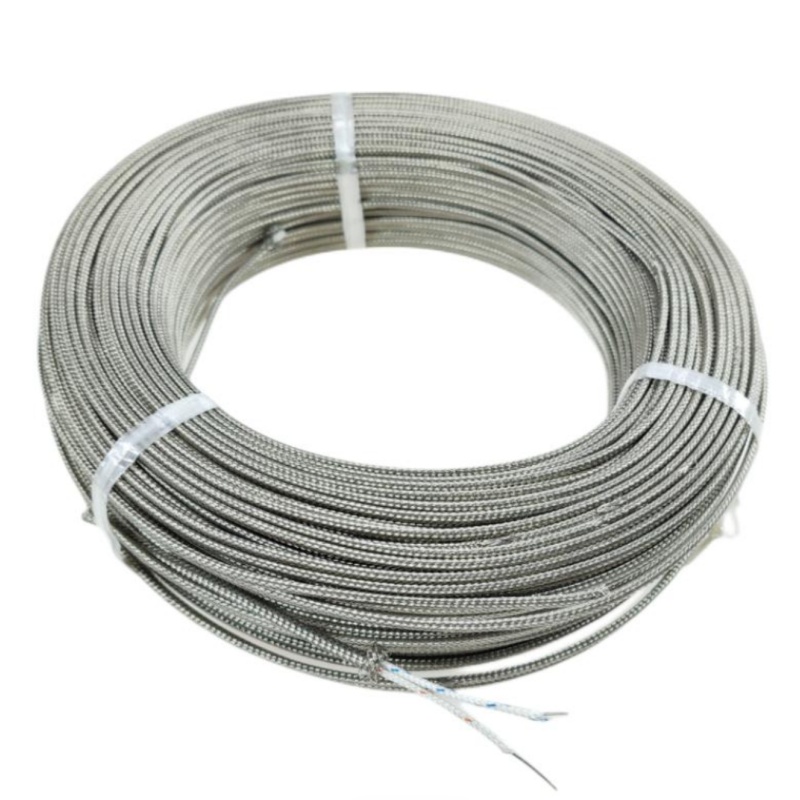
Choose the cable according to the thermocouple type, extension or compensating grade, ambient temperature, insulation material, shielding requirements, and installation conditions.
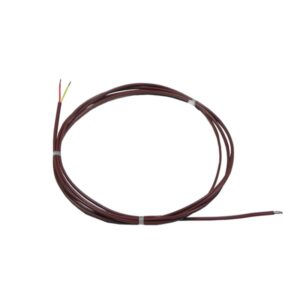
Thermocouple Wire Extension & Compensating Cable
Thermocouple extension and compensating cables transmit the thermoelectric signal between a thermocouple and the connected instrument while maintaining the required thermoelectric characteristics.
- Extension Grade (-X): Uses conductor materials corresponding to the thermocouple type.
- Compensating Grade (-C): Uses alternative alloys with matching thermoelectric characteristics within the specified temperature range.
Thermocouple Cable Features
- Multiple thermocouple types: K, N, E, J, T, S, R, and B options are available.
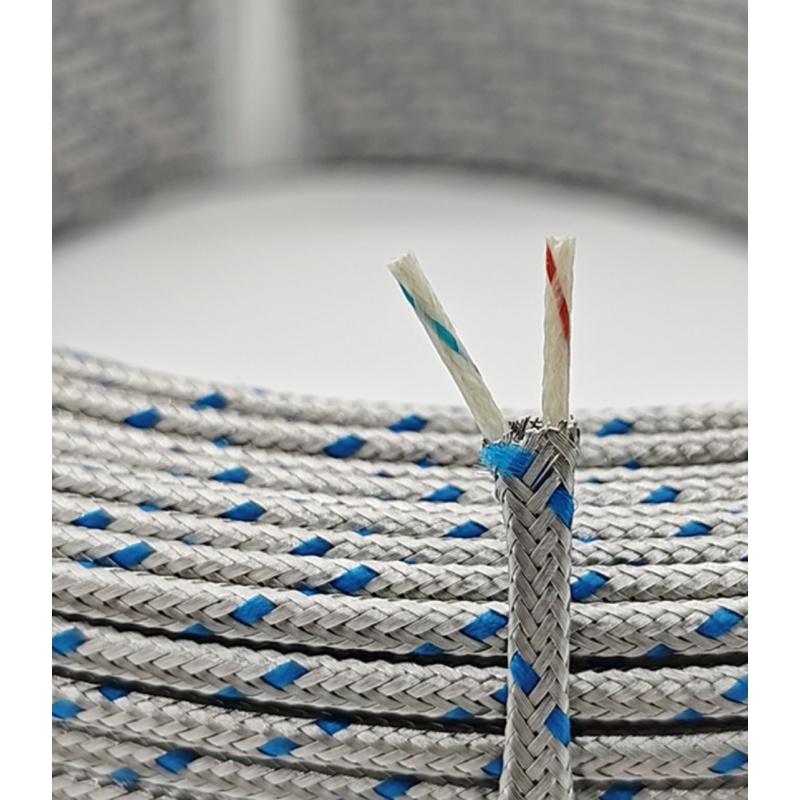
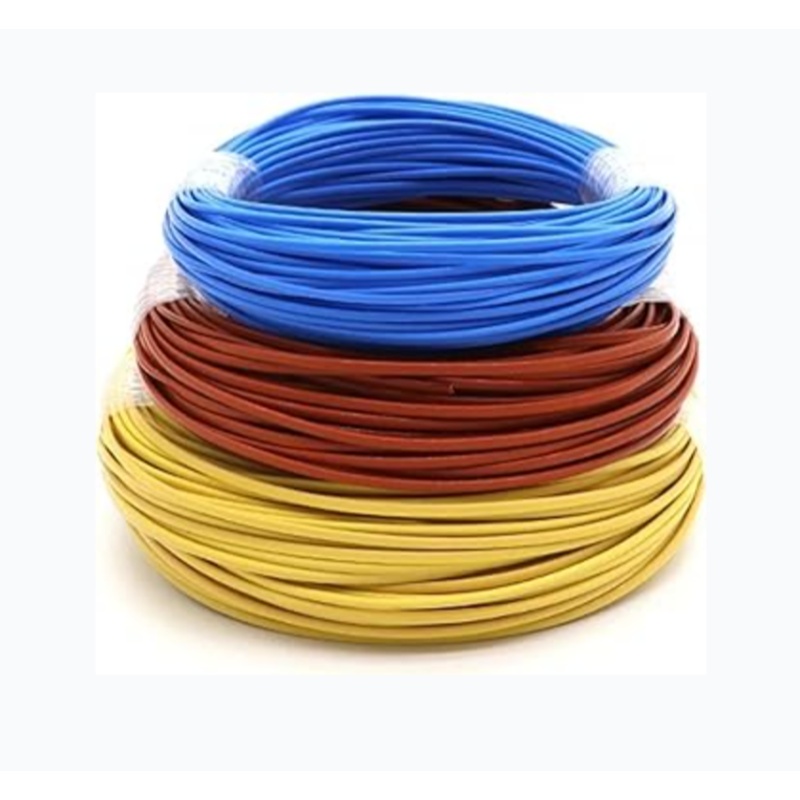
- Flexible insulation: PVC, silicone rubber, PTFE/FEP, and fiberglass options are available.
- Shielded options: Aluminum foil or tinned-copper braid can be supplied for applications requiring additional electrical noise protection.
- Solid or stranded conductors: Select the construction according to installation flexibility and mechanical requirements.
- IEC 60584-3 specifications: Cable identification and tolerance requirements can be supplied according to applicable specifications.
- Custom supply: Available by roll, meter, or custom cut length.
Applications
Thermocouple extension and compensating cables are commonly used for:
- Industrial furnaces and kilns
- Chemical and petrochemical equipment
- Metallurgy and power systems
- Laboratory temperature equipment
- Process automation and temperature monitoring
- Industrial heating and temperature control systems
Thermocouple Types & Cable Designations
For help comparing K, J, T, E, N, S, R, and B thermocouple options, see our Thermocouple Types Selection Guide.
For overall thermocouple selection, including thermocouple type, cable configuration, and application requirements, see our Thermocouple Selection Guide.
| Thermocouple Type | Common Cable Designation | Common Insulation | Shield Options |
|---|---|---|---|
| K-Type | KX / KC | PVC / Silicone / PTFE / Fiberglass | Unshielded / Foil / Copper Braid |
| N-Type | NX / NC | PVC / Silicone / PTFE / Fiberglass | Unshielded / Foil / Copper Braid |
| E-Type | EX | PVC / Silicone / PTFE / Fiberglass | Unshielded / Foil / Copper Braid |
| J-Type | JX | PVC / Silicone / PTFE / Fiberglass | Unshielded / Foil / Copper Braid |
| T-Type | TX | PVC / Silicone / PTFE / Fiberglass | Unshielded / Foil / Copper Braid |
| S-Type | SC | PVC / PTFE / Fiberglass | Unshielded / Foil / Copper Braid |
| R-Type | RC | PVC / PTFE / Fiberglass | Unshielded / Foil / Copper Braid |
| B-Type | BC | PVC / PTFE / Fiberglass | Unshielded / Foil / Copper Braid |
Note: Cable designations and available constructions may vary according to the applicable standard, thermocouple type, and manufacturer specification.
Insulation Options
| Material | Typical Service Temperature | Main Advantage |
|---|---|---|
| PVC | -20 to +105°C | Economical for general wiring |
| Silicone Rubber | -40 to +180°C | Flexible and suitable for elevated ambient temperatures |
| PTFE / FEP | -60 to +205°C | Chemical and moisture resistance |
| Fiberglass Braided | -40 to +400°C | Suitable for dry high-temperature environments |
Note: The temperatures above refer to the typical service range of the insulation system, not the measuring temperature range of the connected thermocouple. Actual cable limits depend on conductor, insulation construction, ambient conditions, and installation.
Conductor & Shield Options
- Solid conductor: Suitable for fixed installations.
- Stranded conductor: Provides greater flexibility for moving or frequently handled wiring. Common constructions include 7/0.2 mm and 7/0.3 mm.
- Unshielded: Suitable for general wiring environments.
- Aluminum foil shield: Provides additional protection against electrical interference.
- Tinned-copper braided shield: Suitable for applications with stronger electromagnetic interference.
Selection & Installation
- Select the cable according to the exact thermocouple type and required cable grade.
- Match the positive and negative polarity correctly during installation.
- Select insulation according to ambient temperature, moisture, chemicals, and mechanical conditions.
- For cable sections installed near high-temperature equipment, select an Extension-X cable and insulation construction suitable for the actual ambient temperature.
- Compensating-C cable should be installed only within its specified temperature range.
- Use suitable shielding and grounding practices when electrical interference is a concern.
- Fiberglass braided cable is generally intended for dry high-temperature environments and should be protected from direct water and oil exposure.
Custom Cable Supply
- Cable type: K, N, E, J, T, S, R, or B
- Cable grade: Extension-X or applicable compensating grade
- Conductor: Solid or stranded
- Insulation: PVC, silicone, PTFE/FEP, fiberglass, or other specified construction
- Shielding: Unshielded, foil, or copper braid
- Length: Standard roll or custom cut length
Thermocouple Cable Standards
Thermocouple extension and compensating cables can be supplied according to applicable identification and tolerance requirements. See the official IEC 60584-3:2021 standard for thermocouple extension and compensating cables for reference.
Related Thermocouple Products
- Industrial Thermocouples
- Sheathed Thermocouple
- Bare Thermocouple Wire
- Insulated Thermocouple Wire
- High-Temperature Thermocouple Extension & Compensating Cable
- Wear-Resistant Assembly Thermocouple
- Platinum-Rhodium Assembly Thermocouple
- Waterproof Anti-Corrosion Assembly Thermocouple
- Thermocouple Applications
Request OEM Thermocouple Cable Support
For OEM or replacement requirements, please provide the thermocouple type, cable grade, conductor construction, insulation material, shielding option, required length, and application environment. Drawings, photos, and existing cable samples are welcome.
Amy – Sales
Email: amy-easewise@tzheater.com
WhatsApp: +86 188 8318 8154
Hanna – Sales
Email: hanna-easewise@tzheater.com
WhatsApp: +86 173 5163 6811

评价
目前还没有评价