
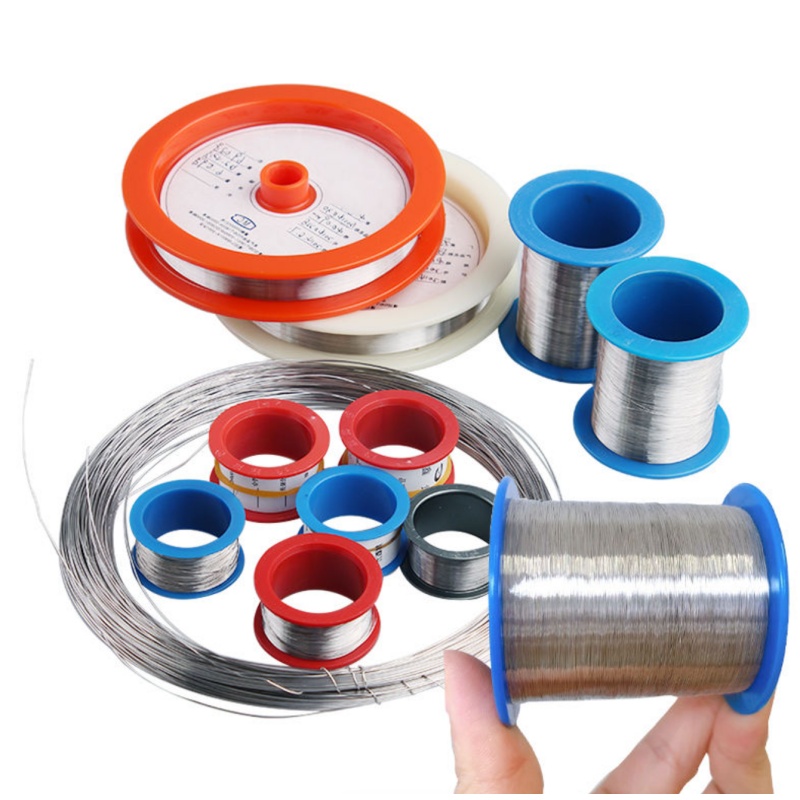
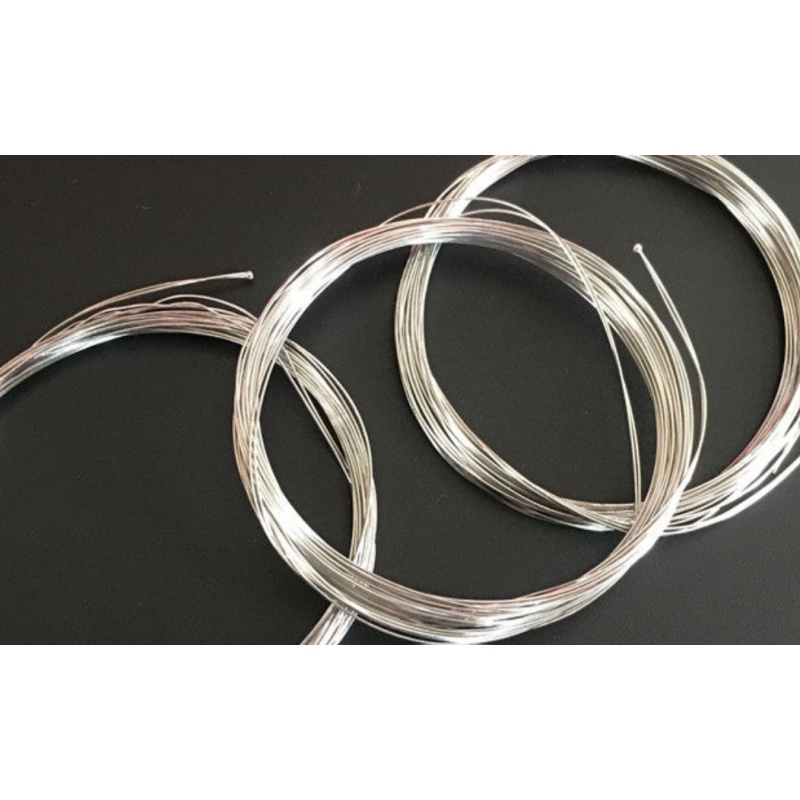
Bare Thermocouple Wire
Choose the wire according to the thermocouple type, temperature range, atmosphere, wire diameter, tolerance grade, and required service life. Custom matched pairs, spool lengths, and cut lengths are available for OEM sensor manufacturing.
Bare Thermocouple Wire Features
- Full thermocouple range: K, N, E, J, T, S, R, and B thermocouple alloy pairs are available.
- Uninsulated construction: Bare positive and negative wires can be welded to form a measuring junction for custom sensor fabrication.
- Multiple diameters: Fine wires provide fast response, while larger diameters offer greater mechanical strength and service life.
- IEC 60584-1 specifications: Wire can be supplied according to applicable thermocouple reference functions and tolerance requirements.
- Flexible supply: Available by meter, spool, or custom cut length.
- Custom supply: Wire diameter, length, tolerance grade, matched-pair requirements, and quantity can be specified for OEM applications.
What Is Bare Thermocouple Wire?
Bare thermocouple wire consists of two dissimilar thermocouple alloy wires without an insulation layer. When the two conductors are joined at a measuring junction, a thermoelectric voltage is generated according to the temperature difference between the measuring junction and reference junction.
The wire can be used as the sensing element when manufacturing custom thermocouple probes. Ceramic beads, ceramic tubes, mica, or another suitable insulating structure can be added when electrical separation between the two conductors is required.
Main Applications
Bare thermocouple wire is commonly used for:
- Custom thermocouple sensor fabrication
- Laboratory temperature testing
- Furnace spot temperature measurement
- High-temperature research and development
- Vacuum and inert-gas equipment
- Special temperature probes
- Industrial temperature measurement systems
Supported Thermocouple Types
For help comparing K, J, T, E, N, S, R, and B thermocouple options, see our Thermocouple Types Selection Guide.
- K-Type: NiCr-NiSi
- N-Type: NiCrSi-NiSi
- E-Type: NiCr-CuNi
- J-Type: Fe-CuNi
- T-Type: Cu-CuNi
- S-Type: PtRh10-Pt
- R-Type: PtRh13-Pt
- B-Type: PtRh30-PtRh6
Technical Specifications
Wire Diameter
Available diameter options include 0.05 mm, 0.1 mm, 0.2 mm, 0.3 mm, 0.5 mm, 0.8 mm, 1.0 mm, 1.5 mm, 2.0 mm, 3.0 mm, and larger sizes up to 10 mm on request. Actual availability depends on the thermocouple type, alloy combination, and required mechanical or temperature performance.
Tolerance Grade
Wire can be supplied according to applicable requirements of IEC 60584-1, which specifies reference functions and tolerances for letter-designated thermocouple types.
- Class 2: Standard tolerance grade for general industrial applications
- Class 1: Tighter tolerance grade for applications requiring improved measurement accuracy
Thermocouple Wire Specification Table
| Thermocouple Type | Alloy Combination | Available Diameter | Typical Application Atmosphere |
|---|---|---|---|
| K-Type | NiCr-NiSi | 0.05-10 mm | Oxidizing, inert |
| N-Type | NiCrSi-NiSi | 0.05-10 mm | Oxidizing, inert |
| E-Type | NiCr-CuNi | 0.05-10 mm | Oxidizing, inert |
| J-Type | Fe-CuNi | 0.05-10 mm | Reducing, inert, selected vacuum applications |
| T-Type | Cu-CuNi | 0.05-6 mm | Oxidizing, inert, selected low-temperature applications |
| S-Type | PtRh10-Pt | 0.1-1.0 mm | Oxidizing, inert |
| R-Type | PtRh13-Pt | 0.1-1.0 mm | Oxidizing, inert |
| B-Type | PtRh30-PtRh6 | 0.1-1.0 mm | Oxidizing, inert |
Note: Available diameters and suitable atmospheres depend on the thermocouple type, alloy construction, wire diameter, installation method, and application conditions.
Temperature Selection Considerations
The usable temperature range of bare thermocouple wire depends on the thermocouple type, wire diameter, atmosphere, junction construction, and required service life. The nominal temperature capability of a thermocouple type should not be treated as a universal operating limit for every bare-wire construction.
Fine-gauge wire generally has a lower usable continuous temperature and shorter service life than larger-diameter wire under the same conditions. Reducing, corrosive, contaminated, or otherwise unsuitable atmospheres may further reduce allowable temperature and service life.
For critical high-temperature applications, confirm the thermocouple type, wire diameter, atmosphere, required operating temperature, and expected service life before ordering.
Installation and Operation
- Keep the two wires electrically separated. A short circuit between the positive and negative legs can cause incorrect temperature measurement.
- Select the wire diameter according to the application. Fine wire provides faster thermal response, while larger wire offers better mechanical strength and durability.
- Form a secure measuring junction. Spot welding or argon-arc welding can be used according to the sensor fabrication method.
- Use suitable insulation when required. Ceramic beads, ceramic tubes, mica, or other suitable insulation can prevent accidental contact between the two conductors.
- Select the atmosphere carefully. S, R, and B platinum-rhodium wire are generally intended for suitable oxidizing or inert environments and should not be operated long-term in reducing atmospheres.
- Protect the wire from corrosive media. Bare wire should not be directly exposed to corrosive liquids or aggressive gases without suitable protection.
Bare Wire Supply Options
- Matched pairs: Positive and negative alloy wires can be supplied as a matched pair.
- Separate spools: Each conductor can be supplied on an individual spool.
- Meter supply: Suitable for laboratory and small-batch requirements.
- Full spool supply: Suitable for sensor manufacturers and industrial production.
- Custom cutting: Required lengths can be supplied according to application requirements.
How to Select
- Select the thermocouple type according to the required temperature range and atmosphere.
- Choose the wire diameter according to response time, mechanical strength, and expected service life.
- Select Class 1 or Class 2 tolerance according to the measurement requirement.
- Confirm whether the wire will be used directly or installed inside ceramic or another protective structure.
- For OEM requirements, provide the thermocouple type, diameter, length, quantity, tolerance grade, and application environment.
Thermocouple Standards
Bare thermocouple wire can be supplied according to applicable thermocouple reference functions and tolerance requirements. See the official IEC 60584-1 standard for thermocouples for reference.
Related Thermocouple Products
For complete temperature measurement solutions, see our related products:
- Industrial Thermocouples – complete thermocouple assemblies for industrial temperature measurement.
- Thermocouple Wire & Extension Cable – insulated extension and compensating cables for connecting thermocouples to temperature instruments.
- Thermocouple Applications – application information for industrial temperature measurement.
Request Custom Bare Thermocouple Wire
For custom or replacement requirements, please provide the thermocouple type, wire diameter, required length, tolerance grade, quantity, and application environment. Drawings, specifications, or existing samples are welcome.
Request a Quote for Bare Thermocouple Wire
Amy – Sales
Email: amy-easewise@tzheater.com
WhatsApp: +86 188 8318 8154
Hanna – Sales
Email: hanna-easewise@tzheater.com
WhatsApp: +86 173 5163 6811

评价
目前还没有评价