
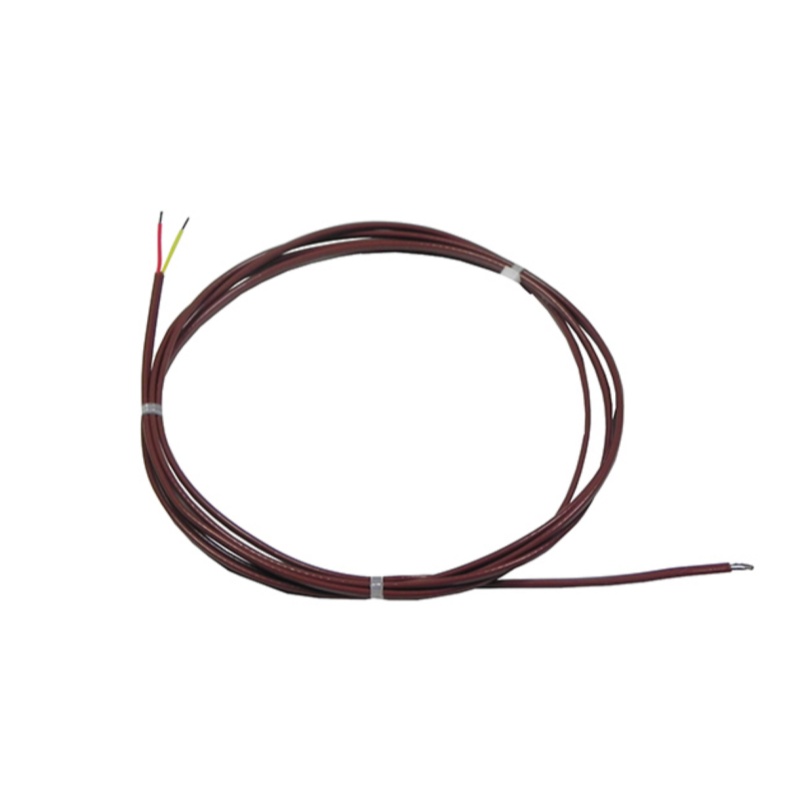
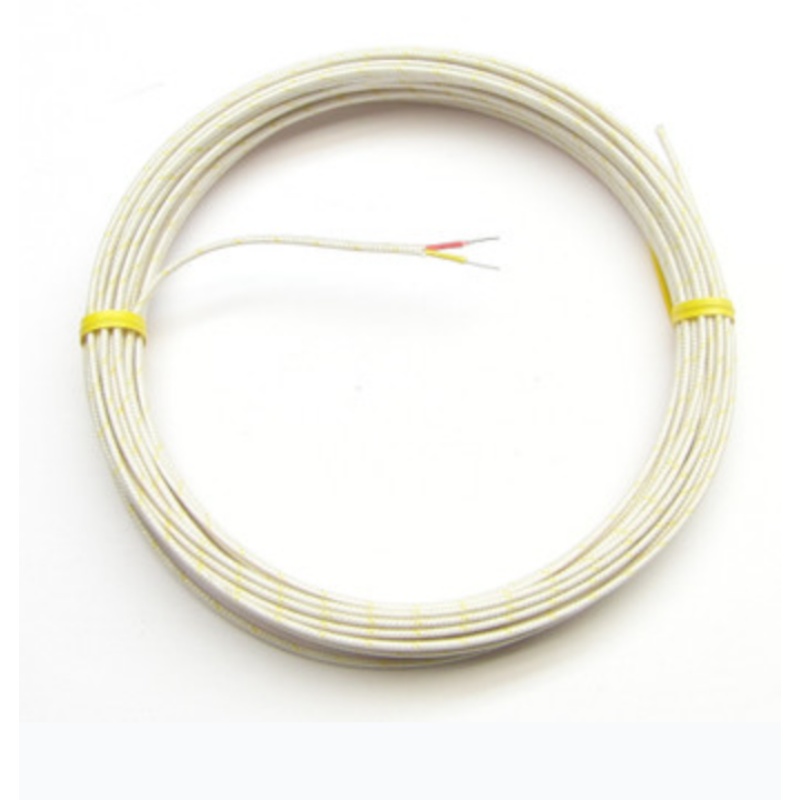
Insulated Thermocouple Wire
Insulated Thermocouple Wire Construction Options & Features
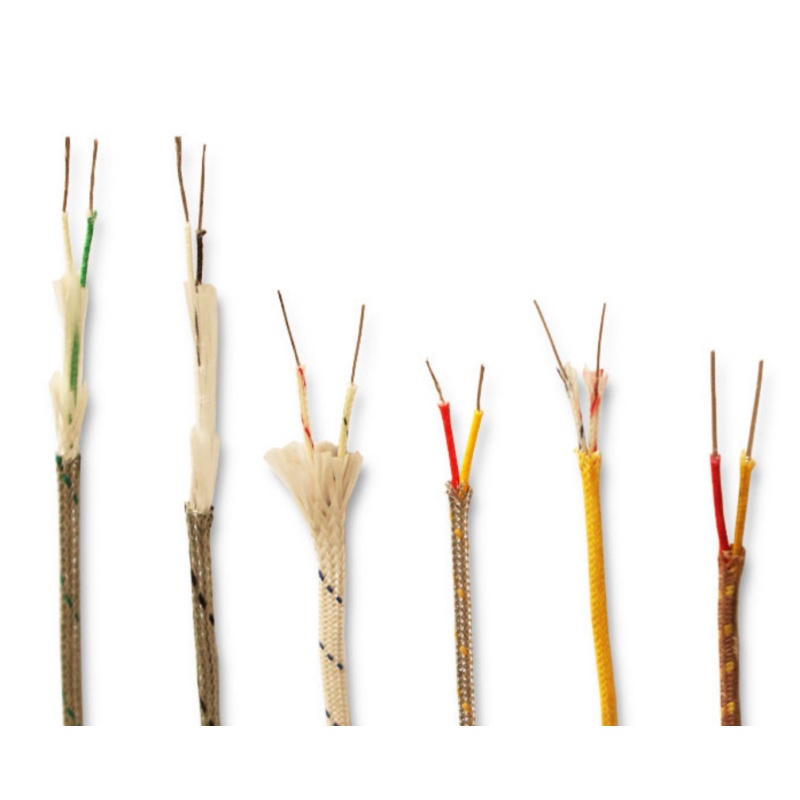
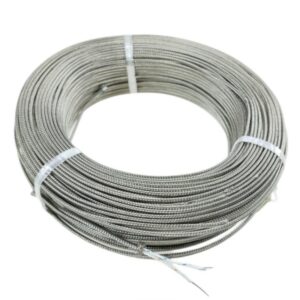
- Individual wire insulation: Positive and negative thermocouple wires are separately insulated to reduce the risk of short circuits during assembly.
- Full thermocouple series: K, N, E, J, T, S, R, and B types are available.
- Fine conductor diameters: Available from 0.08 mm to 3.0 mm for miniature sensors and different mechanical requirements.
- Multiple insulation options: PVC, silicone rubber, PTFE/FEP, fiberglass, and ceramic fiber for different temperature and application requirements.
- Fast thermal response: Fine-diameter wire has low thermal mass for rapid temperature measurement.
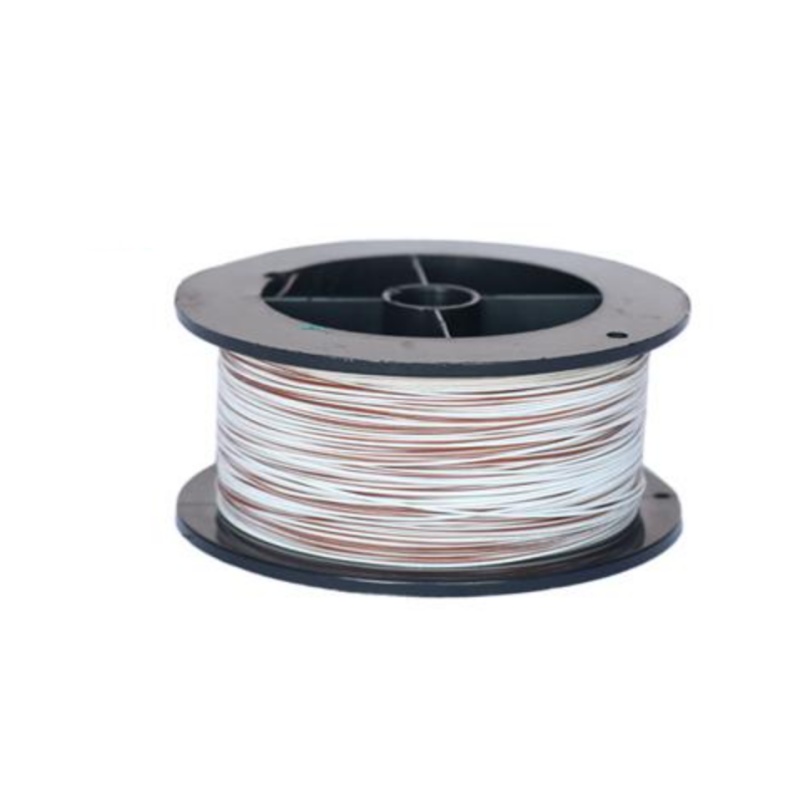
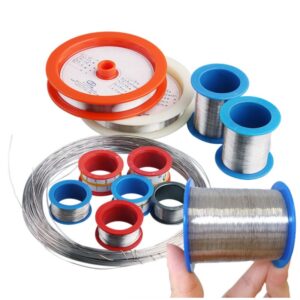
- Custom fabrication: Supplied on spools with custom cut-to-length service available.
Supported Thermocouple Types
For help comparing K, J, T, E, N, S, R, and B thermocouple options, see our Thermocouple Types Selection Guide.
| Thermocouple Type | Alloy Combination |
|---|---|
| K-Type | NiCr-NiSi |
| N-Type | NiCrSi-NiSi |
| E-Type | NiCr-CuNi |
| J-Type | Fe-CuNi |
| T-Type | Cu-CuNi |
| S-Type | PtRh10-Pt |
| R-Type | PtRh13-Pt |
| B-Type | PtRh30-PtRh6 |
Construction Options
Conductor Diameter
Available conductor diameters include 0.08 mm, 0.1 mm, 0.2 mm, 0.3 mm, 0.5 mm, 0.8 mm, 1.0 mm, 1.5 mm, 2.0 mm, and 3.0 mm.
Fine-diameter conductors are suitable for miniature sensors and fast-response measurement, while larger diameters provide greater mechanical strength and durability.
Insulation Material & Temperature Range
The temperature ranges below refer to the typical continuous service temperature of the insulation material. The actual allowable temperature also depends on conductor type, diameter, construction, junction design, and application conditions.
| Insulation Material | Typical Continuous Temperature | Application Feature |
|---|---|---|
| PVC | -20 to +105°C | Economical, suitable for general low-temperature assembly |
| Silicone Rubber | -40 to +180°C | Soft, flexible, good bending performance |
| PTFE / FEP | -60 to +260°C | Anti-corrosion, moisture-resistant, chemical-resistant |
| Fiberglass | -40 to +480°C | Suitable for dry high-temperature environments |
| Ceramic Fiber | -40 to +700°C | For high-temperature applications and custom constructions |
Accuracy Grade
Insulated thermocouple wire is manufactured according to applicable requirements of IEC 60584-1.
- Class 2: Standard supply for general industrial temperature measurement.
- Class 1: Optional for applications requiring tighter measurement accuracy.
See the official IEC 60584-1 thermocouple standard for reference.
Installation & Operation Notice
- Protect the insulation: Keep the insulation intact except at the required welding measuring tip. Damaged insulation can cause short circuits and measurement errors.
- Check the working temperature: The maximum working temperature depends on both conductor diameter and insulation material.
- Consider the atmosphere: S/R/B platinum-rhodium insulated wire is suitable for oxidizing or inert atmospheres. Avoid long-term reducing gas environments.
- Form the measuring junction correctly: The junction can be formed by spot welding or argon-arc welding. Keep the welding point clean and secure.
- Use suitable protection: Do not directly immerse insulated thermocouple wire in strong corrosive media without a suitable outer protection sheath.
Application Scenarios
Insulated thermocouple wire is commonly used for:
- Miniature thermocouple sensor manufacturing
- Mold and hot runner temperature testing
- Laboratory rapid-response temperature measurement
- Temperature sensing in 3D printer heating systems
- R&D custom temperature probes
- Needle and exposed-junction thermocouple sensor fabrication
- Small-space temperature monitoring
Standard Specification Table
| Thermocouple Type | Alloy Combination | Available Diameter | Insulation Options |
|---|---|---|---|
| K-Type | NiCr-NiSi | 0.08-3.0 mm | PVC / Silicone / PTFE / Fiberglass / Ceramic Fiber |
| N-Type | NiCrSi-NiSi | 0.08-3.0 mm | PVC / Silicone / PTFE / Fiberglass / Ceramic Fiber |
| E-Type | NiCr-CuNi | 0.08-3.0 mm | PVC / Silicone / PTFE / Fiberglass |
| J-Type | Fe-CuNi | 0.08-3.0 mm | PVC / Silicone / PTFE / Fiberglass |
| T-Type | Cu-CuNi | 0.08-3.0 mm | PVC / Silicone / PTFE / Fiberglass |
| S-Type | PtRh10-Pt | 0.1-1.0 mm | PTFE / Fiberglass |
| R-Type | PtRh13-Pt | 0.1-1.0 mm | PTFE / Fiberglass |
| B-Type | PtRh30-PtRh6 | 0.1-1.0 mm | PTFE / Fiberglass |
Positive and negative wires are individually insulated and supplied as a matched pair on a spool. Fine-diameter wire provides faster response but lower mechanical strength. Fiberglass and ceramic fiber insulated wire should be used in dry environments and should not be immersed in liquid. S/R/B platinum-rhodium insulated wire should avoid long-term reducing atmospheres. Sold per meter or full spool; custom cutting is available.
Related Thermocouple Products
- Industrial Thermocouples
- Bare Thermocouple Wire
- High-Temperature Thermocouple Extension & Compensating Cable
- Thermocouple Wire & Extension Cable
- Thermocouple Applications
Request OEM Thermocouple Wire Support
For OEM or custom thermocouple wire requirements, please provide the thermocouple type, conductor diameter, insulation material, required length, accuracy grade, and application conditions. Drawings, photos, or existing samples are welcome.
For a quotation, please send your specifications, drawing, or sample details. You can also use our Get a Quote page for your inquiry.
Amy – Sales
Email:
amy-easewise@tzheater.com
WhatsApp:
+86 188 8318 8154
Hanna – Sales
Email:
hanna-easewise@tzheater.com
WhatsApp:
+86 173 5163 6811

评价
目前还没有评价