
Flexible Heater vs Silicone Rubber Heater: Key Differences
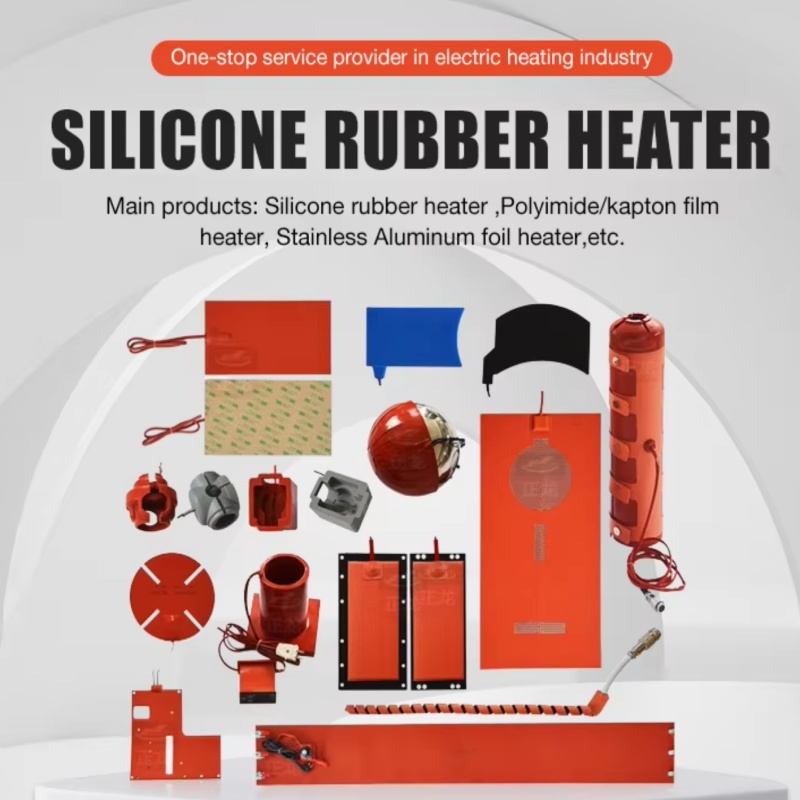
Flexible heaters are a broad category of electric heating elements designed for direct surface heating. Silicone rubber heaters are one common type of flexible heater, while PI heaters provide another option when an extremely thin and compact construction is required.
Choosing between a silicone rubber heater and another flexible heating technology depends on operating temperature, available installation space, heating surface, flexibility, voltage, wattage, and application requirements.
Flexible Heater vs Silicone Rubber Heater: Key Differences
| Feature | Silicone Rubber Heater | Other Flexible Heater Technologies |
|---|---|---|
| Construction | Flexible silicone rubber insulation with an embedded heating element | Depends on heater technology, such as polyimide film or other flexible materials |
| Typical Temperature | Suitable for many low- to medium-temperature applications | Depends on construction and materials; some are designed for higher-temperature or specialized applications |
| Flexibility | Excellent | Excellent, depending on construction |
| Heating Method | Direct surface heating | Direct surface heating |
| Customization | Size, shape, voltage, wattage, leads, holes, and sensor options | Depends on heater technology and construction |
| Main Advantage | Flexible, durable, and suitable for a wide range of surface-heating applications | Can provide very thin construction, compact installation, or specialized performance |
When Should You Choose a Silicone Rubber Heater?
A silicone rubber heater is a practical choice when you need flexible surface heating, good heat transfer, and a heater that can conform to flat, curved, or irregular surfaces.
- Battery and battery pack heating
- Oil and chemical tanks
- Pipes and valves
- Medical equipment
- Outdoor equipment and freeze protection
- Food and processing equipment
- Anti-condensation heating
Silicone rubber heaters can be customized for different heating areas, shapes, voltages, wattages, mounting methods, and sensor requirements.
Explore Silicone Rubber Heater Solutions →
When Should You Choose a PI Heater?
A PI heater, also called a polyimide heater, is a flexible heating element designed for applications where very thin construction, low thermal mass, compact installation, or fast thermal response is important.
- EV batteries and battery systems
- Electronic equipment
- Semiconductor equipment
- Sensors and instruments
- Compact electronic devices
- Aerospace and specialized equipment
PI heaters are particularly useful when installation space is limited and the heating element needs to conform closely to a surface.
For additional information about polyimide film properties, see DuPont Kapton® polyimide technical information.
Silicone Rubber Heater vs PI Heater
Both silicone rubber heaters and PI heaters can provide flexible surface heating, but their construction and typical applications are different.
| Requirement | Silicone Rubber Heater | PI Heater |
|---|---|---|
| Flexible surface heating | Yes | Yes |
| Very thin construction | Good | Excellent |
| Curved surfaces | Excellent | Excellent |
| Compact electronics | Suitable | Well suited |
| Battery heating | Suitable | Suitable |
| Custom shapes and wattage | Yes | Yes |
For a more detailed comparison of these two technologies, see PI Heater vs Silicone Rubber Heater.
How to Choose the Right Flexible Heater
The best flexible heater depends on the physical surface, temperature requirements, available space, and electrical specifications.
- Check the operating temperature. Determine the normal and maximum temperature of the heated surface.
- Measure the heating area. Confirm the required length, width, diameter, or custom shape.
- Check the available installation space. PI heaters can be useful where extremely thin construction is important.
- Determine voltage and wattage. The electrical requirements should match the equipment and heating target.
- Choose the mounting method. Adhesive backing, mechanical fastening, holes, or other installation methods may be required.
- Consider sensors and controls. Thermostats, thermocouples, RTDs, or other temperature sensors may be integrated when required.
For many flexible surface-heating applications, a silicone rubber heater is a practical starting point. When thickness, compact construction, or specific installation constraints are more important, a PI heater may be more suitable.
Flexible Heater Applications
Flexible heaters are used where heat needs to be applied directly to a surface without adding a bulky rigid heating element.
- Battery and energy storage systems
- Electronics and instruments
- Medical equipment
- Pipes, valves, and tanks
- Oil and chemical containers
- Freeze protection and anti-condensation systems
- Industrial process equipment
For applications involving cylindrical barrels, nozzles, or dies, a different heater structure may be more appropriate. Band heaters and coil heaters are designed for specific cylindrical and localized heating requirements.
Not Sure Which Flexible Heater You Need?
The correct heater depends on more than temperature alone. Heating area, dimensions, voltage, wattage, installation method, operating environment, and required service life should also be considered.
EaseWise supplies customized silicone rubber heaters and PI heaters for industrial, battery, electronics, medical, and other flexible surface-heating applications.
Need Help Choosing the Right Heater?
Send us your temperature, heating area, dimensions, voltage, wattage, and application.
Our technical team can help compare flexible heating options and recommend a suitable heater design for your application.
Contact our team for technical consultation and customized heater solutions:
Amy – Sales
WhatsApp: +86 188 8318 8154
Email: amy-easewise@tzheater.com
Hanna – Sales
WhatsApp: +86 173 5163 6811
Email: hanna-easewise@tzheater.com