

Silicone Rubber Heater Supplier | Custom Flexible Silicone Heating Pads
EaseWise supplies custom silicone rubber heaters for industrial equipment, medical and laboratory instruments, automotive and EV systems, batteries, electronics, fluid containers, and anti-condensation applications. These thin, flexible heating elements provide surface heating and can be customized to match equipment dimensions, voltage, wattage, sensors, and installation requirements.
As an OEM heating solution supplier, EaseWise coordinates customized production with vetted partner factories. We support specification review, production coordination, and agreed quality checks for prototype projects and batch orders.
Whether you need a standard configuration or a custom silicone heating pad, the right design depends on the heated surface, target temperature, heat loss, power requirements, and mounting method.
For application examples, see our Silicone Rubber Heater Applications Guide.
Why Source Silicone Rubber Heaters from EaseWise?
- OEM customization: Custom dimensions, shape, voltage, wattage, heating area, sensors, lead wires, and mounting options.
- Production coordination: We coordinate production with vetted partner factories according to confirmed specifications.
- Specification-based quality checks: Project-specific inspection requirements can be agreed in advance, including dimensions and relevant electrical parameters.
- Prototype and batch-order support: Discuss sample requirements, order quantities, and repeat-order needs with our sales team.
- One point of contact: We help coordinate technical communication, quotations, and order follow-up.
Looking for a silicone heater supplier, silicone rubber heater supplier, or OEM heating solution? Send us your drawing or technical requirements for a project review.
What Is a Silicone Rubber Heater?
A silicone rubber heater is a flexible surface heating element made by embedding a resistance heating circuit between layers of silicone rubber insulation. Its thin construction allows it to fit selected flat or curved surfaces where conventional rigid heaters may be difficult to install.
Depending on the design, a silicone heating pad can be manufactured in different shapes and sizes, with customized electrical ratings, lead-wire exits, mounting features, and temperature-sensing options.
Silicone rubber heaters are generally selected when equipment requires localized heating, surface temperature maintenance, or a heating element that can conform to a particular component. Actual heating performance depends on the heater design, the heated material, thermal contact, insulation, ambient conditions, and temperature control.
Silicone Rubber Heater Features
- Flexible silicone rubber construction for suitable flat and curved surfaces
- Wire-wound or etched-foil heating element designs, subject to project requirements
- Thin profile for space-limited installations
- Custom length, width, diameter, and heating area
- Optional pressure-sensitive adhesive backing
- Optional mounting holes or other agreed fixing methods
- Optional thermocouple, PT100, NTC sensor, or thermal switch
- Customized voltage, wattage, lead-wire position, and lead length
- Possible cut-outs and special shapes, subject to design review
Silicone Rubber Heater Construction Types
Wire-Wound Silicone Rubber Heaters
Wire-wound silicone heaters use resistance wire arranged in a defined pattern and embedded between layers of silicone rubber. The wire layout can be adapted to the heating area’s shape and selected installation requirements.
This construction may be considered for prototype development, custom shapes, and projects requiring particular wire routing. The final design should account for the required heating distribution, electrical ratings, surface geometry, and operating conditions.
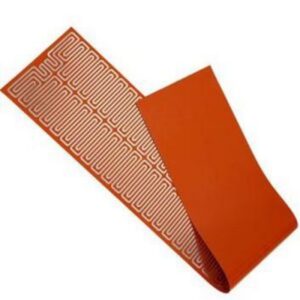
Etched-Foil Silicone Rubber Heaters
Etched-foil silicone heaters use a patterned metal foil resistance element laminated between insulating layers. The foil pattern can be designed around the required heating area and electrical characteristics.
This construction may be suitable for applications where the heating pattern and heat distribution need to be carefully configured. Feasibility depends on the heater dimensions, required wattage, production quantity, and design constraints.
Wire-Wound vs. Etched-Foil: Which Should You Choose?
| Selection Factor | Wire-Wound | Etched-Foil |
|---|---|---|
| Heating element | Resistance wire | Patterned metal foil |
| Design approach | Wire routing configured for the heating pad | Foil pattern designed for the heating area |
| Key consideration | Required shape, wire layout, and installation conditions | Required heating pattern, foil layout, and installation conditions |
| Customization | Dimensions, voltage, wattage, sensors, and mounting options | Dimensions, voltage, wattage, foil layout, sensors, and mounting options |
| Production considerations | Prototype feasibility, geometry, and required wire layout | Foil pattern feasibility, dimensions, and production quantity |
Neither construction is automatically better for every application. The selection should be based on the required heating pattern, dimensions, power, operating conditions, and production requirements.
Not sure which construction is suitable? Send EaseWise your drawing, heating area, voltage, wattage, target temperature, and installation requirements for a project review.
Silicone Rubber Heater Technical Specifications
| Parameter | Reference Specification |
|---|---|
| Heating Element | Nickel-chromium resistance wire for wire-wound designs; etched-foil element available for suitable designs |
| Insulation Material | Silicone rubber |
| Typical Thickness | Approximately 1.5–2.0 mm, depending on design |
| Operating Temperature | Up to approximately 200°C for selected designs; confirm the continuous operating limit for the specific configuration |
| Voltage | 12 V, 24 V, 48 V, 110 V, 220 V, or customized, subject to availability and design |
| Wattage | Customized according to heating area, heat loss, and application requirements |
| Watt Density | Calculated according to the heater area, target temperature, heat transfer, and operating conditions |
| Temperature Sensors | Thermocouple, PT100, NTC sensor, or thermal switch, subject to configuration |
| Mounting | Adhesive backing, mounting holes, or other agreed fixing methods |
| Lead Wires | Lead length, exit position, and configuration can be customized |
Specifications above are reference information, not guaranteed ratings for every model. Confirm the applicable operating limits, electrical ratings, tolerances, and available configurations before ordering.
For additional technical background, see the OMEGA Flexible Silicone Rubber Heater Technical Reference.
How to Select a Silicone Rubber Heater
Choosing a silicone rubber heater involves more than matching the dimensions. The heater’s wattage, heating area, installation method, and temperature-control strategy should be considered together.
1. Define the Heated Surface
Identify the surface or component to be heated, its material, dimensions, shape, and available mounting space. A drawing or marked-up photograph can help clarify the required heating area and any cut-outs.
2. Determine the Target Temperature
Specify the desired surface or process temperature and the expected ambient temperature. Also indicate whether the heater operates continuously, intermittently, or during a short warm-up cycle. The selected design must remain within its confirmed operating limits.
3. Calculate the Required Power
Required wattage depends on the mass and material being heated, the target temperature, heat loss, warm-up time, thermal contact, and insulation. Watt density should be assessed alongside these factors rather than selected in isolation.
4. Confirm Voltage and Electrical Ratings
Provide the available supply voltage and required wattage. Confirm the heater’s resistance, current, lead-wire configuration, insulation requirements, and other relevant electrical parameters before production.
5. Select Temperature Monitoring and Control
Depending on the application, a thermocouple, PT100, NTC sensor, thermostat, or thermal switch may be considered. The control arrangement should be appropriate for the required temperature range and the consequences of overheating.
6. Choose the Mounting Method
Adhesive backing, mounting holes, mechanical fixing, or another agreed method may be considered. The mounting choice should account for the surface material, operating temperature, vibration, maintenance requirements, and expected service conditions.
For help evaluating power requirements, see our Silicone Heater Watt Density and Temperature Guide.
Silicone Heater Watt Density and Power Selection
Watt density is the rated heater power divided by the active heating area. It helps describe how much power is applied across the heater surface, but it does not by itself determine the final temperature.
The appropriate watt density depends on factors such as:
- Target surface temperature and ambient temperature
- Material and thermal mass of the heated component
- Contact quality between the heater and the surface
- Heat loss to the surrounding environment
- Insulation and mounting arrangement
- Temperature sensor location and control method
- Continuous or intermittent operating conditions
An unsuitable power density can lead to slow heating or excessive local temperature. The final design should be evaluated for the actual application, especially where the heated material is a poor thermal conductor or where the heater is covered by insulation.
Silicone Heater Sizes and Configurations
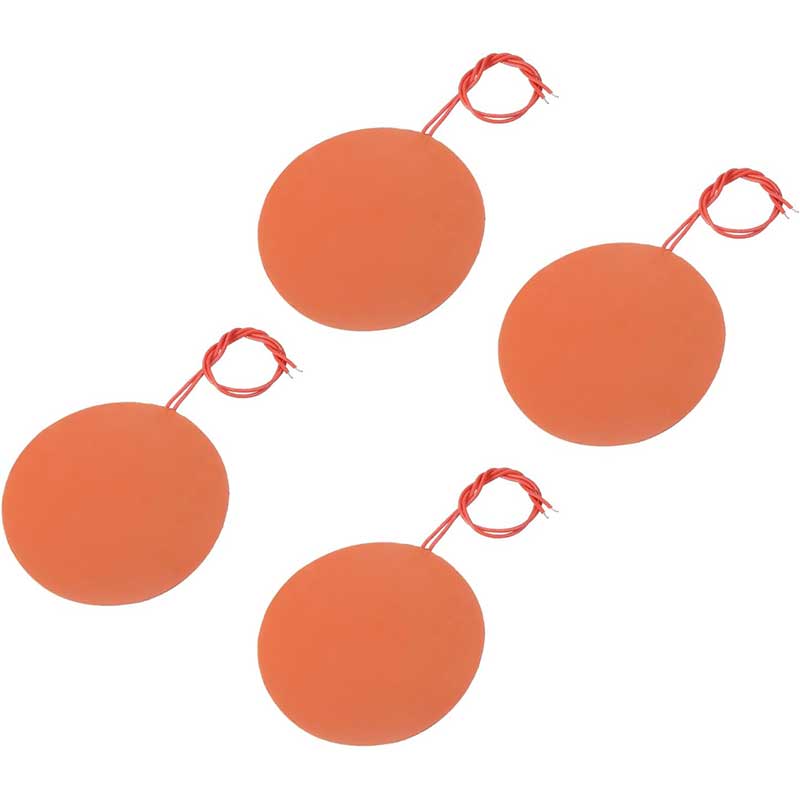
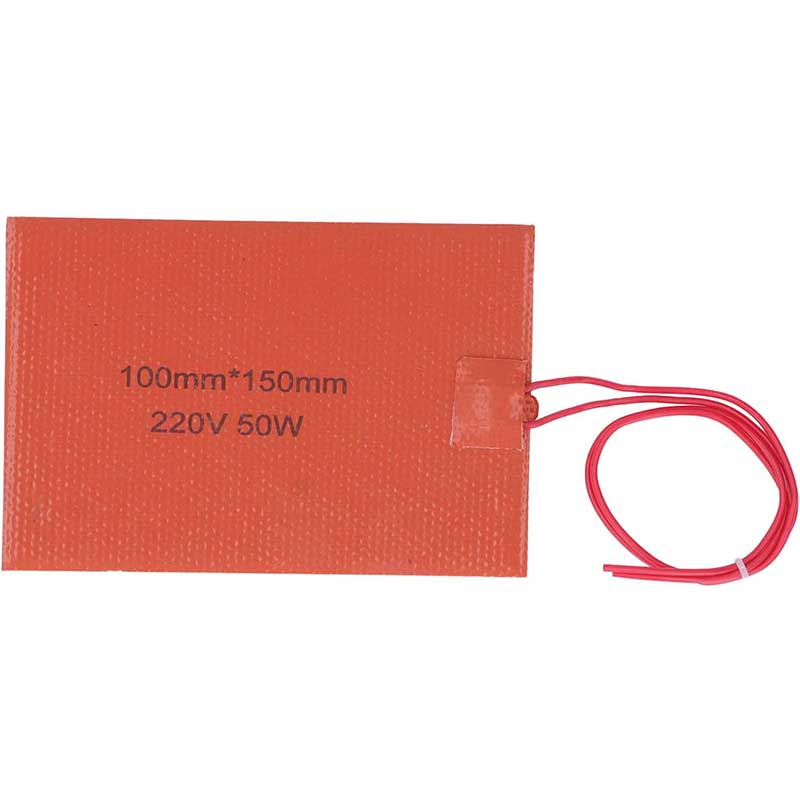
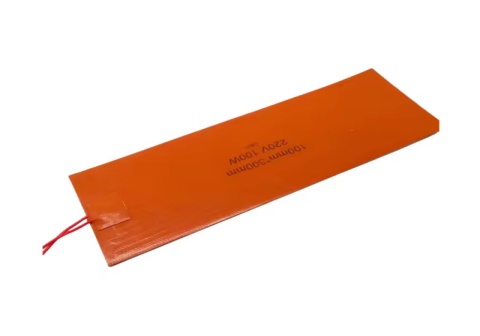
Silicone heating pads can be configured in rectangular, square, round, and selected irregular shapes according to the available installation space and required heating area.
Rectangular Silicone Heating Pads
| Size | Reference Voltage | Reference Power |
|---|---|---|
| 100 × 100 mm | 220 V | 100 W |
| 200 × 100 mm | 220 V | 150 W |
| 200 × 200 mm | 220 V | 300 W |
Round Silicone Heating Pads
| Diameter | Reference Voltage | Reference Power |
|---|---|---|
| Ø100 mm | 220 V | 100 W |
| Ø150 mm | 220 V | 150 W |
| Ø200 mm | 220 V | 250 W |
Customization note: These are reference configurations, not a guarantee of stock availability. Confirm the voltage, wattage, dimensions, sensor position, lead length, heating element design, and mounting method before ordering.
Silicone Rubber Heater Mounting Options
Pressure-Sensitive Adhesive Backing
Adhesive backing may be suitable for compatible surfaces where a low-profile installation is required. Surface preparation, adhesive temperature limits, operating conditions, and the manufacturer’s installation instructions should be reviewed before use.
Mounting Holes
Mounting holes can be considered where mechanical fixing is required. Their location and size must be included in the design so that they do not interfere with the heating element or compromise the heater’s electrical insulation.
Mechanical Fixing or Other Custom Methods
Some projects may require brackets, straps, clamps, or other fixing arrangements. The selected method should maintain suitable thermal contact without creating excessive pressure, sharp bends, or damage to the silicone insulation.
Before selecting a mounting option, confirm the surface material, available space, expected vibration, maintenance access, and operating temperature.
Temperature Control and Overheat Protection
A silicone rubber heater should be matched with an appropriate control strategy for the application. Depending on the design, a temperature sensor or switching device may be integrated into the heater or installed separately.
- Thermocouple: May be used for temperature measurement in a compatible control system.
- PT100 or NTC sensor: May be considered where the control system supports the selected sensor type.
- Thermostat or thermal switch: May provide switching or temperature-limiting functions, subject to the selected design.
- Independent over-temperature protection: Consider suitable protective measures where overheating could damage equipment or create a safety risk.
Sensor type, location, controller compatibility, and protection settings should be confirmed before the heater is manufactured. A sensor alone does not guarantee uniform surface temperature or prevent every overheating condition.
Silicone Heater Applications
Flexible silicone heaters are used in applications that require a low-profile heating element designed to fit a particular surface or component. Final suitability depends on the operating environment, temperature requirements, mounting conditions, and equipment design.
Industrial Equipment and Processing
Potential applications include tanks, pipes, valves, molds, containers, and processing equipment where localized surface heating or temperature maintenance is required.
Anti-Condensation and Freeze Protection
Properly specified heaters can help maintain surface temperature and reduce condensation or freezing on selected cabinets, instruments, enclosures, pipes, and outdoor equipment. The design should account for ambient conditions, moisture exposure, heat loss, and suitable electrical protection.
Medical and Laboratory Equipment
Silicone heating pads may be designed for selected laboratory instruments, analytical equipment, and other devices requiring controlled surface heating. Equipment manufacturers should evaluate the complete device against applicable safety and regulatory requirements.
Automotive and EV Heating
Flexible heating elements may be integrated into selected automotive components and battery-related systems where controlled heating is required. Review our Automotive Silicone Heater page for application-specific information.
Batteries and Electronics
Thin silicone heaters can be designed for selected battery, electronics, and enclosure applications that require localized heating. Explore our Silicone Heater Applications Guide for Batteries and Electronics.
Fluid Containers and Equipment Enclosures
Custom silicone heaters may be considered for compatible containers, reservoirs, and equipment enclosures where surface temperature maintenance is required. The heated material, thermal contact, fluid properties, and installation arrangement should be reviewed before selecting a design.
Silicone Heater vs. PI Heater
Silicone rubber heaters are often considered when flexibility, conformability, and a silicone-insulated heating surface are useful. Polyimide (PI) heaters may be suitable for applications requiring a thin film-style heating element.
The best choice depends on the available installation space, surface shape, temperature requirements, electrical ratings, and environmental conditions. Neither type is universally suitable for every application.
Read our PI Heater vs. Silicone Rubber Heater Guide for a more detailed comparison.
Custom Silicone Rubber Heater OEM Solutions
EaseWise coordinates customized silicone heater projects through vetted partner factories. Depending on the design and production feasibility, customization may include:
- Custom length, width, diameter, and heating area
- Rectangular, round, and selected irregular shapes
- Cut-outs and openings, subject to design review
- Wire-wound or etched-foil construction
- Custom voltage, wattage, and watt density
- Custom lead-wire length, exit position, and configuration
- Thermocouple, PT100, NTC sensor, or thermal switch options
- Adhesive backing, mounting holes, or agreed fixing methods
- OEM packaging, labeling, and batch-order requirements, subject to agreement
How to Request a Custom Silicone Heater
To help us review your project and prepare a more accurate quotation, please provide as many of the following details as possible:
- Drawing or dimensions: PDF/DXF drawing, sample, or marked-up photograph showing the heating area.
- Electrical requirements: Supply voltage and required wattage, if already defined.
- Temperature requirements: Target temperature, ambient temperature, and operating cycle.
- Installation method: Adhesive backing, mounting holes, mechanical fixing, or another preferred method.
- Temperature control: Sensor type, sensor position, controller details, or over-temperature protection requirements.
- Quantity: Prototype quantity, initial order quantity, and estimated repeat demand if known.
If wattage or watt density has not yet been determined, provide the application details and target temperature first. The configuration can then be reviewed against the actual heating requirements.
Submit Your Silicone Heater Requirements
Installation and Operating Considerations
- Install the heater according to the approved design and supplier instructions.
- Maintain appropriate thermal contact between the heater and the heated surface.
- Avoid air gaps, sharp folds, or local pressure that could contribute to overheating or damage.
- Confirm the voltage, wattage, and electrical connections before energizing the heater.
- Use suitable temperature control and over-temperature protection for the application.
- Do not exceed the confirmed operating limits of the heater, adhesive, lead wires, or mounting materials.
- Evaluate insulation, moisture exposure, grounding or protective measures, and electrical safety as required by the complete equipment design.
- For medical, automotive, battery, and other safety-sensitive applications, verify the configuration against the equipment manufacturer’s requirements and applicable regulations.
Frequently Asked Questions About Silicone Rubber Heaters
What is a silicone rubber heater used for?
A silicone rubber heater provides surface heating or temperature maintenance on compatible components. Potential applications include industrial equipment, laboratory instruments, selected automotive systems, battery-related equipment, electronics enclosures, and condensation or freeze protection.
Can silicone rubber heaters be customized?
Yes, custom designs may be available for dimensions, shape, voltage, wattage, heating area, lead-wire position, mounting method, and temperature-sensing options. Final feasibility depends on the project requirements and confirmed design.
What is the difference between wire-wound and etched-foil silicone heaters?
Wire-wound heaters use resistance wire arranged within the silicone structure, while etched-foil heaters use a patterned metal foil element. The appropriate construction depends on the heating pattern, geometry, power requirements, and production considerations.
How do I choose the wattage for a silicone heating pad?
Wattage depends on the heated component, target temperature, warm-up time, heat loss, thermal contact, and insulation. If the required wattage is unknown, provide the application details so the design can be reviewed before finalizing the rating.
Can a silicone heater include a temperature sensor?
Depending on the design, options may include a thermocouple, PT100, NTC sensor, or thermal switch. Confirm the sensor type, location, controller compatibility, and protection requirements before production.
Can silicone heaters be used on curved surfaces?
Selected silicone heaters can fit suitable curved surfaces, provided the shape and installation method are supported by the design. Confirm the surface geometry, required contact, and any bending or mounting limitations before installation.
What information is needed for a quotation?
A drawing or dimensions, voltage, wattage if known, target temperature, mounting method, sensor requirements, and order quantity are useful starting points. A PDF/DXF drawing can help clarify the required shape and heating area.
Does a silicone heater for medical equipment mean the equipment is certified?
No. The heater component does not automatically certify the finished equipment. The equipment manufacturer must assess the complete device and its applicable regulatory requirements.
Related Heating Products and Guides
- Silicone Rubber Heater Product – the main product page for flexible silicone heating elements and custom surface-heating applications.
- Flexible Silicone Heaters – related flexible heater information and product selection.
- Automotive Silicone Heater – heating solutions for selected automotive and EV applications.
- Silicone Rubber Heater Applications Guide – applications for batteries, electronics, and related equipment.
- Silicone Heater Watt Density and Temperature Guide – factors affecting power selection and operating temperature.
- PI Heater vs. Silicone Rubber Heater – a comparison of two flexible heating technologies.
- Thermocouple Applications – temperature-sensing options for heater monitoring and control.
Request a Silicone Rubber Heater Quote
EaseWise supports OEM sourcing and customized silicone rubber heater projects through vetted partner factories. Send your drawing, specifications, or sample requirements along with your target quantity. Our team will review the request and follow up on configuration, production feasibility, and quotation.
Amy – Sales
Email: amy-EaseWise@tzheater.com
WhatsApp: +86 188 8318 8154
Hanna – Sales
Email: Hanna-EaseWise@tzheater.com
WhatsApp: +86 173 5163 6811
Request a Custom Silicone Rubber Heater
Send your PDF/DXF drawing, technical specifications, or sample requirements, along with your target quantity. EaseWise will review the request and follow up on configuration, production feasibility, and quotation.
评价
目前还没有评价