
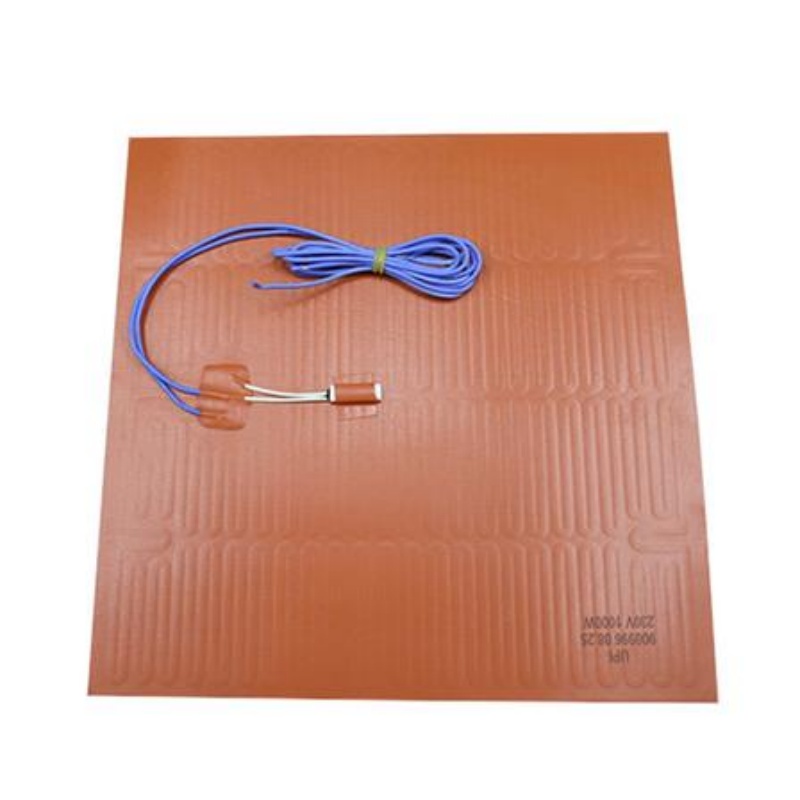
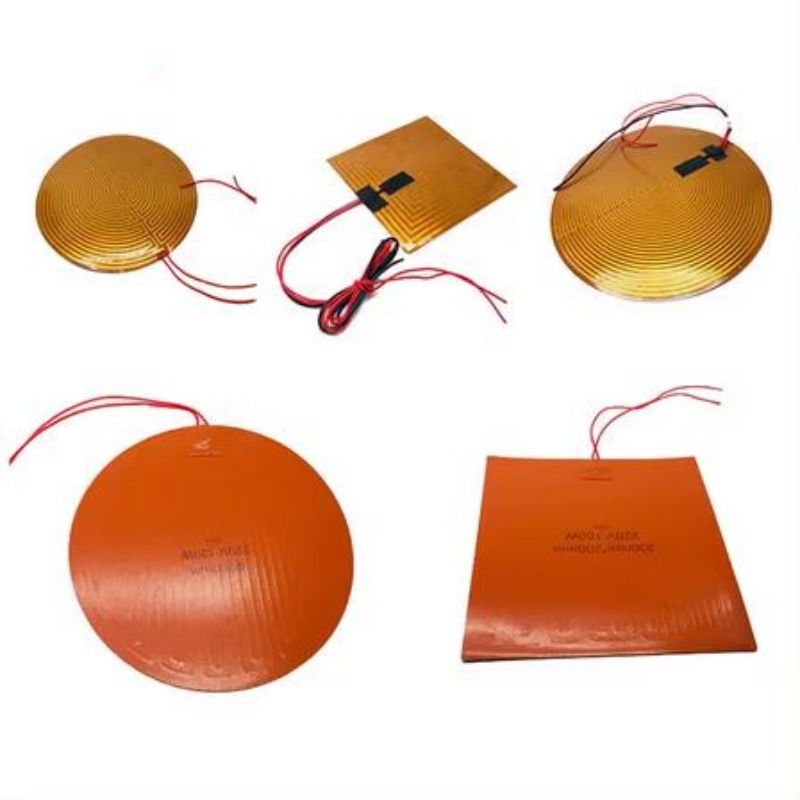
Wire-Wound Silicone Heater
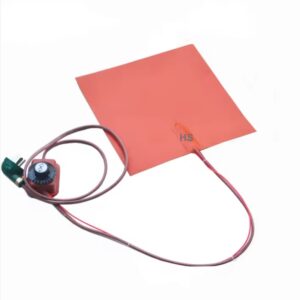
A wire-wound silicone heater is a flexible heating
element designed for general industrial heating, freeze protection
and temperature maintenance. It is constructed by winding nickel-chromium
resistance wire around fiberglass reinforcement and laminating the
assembly between layers of silicone rubber.
This established heating design offers a practical balance of cost,
flexibility and customization. It is suitable for many applications
where dependable heating, straightforward installation and budget
efficiency are important considerations.
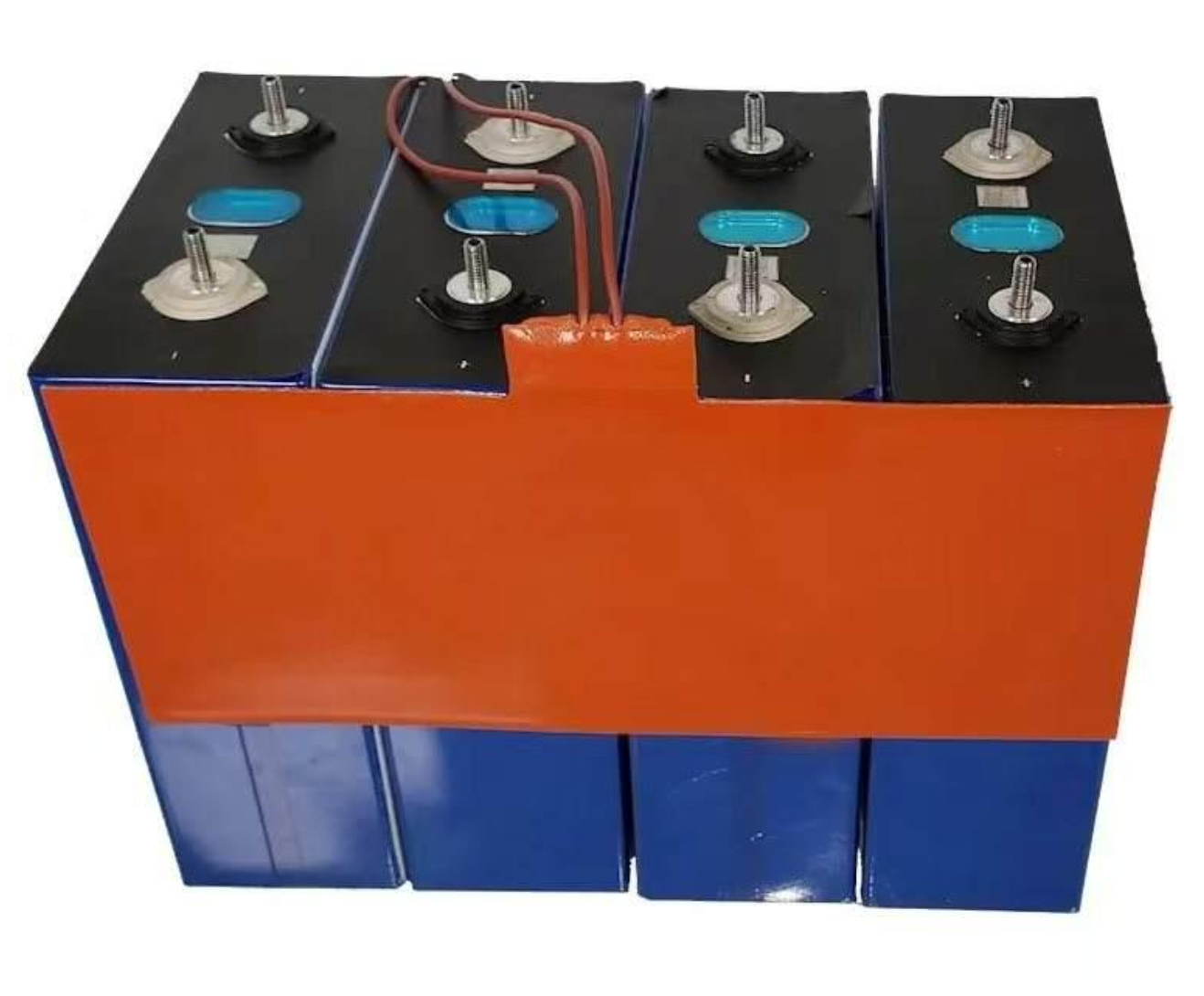
The flexible silicone rubber construction can conform to suitable flat,
curved and cylindrical surfaces. Optional pressure-sensitive adhesive
(PSA) backing, mechanical clamping and other mounting methods can be
considered according to the installation requirements.
Custom dimensions, voltage, wattage, cutouts, lead wire configurations
and temperature-control accessories can be specified for your project.
Wire-Wound Silicone Heater Features
- Cost-Effective Heating:
The established wire-wound construction can be a practical choice
for general-purpose heating and cost-sensitive projects. - Flexible and Conformable:
The silicone rubber structure can fit suitable flat, curved and
cylindrical surfaces within the specified bending limits. - Wide Operating Temperature Range:
Different constructions may be available for freeze protection
and process heating. Confirm the operating limits for your selected
design before ordering. - Moisture Resistance:
Silicone rubber insulation can help protect the heating element
in suitable humid and industrial environments. Actual protection
depends on sealing, lead exits and installation. - Custom Shapes and Sizes:
Heater dimensions, cutouts, mounting holes, voltage, wattage and
lead wire lengths can be specified according to the application. - Convenient Installation:
Optional PSA adhesive backing or suitable mechanical mounting
methods can simplify installation. - Optional Temperature Accessories:
NTC thermistors, PT100 RTDs, bimetal thermostats and thermal fuses
may be available depending on the design. - Reinforced Construction:
Fiberglass reinforcement supports the heating-wire assembly for
suitable industrial equipment and operating conditions.
Wire-Wound Silicone Heater Construction
A wire-wound silicone heater uses nickel-chromium resistance wire
arranged around fiberglass reinforcement and enclosed within silicone
rubber insulation. The wire layout, heater outline, lead exit and
optional control accessories can be adapted to the intended application.
This construction is commonly considered for general industrial
heating, surface heating and freeze protection where a flexible,
customizable heating element is required.
Wire-Wound Silicone Heater Specifications
The following values are preliminary specification ranges for product
selection. Confirm the available limits, dimensions and test conditions
for the actual heater configuration before placing an order.
| Item | Specification |
|---|---|
| Construction | Nickel-chromium resistance wire, fiberglass reinforcement and silicone rubber |
| Thickness | Proposed range: 1.5–3.0 mm |
| Voltage | Proposed range: 5 V DC to 480 V AC, subject to design and safety requirements |
| Continuous Operating Temperature | Preliminary: -60°C to 200°C without PSA; -30°C to 175°C with PSA |
| Short-Term Peak Temperature | Proposed maximum: 230°C; confirm application-specific limits |
| Power Tolerance | Proposed: ±10% |
| Watt Density | Proposed range: 0.5–2.5 W/cm², subject to design confirmation |
| Minimum Bending Radius | Proposed: 10 mm or greater, subject to heater construction |
| Dielectric Strength | Proposed: ≥1500 V AC; confirm test conditions and duration |
| Size Range | Proposed minimum: 20 × 20 mm; larger custom sizes subject to feasibility review |
| Adhesive Backing | Optional pressure-sensitive adhesive (PSA) |
| Environmental Protection | IP65 option proposed; confirm the complete assembly and test conditions |
| Temperature Sensors | NTC thermistor, PT100 RTD or other compatible sensor options |
| Thermal Protection | Bimetal thermostat or thermal fuse options, subject to design |
| Certifications | CE, RoHS or UL-related documentation only where applicable and verified for the product |
Actual performance depends on the heater dimensions, resistance-wire
layout, mounting method, operating temperature, temperature control
and working environment. Please provide your application requirements
for technical review.
Custom Wire-Wound Silicone Heater Solutions
We can review custom wire-wound silicone heater requirements for
industrial equipment, surface heating and freeze protection. Providing
a drawing and operating details helps determine a suitable configuration.
- Custom length, width, shape and overall dimensions
- Operating voltage and required wattage
- Target temperature and temperature-control method
- Mounting holes, cutouts and cable exit positions
- PSA adhesive backing or mechanical mounting
- Lead wire length, connector and wiring requirements
- NTC, PT100, thermostat or thermal fuse options
- Required quantity and expected order volume
- Working environment and required protection rating
Wire-Wound Silicone Heater Applications
Wire-wound silicone heaters can be considered for a range of general
industrial and equipment-heating applications, subject to the confirmed
operating limits and installation requirements.
- Electrical and telecommunications enclosure anti-condensation
- Freeze protection for suitable pipes, valves, tanks and equipment
- Drum, bucket and container surface heating
- Temperature maintenance for suitable oils, grease and wax
- 3D printer heated beds and packaging machinery
- Lamination equipment and general industrial machinery
- Laboratory equipment and selected medical-device applications
- Outdoor cabinets, RV and marine freeze protection where appropriately rated
- General industrial warming and low-to-medium precision thermal control
Wire-Wound vs. Etched-Foil Silicone Heater
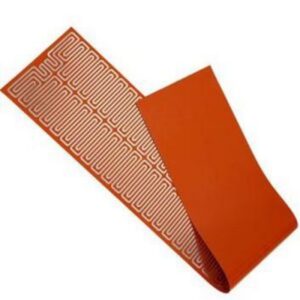
Wire-wound and etched-foil silicone heaters use different resistive
heating structures. A wire-wound design is often considered for
cost-sensitive, general-purpose heating, while an etched-foil design
may be preferred when a thinner profile or more precisely distributed
heating pattern is required. The best option depends on the actual
application and verified product specifications.
| Comparison Item | Wire-Wound Silicone Heater | Etched-Foil Silicone Heater |
|---|---|---|
| Heating Structure | Nickel-chromium resistance wire | Patterned etched resistive foil |
| Cost | Often a cost-effective option | May have a higher cost depending on circuit design |
| Lead Time | May be suitable for prototypes and smaller orders | Depends on circuit design and production requirements |
| Heat Distribution | Depends on resistance-wire spacing and layout | Flat circuit layout can support distributed heating |
| Watt Density | Proposed range: 0.5–2.5 W/cm² | Higher watt density may be possible with a suitable design |
| Thickness | Proposed range: 1.5–3.0 mm | Proposed range: 0.8–1.5 mm |
| Large Heating Areas | Large custom formats may be feasible | Maximum size depends on the foil circuit and manufacturing process |
| Typical Selection | General industrial heating and cost-sensitive projects | Thin-profile designs and applications requiring a tailored heating pattern |
Learn more about our
etched-foil silicone heater
option if your application requires a different heating-circuit design.
Frequently Asked Questions
What is the difference between wire-wound and etched-foil silicone heaters?
A wire-wound silicone heater uses resistance wire embedded in silicone
rubber and is often chosen for general-purpose, cost-sensitive heating.
An etched-foil silicone heater uses a patterned flat foil circuit and
may offer a thinner profile or a more tailored heating pattern.
The appropriate option depends on the application’s performance and
budget requirements.
Can I order custom shapes and sizes?
Custom shapes, dimensions, cutouts, mounting holes, voltage, wattage
and lead-wire configurations can be reviewed according to your drawing
and application. Send your requirements for a feasibility review and quote.
What is PSA adhesive backing?
PSA is pressure-sensitive adhesive backing that can simplify mounting
on a suitable clean, dry surface. The adhesive type and temperature
limits must be confirmed for the intended application. The proposed
continuous operating temperature for PSA versions is up to 175°C,
subject to confirmation.
Can a temperature sensor or overheat protection be added?
NTC thermistors, PT100 RTDs, bimetal thermostats and thermal fuses
may be available depending on the heater design. Specify the required
sensor type and installation position when requesting a quotation.
Is a wire-wound silicone heater suitable for outdoor use?
Outdoor suitability depends on the heater construction, lead sealing,
mounting method and environmental protection rating. An IP65 option
must be confirmed for the complete assembly. The heater should not be
immersed in water unless specifically designed and approved for that use.
What information is needed for a quotation?
Please provide a drawing or dimensions, voltage, wattage, target
temperature, quantity, mounting method and any sensor or lead-wire
requirements. Our team can review your requirements and advise on
a suitable configuration.
Installation and Safety Notes
- Operate the heater with appropriate temperature control and thermal
protection for the application. - Ensure suitable thermal contact with the target surface. Unintended
air gaps can cause localized overheating. - Apply PSA adhesive only to surfaces prepared according to the
adhesive manufacturer’s instructions. - Do not fold, sharply crease, pinch or mechanically damage the heater,
as this may damage the internal resistance wire. - High-voltage AC versions must be installed and wired by qualified
personnel in accordance with applicable electrical requirements. - Confirm the operating temperature, wattage, mounting method and
environmental limits before use.

评价
目前还没有评价