


Custom Cartridge Heater for OEM Industrial Applications
Custom cartridge heaters are cylindrical electric heating elements designed for precise and localized heating in industrial equipment. EaseWise provides custom cartridge heater solutions based on your required diameter, length, voltage, wattage, watt density, lead configuration, and operating temperature.
When a standard cartridge heater cannot meet your equipment’s dimensions, electrical specifications, installation space, or connection requirements, a custom configuration may be needed. Typical applications include injection molding molds, dies, extrusion equipment, packaging machinery, heating blocks, and other industrial equipment.
Whether you need a prototype, replacement heater, or production quantity, EaseWise can coordinate custom production through qualified partner factories according to your drawing, sample, technical specifications, or application requirements.
Looking for a Custom Cartridge Heater?
Send us your diameter, length, voltage, wattage, operating temperature, lead configuration, and required quantity. You can also provide a DXF/PDF drawing or an existing sample for technical review.


Custom Cartridge Heater Specifications
Custom cartridge heaters can be configured according to the mechanical, electrical, and thermal requirements of your equipment. The following table shows typical specification ranges and available options.
| Parameter | Typical Range / Options |
|---|---|
| Diameter | 3 mm–50 mm |
| Length | 25 mm–1500 mm |
| Voltage | 12 V–480 V |
| Watt Density | Up to 40 W/cm², depending on design and operating conditions |
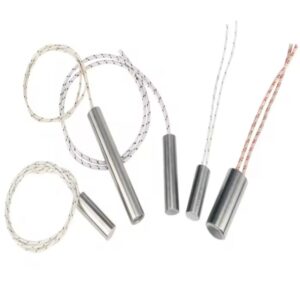
| Lead Configuration | Fiberglass, stainless steel braided, Teflon, and other options |
| Thermocouple | Optional Type J / Type K |
| Sheath Material | Stainless steel and other suitable materials, subject to application requirements |
Actual specifications depend on heater dimensions, electrical requirements, operating temperature, installation conditions, and application requirements. Final specifications should be confirmed during technical review.

Cartridge Heater Construction and Working Principle
A cartridge heater is generally constructed with a resistance heating element positioned inside a cylindrical metal sheath. Electrical insulation and heat-conducting material are used between the resistance element and the outer sheath.
A typical construction includes the following components:
| Component | Function |
|---|---|
| Resistance Heating Wire | Generates heat when electrical current passes through the resistance element. |
| Magnesium Oxide (MgO) Insulation | Provides electrical insulation while allowing heat to transfer from the resistance element to the metal sheath. |
| Metal Sheath | Protects the internal components and transfers heat to the surrounding metal block or equipment. |
| Lead Wires and Terminals | Connect the heater to the electrical power supply. |
| End Sealing | Helps protect the internal assembly from contamination and moisture, depending on the construction. |
When energized, the resistance wire generates heat. This heat passes through the compacted insulation material and the metal sheath before transferring to the surrounding material, typically through direct contact with the wall of an installation hole.
The quality of the internal assembly, insulation condition, heater dimensions, and installation contact all influence heat transfer and operating performance.
For OEM projects, the internal construction should be selected according to the required wattage, operating temperature, heater diameter, installation conditions, and expected service environment.
Custom Cartridge Heater Design Options
The heater configuration can be adapted to the available installation space, electrical supply, heating requirements, and operating environment.
| Customization | Available Options |
|---|---|
| Dimensions | Diameter, overall length, heated length, and unheated section |
| Electrical Specifications | Voltage, wattage, resistance, and watt density |
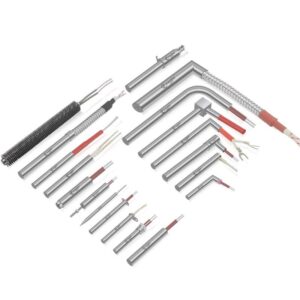
| Lead Configuration | Lead length, direction, insulation, and connection configuration |
| Temperature Requirements | Operating temperature and temperature-control requirements |
| Temperature Sensing | Optional Type J or Type K thermocouple configurations |
| Materials | Sheath and insulation materials selected according to application requirements |
Cartridge Heater Lead and Terminal Configurations
The lead and terminal arrangement should match the available wiring space, electrical connection method, and temperature conditions around the heater’s lead end.
Depending on the heater design, customization may include:
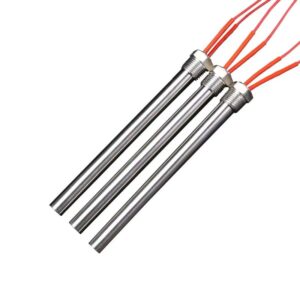
- Lead wire length and exit direction
- Fiberglass or Teflon-insulated lead options
- Stainless steel braided lead protection
- Single-side or other suitable terminal arrangements
- Connection and terminal configurations according to installation requirements
- Defined heated and unheated sections
Lead insulation should be selected according to the actual temperature at the lead exit, not only the maximum temperature of the heated equipment. If the lead area is exposed to high ambient temperatures, additional protection or a different lead arrangement may be required.
Please provide a photo or drawing showing the lead exit direction and available wiring space when requesting a quotation.
Custom Cartridge Heaters with Built-in Thermocouples
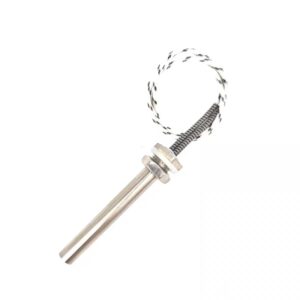
A cartridge heater can be configured with an optional built-in thermocouple where temperature sensing near the heater is required. Type J and Type K thermocouple options are available subject to the heater design.
A built-in thermocouple provides a temperature signal for a compatible temperature controller. It can help monitor heater temperature and support temperature regulation or over-temperature protection when used with a suitable control system.
| Option | Selection Consideration |
|---|---|
| Type J Thermocouple | Selected according to the required measurement range and control system compatibility. |
| Type K Thermocouple | Selected according to the required measurement range and control system compatibility. |
| Sensor Position | Depends on heater diameter, internal construction, and the location where temperature needs to be monitored. |
| Sensor Wiring | Requires suitable sensor lead identification and connection to the temperature controller. |
The thermocouple location affects the temperature reading and response. The temperature measured inside or near the heater may differ from the actual temperature of the mold, metal block, or workpiece.
If your equipment requires temperature feedback, please provide the controller type, sensor preference, heater dimensions, and intended measurement location.
Installation Fit and Heat Transfer Considerations
Correct installation is important for cartridge heater performance. A cartridge heater is commonly inserted into a drilled hole in a mold, metal block, or machine component. The dimensional relationship between the heater and the installation hole affects contact and heat transfer.
1. Installation Hole Diameter
The installation hole should be prepared according to the heater’s specified outside diameter and the required fit. An oversized hole can reduce contact between the heater sheath and the surrounding material, while an unsuitable tight fit can make installation or removal difficult.
2. Surface Contact and Heat Transfer
Heat is transferred from the heater sheath to the surrounding metal primarily through conduction at the contact interface. Proper hole preparation and suitable dimensional fit help improve heat transfer and reduce localized overheating risks.
3. Heated and Unheated Sections
The heated section should correspond to the area that requires heating. The unheated section and lead exit area should be considered when designing the installation depth and wiring arrangement.
4. Installation and Removal
The heater should be installed without damaging the sheath or lead connections. Where frequent replacement is expected, the installation design should also consider access for removal and maintenance.
For a custom quotation, provide the installation hole diameter, hole depth, available space, and required heated area. These details help determine a more suitable heater configuration.
Custom Cartridge Heater Applications
Custom cartridge heaters are commonly used in industrial equipment where a specific heater size, electrical configuration, or installation design is required.
- Injection molding molds and tooling
- Plastic extrusion equipment
- Hot runner systems
- Packaging and sealing machinery
- Heating blocks and metal plates
- Die casting and metal forming equipment
- Industrial processing equipment
- Laboratory and specialized heating equipment
Explore our
Cartridge Heater Applications
page for more information about industrial heating applications and equipment requirements.
What Information Is Needed for a Custom Cartridge Heater?
Providing accurate application and dimensional information helps determine a suitable heater configuration. If you are requesting a replacement heater or developing a new OEM project, the following information is useful:
| Required Information | Why It Matters |
|---|---|
| Diameter and Length | Helps determine whether the heater fits the installation hole and required heated area. |
| Voltage and Wattage | Defines the electrical configuration and available heating power. |
| Watt Density | Helps evaluate the heating load and thermal requirements of the application. |
| Lead Configuration | Helps ensure that the heater can be connected and installed correctly. |
| Operating Temperature | Helps determine suitable materials, insulation, and heater construction. |
| Installation Hole | Helps evaluate the dimensional fit and heat transfer conditions. |
| Thermocouple Requirement | Determines whether integrated temperature sensing is needed. |
| Drawing or Existing Sample | Allows the proposed heater configuration to be compared with the existing application. |
| Required Quantity | Helps prepare an appropriate quotation for prototype or production requirements. |
If you do not have a complete technical drawing, you can send the available dimensions, product photos, or an existing heater sample. Our team can review the information and identify the details that still need confirmation.
Have a Heater Drawing or Existing Sample?
Send your DXF/PDF drawing, heater photos, or available specifications. Include your required voltage, wattage, and quantity so we can review your project.
OEM Cartridge Heater Customization and Production Support
EaseWise supports OEM cartridge heater projects for molds, machines, tooling, heating blocks, and industrial production equipment. Custom requirements can be coordinated through qualified partner factories according to approved drawings, samples, technical specifications, or application details.
Projects may involve prototype requirements, replacement heaters, or production quantities. Dimensions, electrical specifications, lead configurations, and installation requirements can be reviewed according to the project specifications.
For an OEM quotation, you can provide:
- Technical drawing or heater drawing in DXF/PDF format
- Existing heater sample or product photos
- Diameter, overall length, and heated length
- Voltage and wattage
- Operating temperature and heating environment
- Lead and terminal requirements
- Installation hole dimensions
- Thermocouple requirements, if applicable
- Application and installation details
- Required quantity
After reviewing your information, EaseWise can coordinate the technical requirements and quotation with suitable production partners.
Common Cartridge Heater Problems and Selection Considerations
Incorrect heater selection or unsuitable installation conditions may affect service life and heating performance. When replacing an existing heater or developing a new design, consider the following common issues:
| Common Problem | Possible Factors to Check |
|---|---|
| Slow Heating | Check voltage, wattage, heater size, installation contact, and heating load. |
| Uneven Temperature | Review heater position, heated length, watt distribution, and contact with the surrounding material. |
| Frequent Heater Burnout | Check operating conditions, watt density, installation fit, and temperature control. |
| Lead Wire Damage | Check the temperature near the lead exit, insulation selection, and mechanical protection. |
| Temperature Fluctuation | Check the thermocouple position, controller settings, sensor wiring, and thermal load. |
If you are experiencing slow heating, temperature fluctuation, frequent burnout, broken wires, or other cartridge heater problems, see our
Cartridge Heater Troubleshooting Guide
for common causes and practical solutions.
Why Choose EaseWise for Custom Cartridge Heaters?
EaseWise provides application-based custom cartridge heater solutions for industrial equipment buyers and OEM projects. We focus on understanding your technical requirements, coordinating suitable configurations, and supporting the quotation process.
- OEM customization based on customer drawings, samples, and specifications
- Flexible dimensions and electrical configuration options
- Support for prototype, replacement, and production requirements
- Custom lead and connection configurations
- Coordination with qualified partner factories
- Application-based heater selection and technical communication
- Support for customers across different industrial markets
Our team can help review your requirements before quotation so that important details such as dimensions, voltage, wattage, lead arrangement, installation fit, and operating conditions are considered.
Related Cartridge Heater Products
If you are looking for a general cartridge heater solution rather than a fully customized configuration, visit our
Cartridge Heater Product Page
to review the core product range.
For applications requiring higher watt density and compact heating performance, explore our
High-Density Cartridge Heater
page.
You can also explore our
Cartridge Heater Applications
page to understand how cartridge heaters are used in different industrial equipment.
Custom Cartridge Heater FAQ
1. What information do I need to order a custom cartridge heater?
The most useful information includes diameter, overall length, heated length, voltage, wattage, lead configuration, operating temperature, and quantity. A technical drawing or existing sample can help clarify the requirements.
2. Can cartridge heaters be customized according to a drawing?
Yes. Custom requirements can be reviewed according to a DXF/PDF drawing, sample, or technical specification. Dimensions, electrical ratings, lead arrangements, and other design details are subject to technical confirmation.
3. What is the function of MgO in a cartridge heater?
Magnesium oxide (MgO) is commonly used as an insulating and heat-conducting material inside cartridge heaters. It electrically separates the resistance element from the metal sheath while allowing heat to transfer toward the outside of the heater.
4. Why is the installation hole important?
The relationship between the heater outside diameter and the installation hole affects fitting, contact, and heat transfer. An unsuitable fit can reduce heat transfer efficiency or make installation and removal difficult.
5. Can a cartridge heater have a built-in thermocouple?
A built-in Type J or Type K thermocouple can be considered for suitable heater designs. The sensor location, wiring, heater dimensions, and controller compatibility should be confirmed before ordering.
6. How do I choose the correct watt density?
Watt density should be evaluated according to heater dimensions, material being heated, operating temperature, installation contact, and heat dissipation conditions. A higher watt density is not automatically better for every application.
7. Can I order a replacement cartridge heater using an old sample?
Yes. You can provide an existing heater sample or clear photos with its dimensions and electrical information. The available details can be reviewed to prepare a replacement configuration.
8. Can EaseWise support OEM production requirements?
EaseWise coordinates custom cartridge heater projects through qualified partner factories. Prototype and production requirements can be reviewed according to drawings, samples, technical specifications, and order quantities.
Request a Custom Cartridge Heater Quote
Looking for a custom cartridge heater for your equipment or OEM project? Send EaseWise your drawing, sample, dimensions, voltage, wattage, operating temperature, lead configuration, and required quantity.
Our team will review the available information and coordinate a suitable configuration and quotation based on your application requirements.
Contact EaseWise
Contact our sales team for custom cartridge heater pricing, technical specifications, availability, and OEM project support.
Stock models and custom configurations are available subject to confirmation. Contact EaseWise for pricing, availability, and OEM project support.
评价
目前还没有评价