
Cartridge Heater Voltage, Wattage & Temperature Guide
Cartridge heater voltage, wattage, and temperature directly affect heating performance, heat-up time, reliability, and service life. Voltage must match the power supply, wattage determines heating power, and operating temperature affects heater construction and material selection.
For industrial applications, these parameters should be considered together with heat loss, installation conditions, and watt density.
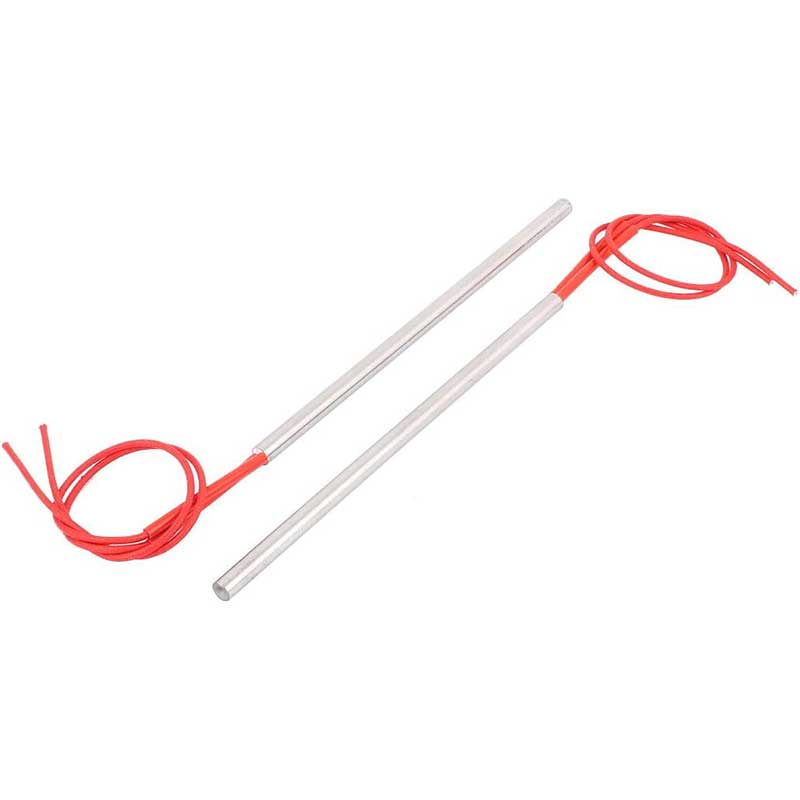
Voltage, Wattage and Temperature Reference
| Parameter | Typical Options | Key Consideration |
|---|---|---|
| Voltage | 12V, 24V, 110V, 220V, 230V, 240V, 380V, 480V | Match the available power supply |
| Wattage | Hundreds to several thousand watts | Depends on heating load and heat-up time |
| Operating Temperature | Application dependent | Depends on construction, sheath material, and heat transfer |
| Watt Density | Application dependent | Must match the heated material and heat dissipation |
How Are Voltage and Wattage Related?
For a resistive heating element, electrical power is related to voltage and resistance:
P = V² / R
Where P is power, V is voltage, and R is resistance.
This means voltage and wattage are closely related. Applying a substantially higher voltage than the heater is designed for can significantly increase power output and cause overheating or premature failure.
For replacement heaters, always confirm the original voltage and wattage before ordering.
How to Choose the Right Wattage
Required wattage depends mainly on the heating load, target temperature, heat-up time, heat loss, and installation conditions.
- Heat-up time: Higher wattage can shorten heating time when the heated component can effectively absorb the heat.
- Heating load: Metals, plastics, liquids, molds, and heating blocks have different thermal requirements.
- Heat loss: Insulation, airflow, ambient temperature, and equipment structure affect the required power.
- Watt density: Power concentrated over a smaller heated surface can increase heater temperature and affect service life.
For a more detailed explanation of watt density and application ranges, see our Cartridge Heater Watt Density Guide.
For the complete selection process, see our Cartridge Heater Selection Guide.
How Does Operating Temperature Affect Performance?
Operating temperature affects sheath material, watt density, insulation, heat transfer, and temperature control. The maximum rated temperature should not be treated as the normal operating temperature.
For lower and medium-temperature applications such as packaging equipment, sealing machines, and heating blocks, stable temperature control and efficient heat transfer are often more important than maximum temperature capability.
High-temperature applications such as molds and hot runner systems require closer attention to sheath material, watt density, installation fit, and temperature control.
Depending on the application, sheath materials may include SUS304, SUS321, SUS316L, or Inconel 600.
For additional technical information about cartridge heater construction and high-density heating, see the OMEGA Hi-Density Cartridge Heater Technical Reference.
Voltage, Wattage and Temperature by Application
| Application | Typical Voltage | Heating Requirement | Main Considerations |
|---|---|---|---|
| Injection Molding | 220V / 240V | Medium to high power | Watt density, bore fit, heat transfer |
| Hot Runner | 220V / 240V / 480V | High localized heating | Temperature stability, response time, fit |
| Packaging & Sealing | 110V / 220V / 240V | Low to medium power | Temperature control and response |
| Heating Blocks | 110V / 220V / 240V | Application dependent | Heat distribution and installation fit |
| Industrial Equipment | 220V / 380V / 480V | Application dependent | Power supply, heat loss, and temperature |
For additional application examples, see our Cartridge Heater Applications Guide.
Why Can a Cartridge Heater Fail Even When Specifications Are Correct?
Correct electrical specifications do not guarantee long heater life. Installation and operating conditions also affect performance.
- Poor bore fit: Excessive clearance can reduce heat transfer and create hot spots.
- Excessive watt density: High power concentration can cause overheating when heat cannot dissipate effectively.
- Insufficient heat dissipation: Poor contact or heat transfer can raise heater temperature.
- Incorrect sheath material: The sheath must suit the temperature and surrounding environment.
- Moisture exposure: Moisture can affect electrical insulation and reliability.
- Frequent thermal cycling: Repeated heating and cooling can increase thermal stress.
- Poor temperature control: Incorrect sensor positioning or control can cause overheating.
Cartridge heater performance should therefore be evaluated as part of the complete heating system, not by voltage and wattage alone.
When Should You Choose a Custom Cartridge Heater?
A custom cartridge heater is useful when standard dim