
Immersion Heater Troubleshooting & Maintenance Guide
Immersion heater troubleshooting helps identify common heating problems before they cause equipment downtime or premature heater failure. If an electric immersion heater is not working, has stopped heating, or repeatedly trips electrical protection, identifying the possible cause can help determine the appropriate corrective action. This guide covers common faults, safe inspection procedures, and maintenance for industrial immersion heaters.
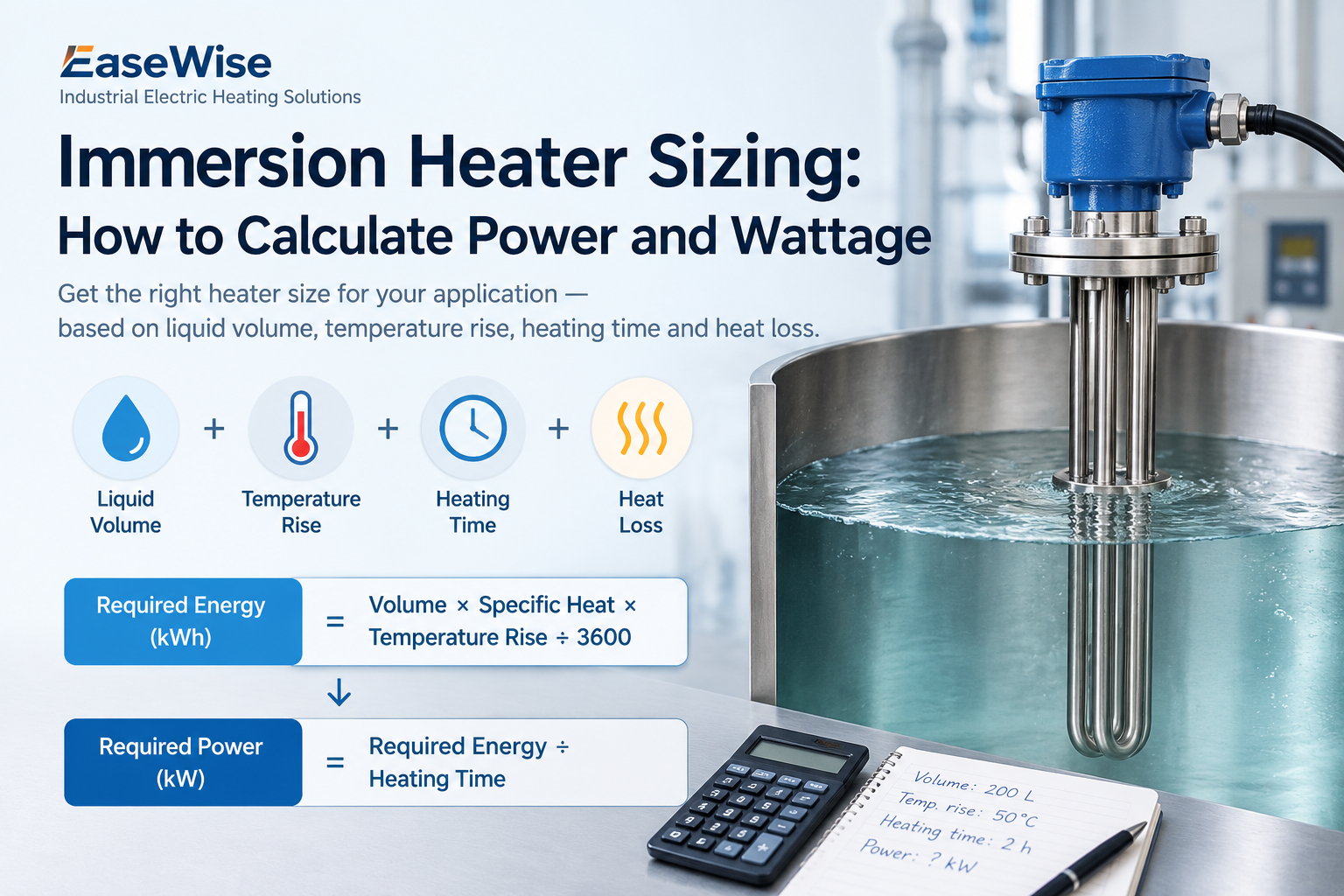
Immersion Heater Troubleshooting: Common Problems
An effective immersion heater troubleshooting process starts with identifying the symptoms, checking the operating conditions, and determining whether the problem is electrical or related to heat transfer. Common issues include an immersion heater not working, slow heating, overheating, scale buildup, and repeated electrical trips.
| Problem | Possible Cause | What to Check |
|---|---|---|
| Immersion heater not working | Power supply, wiring, controller, or heating element failure | Have a qualified technician check the supply, controls, wiring, and element continuity. |
| Slow heating | Insufficient power, scale buildup, poor circulation, or excessive heat loss | Check heater wattage, liquid condition, circulation, and deposits. |
| Overheating | Low liquid level, poor circulation, or temperature-control problems | Check liquid coverage, circulation, thermostat, and controller settings. |
| Frequent failure | Dry firing, scale, corrosion, or unsuitable operating conditions | Inspect the element and review the operating conditions. |
| Electrical tripping | Moisture ingress, damaged insulation, wiring faults, or element failure | Isolate the power supply and have qualified personnel check insulation and electrical connections. |
1. Immersion Heater Does Not Heat
If an immersion heater is not heating, the cause may be related to the power supply, electrical connections, temperature controls, or heating element. Before considering replacement, identify the fault using appropriate inspection and testing procedures.
- Confirm that the supply voltage and electrical configuration match the heater specifications.
- Inspect wiring, terminals, relays, and contactors for visible damage or loose connections after safely isolating the equipment.
- Verify thermostat, temperature sensor, and controller operation.
- Have a qualified technician test heating element continuity and insulation resistance as appropriate.
If the electrical supply and controls are working correctly but the element does not heat, the heating element may have failed and require repair or replacement.
2. Why Is My Immersion Heater Not Working?
If you are asking, “why is my immersion heater not working?”, start by considering when the problem occurs and whether anything has changed in the heating system. An electric immersion heater not working may have an electrical fault, a control problem, a damaged element, or an operating condition that prevents normal heating.
- No heating at all: The power supply, electrical circuit, controller, or heating element may require inspection.
- The heater switches off unexpectedly: Check the temperature-control system and any protective devices.
- The heater works intermittently: Loose connections, control faults, or changing operating conditions may be involved.
- The heater repeatedly overheats: Check liquid coverage, circulation, deposits, and temperature-control operation.
- The heater trips electrical protection: The circuit and heater insulation should be checked by qualified personnel.
These symptoms can have different causes. Do not assume that the heating element has failed until the relevant electrical and operating checks have been completed.
3. Immersion Heater Slow Heating
Slow heating can result from insufficient power, scale buildup, poor liquid circulation, or increased heat loss. A change in liquid volume, production rate, or target temperature can also increase the heating load.
- Check whether the heater wattage is adequate for the liquid volume and required heat-up time.
- Confirm that the supply voltage and electrical configuration meet the heater specifications.
- Inspect the element for scale or process deposits after safely isolating the equipment.
- Check whether liquid circulation is adequate for the application.
- Review tank insulation, ambient conditions, and heat loss.
If the problem started after a process change, verify that the existing heater still matches the required heating load. Our Immersion Heater Sizing Guide explains how to estimate heating energy and required power.
4. Immersion Heater Overheating and Dry Firing
Immersion heater overheating can occur when the liquid level is too low, circulation is insufficient, or temperature controls do not operate correctly. The heater must remain within its specified operating conditions.
- Maintain the required liquid level so the heating element remains adequately immersed.
- Check liquid circulation where required by the heater design.
- Verify thermostat, temperature sensor, and controller operation.
- Review controller settings and the required process temperature.
- Check for scale or deposits that may interfere with heat transfer.
Never operate an immersion heater under dry conditions unless it is specifically designed for that operation. Insufficient liquid coverage can cause rapid overheating, sheath damage, and premature heater failure.
5. Immersion Heater Scale and Corrosion
Scale and process deposits can reduce heat transfer and increase the heating element’s operating temperature. Corrosion can also damage the sheath and shorten heater service life.
- Inspect the heating element for scale, deposits, pitting, and surface damage.
- Clean deposits only after isolating the equipment and using a method compatible with the sheath material.
- Avoid cleaning chemicals or tools that may damage the heating element or its protective surface.
- If corrosion or pitting repeatedly occurs, review the liquid composition, concentration, operating temperature, and sheath material.
For help selecting a suitable sheath material for your liquid and operating conditions, read our Immersion Heater Materials & Sheath Selection Guide.
6. Immersion Heater Electrical Faults
If an immersion heater trips a circuit breaker or another electrical protection device, isolate the power supply and do not repeatedly reset the protection device without identifying the cause.
Possible causes include moisture ingress, damaged insulation, loose electrical connections, incorrect wiring, or a failed heating element. Qualified personnel should inspect the electrical circuit and test insulation resistance using procedures appropriate for the heater and connected controls.
Do not return the heater to service until the fault has been identified and the equipment has been confirmed safe to operate.
How to Test an Immersion Heater Safely
If you need to know how to test an immersion heater, the appropriate procedure depends on the heater design, supply voltage, and electrical control system. Electrical testing should be performed by a qualified technician using suitable equipment.
Before inspection or testing, isolate the power supply, follow the site’s lockout procedures, and allow the heater and liquid to cool to a safe temperature.
- Check the heater nameplate against the available supply voltage and specified electrical ratings.
- Inspect accessible wiring, terminals, and controls for visible damage after the equipment has been safely isolated.
- Have a qualified technician test heating element continuity and insulation resistance as appropriate for the equipment.
- Check the thermostat, temperature sensor, and controller if the heater does not respond to a heating demand.
- Confirm that the heater is adequately immersed and operating under its specified conditions before returning it to service.
A continuity test alone does not establish that an immersion heater is safe to operate. Insulation condition, protective devices, wiring, and the cause of the original fault may also need to be assessed.
How to Check If an Immersion Heater Is Working
To understand how to check if an immersion heater is working, observe whether the heater responds to a heating demand and whether the liquid temperature increases as expected. These observations can help identify a problem, but they do not replace electrical testing.
- Check the operating conditions: Confirm the liquid level, target temperature, and controller settings.
- Observe the heating response: Check whether the system responds when heating is requested and whether the liquid temperature changes over time.
- Review the controls: If the heater does not respond, the thermostat, sensor, controller, or electrical supply may require inspection.
- Check for warning signs: Unexpected shutdowns, repeated electrical trips, visible damage, or abnormal overheating require investigation.
- Arrange electrical testing: A qualified technician should test the heating element and insulation when a fault is suspected.
Do not touch exposed terminals or live electrical components to check whether the heater is operating. Isolate the equipment and use appropriate procedures for any physical inspection or testing.
Immersion Heater Troubleshooting and Maintenance Checklist
Regular maintenance can help identify wear, deposits, and operating problems before they lead to unexpected downtime. Inspection frequency should be based on the process medium, operating temperature, duty cycle, and manufacturer recommendations.
| Item | What to Check |
|---|---|
| Heating element | Scale, deposits, corrosion, deformation, or visible damage |
| Liquid level | Adequate heater coverage during operation |
| Electrical connections | Terminal condition, wiring damage, and loose connections |
| Temperature control | Thermostat, sensor, controller, and temperature response |
| Liquid circulation | Sufficient liquid movement where required by the application |
| Mounting and installation | Secure installation, correct positioning, and signs of leakage where applicable |
| Sheath condition | Corrosion, pitting, cracks, and other signs of deterioration |
What Maintenance Is Required for Industrial Immersion Heaters?
The maintenance required for industrial immersion heaters depends on the heating medium, operating temperature, duty cycle, and installation environment. A practical maintenance plan should include regular inspection of the heating element, sheath condition, electrical connections, temperature controls, liquid level, and circulation where required.
- Inspect for scale, process deposits, corrosion, and physical damage.
- Check accessible electrical connections and temperature-control components.
- Confirm that the liquid level and circulation meet the heater’s operating requirements.
- Clean deposits using a method compatible with the sheath material and process medium.
- Investigate repeated overheating, slow heating, or electrical trips before resuming normal operation.
- Record recurring faults, inspection findings, and any maintenance performed.
Set inspection intervals according to the application, operating conditions, and manufacturer recommendations. Isolate the power supply before maintenance, and have electrical tests performed by qualified personnel.
How to Prevent Immersion Heater Failure
Preventive maintenance and correct heater selection can help reduce avoidable immersion heater failures. Keep the element adequately immersed, maintain appropriate temperature control, inspect for scale and corrosion, and ensure that the heater matches the process medium and heating load.
Regular immersion heater troubleshooting also helps identify recurring problems such as unsuitable wattage, incorrect temperature settings, liquid-level issues, and sheath corrosion. Record repeated faults and correct their underlying causes to help reduce avoidable downtime.
- Select a suitable heater wattage for the required heat-up time and operating conditions.
- Choose a sheath material compatible with the liquid and its concentration.
- Maintain the required liquid level and circulation conditions.
- Inspect the heater and electrical connections at suitable intervals.
- Investigate repeated trips, overheating, or slow heating instead of continuing operation without identifying the cause.
When Should You Replace an Immersion Heater?
Consider replacing an immersion heater when it has severe corrosion, damaged insulation, physical damage, repeated electrical faults, or consistently poor heating performance that cannot be resolved through appropriate maintenance.
Before ordering a replacement, confirm the following specifications:
- Voltage and wattage
- Heated length and overall dimensions
- Mounting configuration and connection size
- Process medium and operating temperature
- Sheath material
- Available installation space
- Temperature control and sensor requirements
Providing the existing heater’s nameplate information, dimensions, or a drawing can help with replacement selection.
Choose the Right Industrial Immersion Heater
Need a replacement or custom immersion heater? Explore the EaseWise Immersion Heater product range for industrial liquid heating applications.
For specific installation configurations, see our Screw Plug Immersion Heater and Flanged Immersion Heater.
Request a Custom Immersion Heater
EaseWise can review your application requirements to help identify a suitable immersion heater configuration. When requesting a quotation, provide your voltage, wattage, dimensions, heating medium, operating temperature, mounting method, and quantity. A PDF or DXF drawing is also helpful when available.
Request a Custom Immersion Heater Quote
Amy – Sales
Email: amy-EaseWise@tzheater.com
WhatsApp: +86 188 8318 8154
Hanna – Sales
Email: Hanna-EaseWise@tzheater.com
WhatsApp: +86 173 5168 116
Frequently Asked Questions
Why has my immersion heater stopped working?
An immersion heater may stop working because of a power supply problem, faulty temperature controls, damaged wiring, a failed heating element, or an operating condition that activates a protective device. The cause should be identified before the heater is repaired or replaced.
Can I test an immersion heater myself?
You can observe the system’s heating response and review the controller settings, but electrical testing should be performed by qualified personnel. Always isolate the power supply before inspection and never touch exposed live components.
How often should industrial immersion heaters be maintained?
Maintenance frequency depends on the liquid, operating temperature, duty cycle, and operating environment. Follow the manufacturer’s recommendations and establish an inspection schedule based on the application’s risk and operating conditions.
What information is needed to replace an immersion heater?
Provide the voltage, wattage, dimensions, heated length, mounting configuration, sheath material, heating medium, operating temperature, and quantity. An existing heater drawing or nameplate details can also help with selection.