
Cartridge Heater Materials: Stainless Steel, Incoloy & More
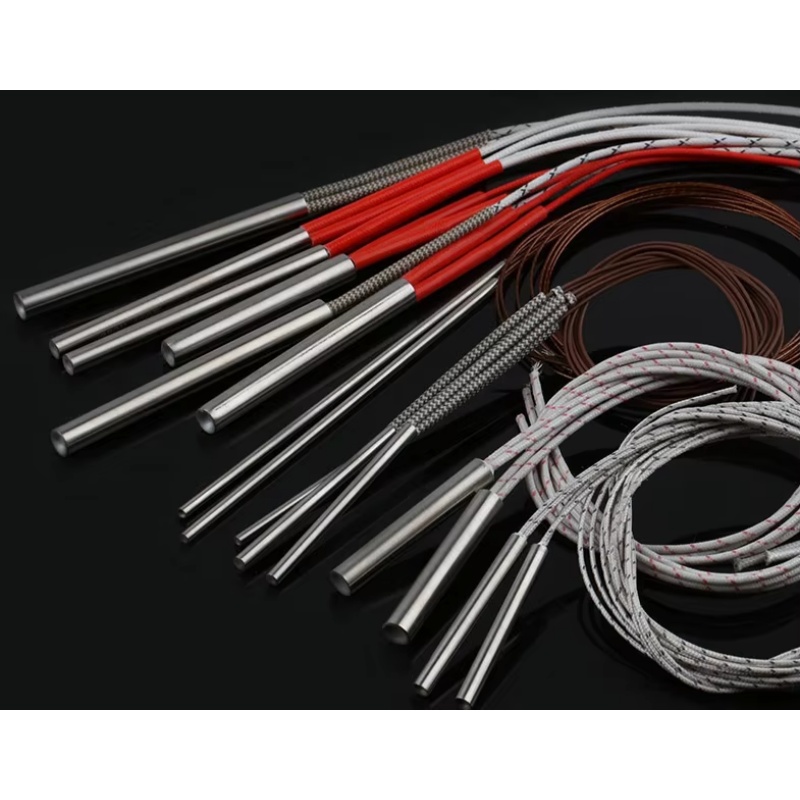
Choosing the right cartridge heater material is just as important as selecting the correct voltage, wattage, and dimensions.
Many cartridge heaters may look similar, but the sheath material can significantly affect temperature capability, corrosion resistance, service life, application compatibility, and cost.
So which material should you choose — 304 stainless steel, 316L stainless steel, Incoloy®, steel, or copper?
This guide explains the key differences and helps you choose the right material for your operating environment.
Cartridge Heater Material Comparison
| Material | Max. Operating Temperature* | Corrosion Resistance | Typical Applications | Cost Level |
|---|---|---|---|---|
| 304 Stainless Steel | ~650°C | Good | General industrial heating, water solutions, cleaning systems | Medium |
| 316L Stainless Steel | ~650°C | Excellent | Corrosive liquids, chemical processing, food equipment | Medium-High |
| Incoloy® | ~870°C | Excellent | High-temperature air heating, radiant heating, demanding environments | High |
| Steel | ~427°C | Fair | Oil heating, alkaline cleaning solutions | Low |
| Copper | ~175°C | Fair | Water heating in non-corrosive environments | Medium |
*Actual maximum operating temperature depends on heater construction, watt density, installation, heating medium, and operating conditions.
304 Stainless Steel vs. 316L: What’s the Difference?
304 stainless steel is one of the most commonly used materials for cartridge heaters because it offers a good balance between cost, corrosion resistance, and general durability.
It is suitable for many standard industrial applications, including heating water-based solutions and general process equipment.
316L stainless steel provides better corrosion resistance, particularly in environments where the heater is exposed to corrosive liquids or chemicals.
Which One Should You Choose?
Choose 304 stainless steel when:
- The heating medium is relatively non-corrosive
- You need a reliable solution for general industrial heating
- Cost efficiency is important
- The operating temperature is within the normal range of stainless steel heaters
Consider 316L when:
- The heater is exposed to corrosive liquids
- Chemical resistance is important
- The application involves food or processing equipment
- You need additional protection against corrosion
In simple terms, 316L is not automatically “better” than 304. It is better suited to applications where its additional corrosion resistance provides a real benefit.
What Is Incoloy® and When Should You Use It?
Incoloy® is a nickel-based alloy family designed for demanding environments where conventional stainless steel may not provide the required combination of high-temperature performance and corrosion resistance.
For cartridge heaters operating at high temperatures, Incoloy® can be a better choice when the application involves:
- High-temperature air heating
- Radiant heating
- High-temperature industrial equipment
- Severe thermal conditions
- Corrosive or demanding operating environments
For example, if a cartridge heater operates continuously at a significantly higher temperature than a typical stainless-steel application, choosing a higher-temperature alloy can help improve heater reliability and service life.
However, higher temperature capability does not mean Incoloy® should be used for every heater.
If your application operates at a moderate temperature and has no special corrosion requirements, 304 or 316L stainless steel may provide a more cost-effective solution.
How to Choose the Right Cartridge Heater Material
The best material depends primarily on what the heater is exposed to, not simply the heater’s rated wattage.
| Operating Environment | Recommended Material | Why |
|---|---|---|
| General industrial heating | 304 Stainless Steel | Balanced cost and corrosion resistance |
| Water-based heating | 304 Stainless Steel | Suitable for many non-aggressive water applications |
| Corrosive liquids | 316L Stainless Steel | Improved corrosion resistance |
| Chemical processing | 316L / Incoloy® | Depends on chemical composition and temperature |
| High-temperature air | Incoloy® | Better suited to demanding high-temperature operation |
| Radiant heating | Incoloy® | Suitable for high-temperature applications |
| Oil heating | Steel / Stainless Steel | Depends on temperature and oil characteristics |
| Alkaline cleaning solutions | Steel / Stainless Steel | Depends on chemical concentration and temperature |
| Non-corrosive water heating | Copper | Good thermal conductivity at moderate temperatures |
The final cartridge heater material selection should consider the heating medium, temperature, watt density, installation method, and required service life together.
For a broader selection process covering heater dimensions, voltage, wattage, temperature, and installation requirements, see our Cartridge Heater Selection Guide.
Why Do Cartridge Heaters With the Same Wattage Cost So Much Differently?
Two cartridge heaters can have exactly the same:
- Voltage
- Wattage
- Diameter
- Length
but still have significantly different prices.
The reason is that the heater is not defined by electrical specifications alone.
Cartridge heater material selection can affect the cost of the complete heating element.
For example:
304 stainless steel → 316L stainless steel → Incoloy®
generally represents an increase in material cost as the alloy becomes more specialized for corrosion resistance and demanding temperature conditions.
But material is only one part of the cost.
Other factors include:
- Sheath material
- Heating wire material
- Insulation material
- Watt density
- Lead wire configuration
- Internal thermocouple
- Tolerance requirements
- Special fittings or mounting features
- Custom dimensions
- Production quantity
Therefore, choosing the cheapest material is not always the lowest-cost solution.
A heater that uses an unsuitable material may experience corrosion, premature failure, overheating, or reduced service life, resulting in higher replacement and maintenance costs.
Common Problems Caused by Choosing the Wrong Material
1. Corrosion and Early Failure
If the sheath material is not compatible with the heating medium, corrosion can occur much faster than expected.
This is especially important for cartridge heaters used in chemical, liquid, or cleaning applications.
2. Excessive Surface Temperature
Material selection should also be considered together with watt density and heat transfer conditions.
A high-watt-density heater installed in an unsuitable environment can create excessive sheath temperatures and shorten heater life.
For more information, see our guide to Cartridge Heater Watt Density: How to Calculate and Choose.
3. Reduced Service Life
A material that works well in a short-term test may not provide the required durability for continuous industrial operation.
For production equipment, the goal should be to select a material that matches the actual operating environment and expected service life.
4. Unnecessary Cost
The opposite problem is also common.
Using Incoloy® for a moderate-temperature, non-corrosive application may increase the heater cost without providing a meaningful performance advantage.
The right material is therefore not necessarily the most expensive material.
It is the material that matches the application.
Need a Custom Cartridge Heater Material?
If you are unsure whether to use 304, 316L, Incoloy®, steel, or copper, you do not need to determine the material by yourself.
Provide us with your heating requirements, including:
- Heating medium
- Operating temperature
- Voltage
- Wattage
- Heater diameter and length
- Installation method
- Corrosive or chemical exposure
- Required quantity
- Lead wire or terminal requirements
Our team can recommend a suitable cartridge heater construction based on your actual operating conditions.
We can also provide custom heater dimensions, material selection, technical solutions, and sample service for evaluation before mass production.
Choose the Right Cartridge Heater Material for Your Application
The right cartridge heater material depends on more than temperature alone.
304 stainless steel is a practical choice for many general industrial applications.
316L stainless steel is better suited to more corrosive environments.
Incoloy® is designed for demanding high-temperature and corrosive applications.
Steel and copper can also be suitable when the operating conditions match their material limitations.
If you are experiencing heater failures or are unsure which material is suitable for your application, send us your heating requirements.
EaseWise can help you select the appropriate material and provide a complete customized heating solution, including technical consultation and sample service.
Contact Amy / Hanna for a customized cartridge heater solution.
Ready to choose your heater? Explore the EaseWise Cartridge Heater product range or contact our team for a customized solution.