How Does a Cartridge Heater Work?

```html

How Does a Cartridge Heater Work?

A cartridge heater is an electric heating element designed to provide concentrated and controlled heat inside industrial equipment. If you are wondering how a cartridge heater works, the basic principle is simple: electrical energy passes through a resistance heating coil, generating heat that travels through the internal insulation and metal sheath before being transferred to the surrounding component.

Because cartridge heaters are normally installed inside a drilled hole or heating block, they can deliver heat close to the area where it is required. This makes cartridge heaters suitable for localized heating, temperature control and compact industrial heating systems.

What Is a Cartridge Heater?

A cartridge heater is a cylindrical electric heating element consisting of a metal sheath, an internal resistance heating coil, electrical insulation and lead wires or terminal connections. Depending on the application, the heater can also include a built-in thermocouple or other temperature-sensing configuration.

The resistance heating coil converts electrical energy into thermal energy. The insulation electrically isolates the heating wire from the metal sheath, while the sheath protects the internal components and transfers heat to the surrounding material.

Cartridge heaters are available in different diameters, heated lengths, voltages, wattages, watt densities, sheath materials and lead configurations. These options allow the heating element to be matched to different industrial equipment and installation requirements.

For a detailed overview of cartridge heater construction and materials, see our Cartridge Heater Materials and Performance Comparison .

How Does a Cartridge Heater Work?

The working principle of a cartridge heater is based on electrical resistance. When voltage is applied to the heater, electrical current flows through the resistance heating coil. The electrical resistance of the coil converts electrical energy into heat.

The generated heat then travels from the internal resistance wire through the electrical insulation and metal sheath. Once the outer surface of the heater becomes hotter than the surrounding component, heat is transferred into the material by conduction.

In simple terms, the heating process follows these steps:

  1. Electrical power is supplied to the cartridge heater.
  2. Current flows through the internal resistance heating coil.
  3. The resistance wire generates heat.
  4. Heat passes through the electrical insulation.
  5. Heat reaches the metal sheath.
  6. The surrounding mold, block, plate, die or equipment component absorbs the heat.

Cartridge Heater Internal Structure

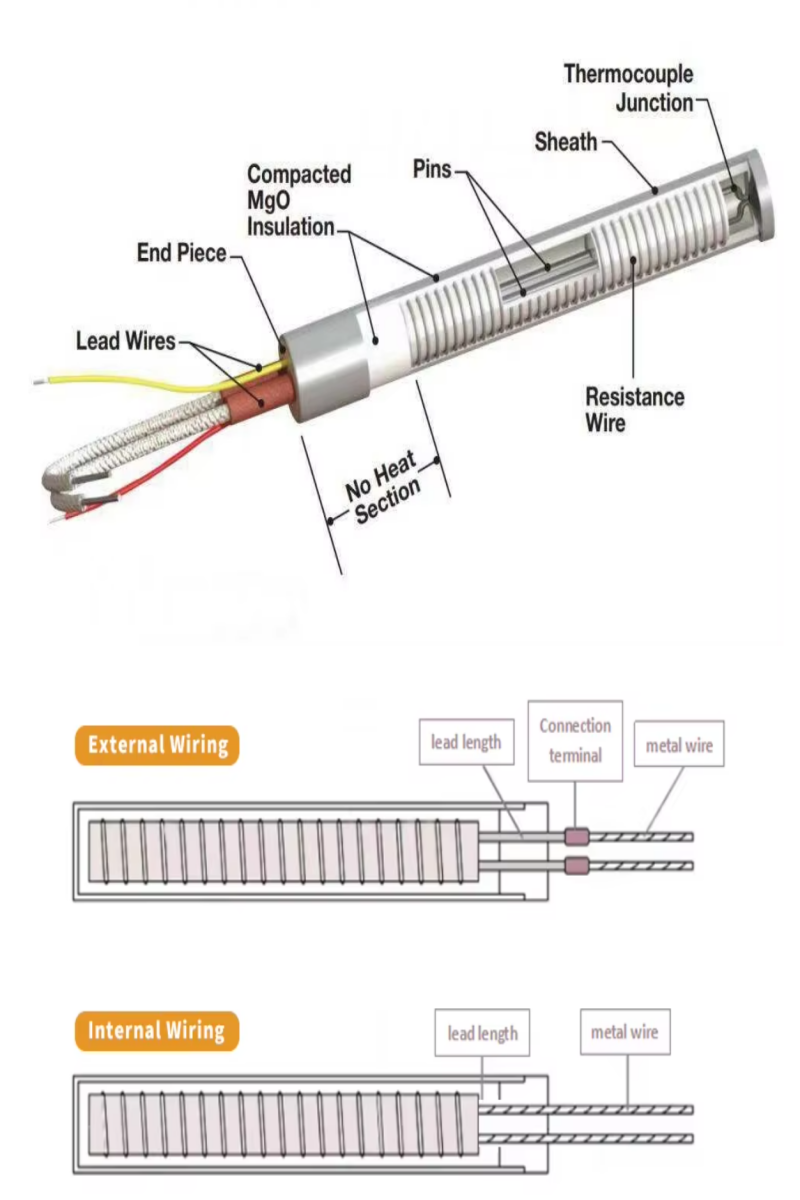
Understanding the internal structure of a cartridge heater helps explain how electrical energy is converted into useful heat. Although construction can vary according to the application, most cartridge heaters contain several basic components.

cartridge heater internal structure showing heating coil insulation and metal sheath
Typical cartridge heater internal structure and heating components.

Resistance Heating Coil

The resistance heating coil is the primary heat-generating component. It is manufactured from resistance heating wire designed to convert electrical energy into heat when current passes through it.

Electrical Insulation

Electrical insulation surrounds the heating coil and electrically isolates the resistance wire from the metal sheath. High-temperature insulating materials are used to maintain electrical insulation while allowing heat to move efficiently toward the sheath.

Metal Sheath

The metal sheath forms the outer surface of the cartridge heater. It protects the internal components and provides a path for heat transfer to the surrounding material. Different sheath materials can be selected according to operating temperature, corrosion resistance and environmental requirements.

Lead Wires and Terminals

Lead wires or terminal connections provide the electrical connection between the heater and the power supply. Lead length, orientation and connection configuration can be customized according to the equipment design and available installation space.

Optional Temperature Sensing

Some cartridge heater designs can include a built-in thermocouple or other temperature-sensing configuration. This allows temperature feedback to be collected close to the heating point and can improve temperature-control performance.

How Is Heat Transferred From a Cartridge Heater?

After the resistance coil generates heat, the thermal energy must reach the component being heated. In many industrial applications, the cartridge heater is installed inside a machined hole in a metal block, mold, die or other component.

Heat travels through the internal insulation and metal sheath before entering the surrounding material. The closer and more suitable the contact between the heater surface and the surrounding bore, the more effectively heat can generally be transferred by conduction.

This means that installation fit is an important part of cartridge heater performance. An excessively loose bore can increase thermal resistance, while an unsuitable installation fit can create mechanical or service problems.

The final temperature distribution can also be affected by heater diameter, heated length, power rating, watt density, sheath material, installation conditions and the characteristics of the material being heated.

What Affects Cartridge Heater Heating Performance?

Several factors determine how effectively a cartridge heater generates and transfers heat. Selecting the appropriate combination is important for achieving the required heating speed, operating temperature and service life.

Voltage and Wattage

Voltage and wattage determine the electrical power supplied to the heater. Higher power can increase heating capacity, but the required wattage should always be selected according to the equipment, material being heated, heat loss and target temperature.

Watt Density

Watt density describes the amount of electrical power applied over the heated surface area. It can influence heating speed and the thermal load placed on the surrounding material.

Higher watt density can provide faster heating, but it also requires appropriate heat transfer conditions and suitable installation.

For applications requiring rapid localized heating, see our High-Density Cartridge Heater .

Heater Diameter and Heated Length

The heater diameter affects how the element fits inside the installation bore, while the heated length determines the available heating area. The diameter should match the installation requirements and the heated length should correspond to the component area requiring heat.

Installation Fit

A suitable installation fit helps improve heat transfer between the cartridge heater and the surrounding component. An excessively loose fit can increase thermal resistance and reduce effective heat transfer.

Operating Temperature

The required operating temperature affects the selection of heater construction, insulation, sheath material, watt density and temperature-control method. The surrounding environment should also be considered when selecting the heater design.

Sheath Material

The sheath material should be selected according to temperature, corrosion exposure, mechanical requirements and the surrounding environment. Common options include stainless steel materials and nickel-based alloys for more demanding applications.

How Does a Cartridge Heater Reach the Required Temperature?

A cartridge heater does not instantly reach its final operating temperature. Heating time depends on heater wattage, heater dimensions, the mass and material of the component being heated, heat loss, installation conditions and the target temperature.

A temperature controller can regulate electrical power according to temperature feedback. This allows the heating system to maintain a more stable operating temperature instead of continuously supplying maximum power.

For applications requiring direct temperature measurement, a Cartridge Heater with Built-in Thermocouple can combine heating and temperature sensing in one compact component.

cartridge heater with built-in K-type thermocouple for temperature control
Cartridge heater with built-in K-type thermocouple for temperature monitoring and control.

Where Are Cartridge Heaters Used?

Cartridge heaters are commonly used where concentrated heat is required inside industrial equipment. Typical applications include:

  • Injection molding equipment
  • Plastic processing machinery
  • Hot runner systems
  • Industrial molds and dies
  • Heating blocks and metal plates
  • Packaging and sealing equipment
  • Laboratory and specialized heating equipment
  • Automation equipment
  • Heat-forming and heat-cutting equipment
  • Hot melt and adhesive equipment

For a detailed overview of industrial uses, read our Cartridge Heater Applications: A Complete Guide .

How to Improve Cartridge Heater Heating Performance

Good heater performance depends on more than the heating element itself. The heater should be correctly matched to the equipment and installed according to the mechanical and electrical requirements of the application.

  • Choose suitable voltage and wattage for the application.
  • Match the heater diameter to the installation bore.
  • Select an appropriate heated length.
  • Consider the required operating temperature.
  • Select suitable sheath and insulation materials.
  • Use appropriate watt density for the heating application.
  • Use temperature control when required.
  • Ensure the heater is properly installed for effective heat transfer.

If you are selecting a heater for a specific application, see our Cartridge Heater Manufacturer and OEM Solutions .

Cartridge Heater Working Principle vs. Heating Performance

The basic working principle of a cartridge heater is relatively simple, but actual heating performance depends on how the heater is designed and installed. Two heaters using the same electrical principle can produce different results when their diameter, length, watt density, installation fit, sheath material or operating conditions are different.

For this reason, cartridge heater selection should consider both the electrical requirements and the thermal characteristics of the equipment. A properly matched heater can provide more stable and predictable heating performance.

Frequently Asked Questions

How does a cartridge heater work?

A cartridge heater works by passing electrical current through a resistance heating coil. The coil converts electrical energy into heat, which travels through the internal insulation and metal sheath before being transferred to the surrounding component.

What is inside a cartridge heater?

A typical cartridge heater contains a resistance heating coil, electrical insulation, a metal sheath and lead wires or terminals. Some designs can also include a built-in thermocouple or other temperature-sensing configuration.

How hot can a cartridge heater get?

The maximum operating temperature depends on heater construction, sheath material, watt density, electrical configuration, installation conditions and the temperature-control system. The heater should therefore be selected according to the actual application requirements.

Does cartridge heater wattage affect heating speed?

Yes. Higher wattage can provide greater heating capacity, but the appropriate power depends on the mass and material being heated, heat loss, target temperature, installation conditions and required heating time.

Why is installation fit important for a cartridge heater?

Installation fit affects heat transfer between the heater and the surrounding component. An excessively loose installation bore can increase thermal resistance and reduce effective heat transfer.

Can cartridge heaters be customized?

Yes. Cartridge heaters can be customized according to diameter, heated length, voltage, wattage, watt density, lead configuration, sheath material and other application requirements. Custom designs are useful when standard heater dimensions do not match the equipment.

Conclusion

Understanding how a cartridge heater works starts with its basic electrical resistance principle. Electrical energy is converted into heat by the internal resistance coil, and the generated heat travels through the insulation and metal sheath before being transferred to the surrounding component.

The final heating performance depends on the heater's electrical specifications, dimensions, construction, installation conditions, operating temperature and the material being heated. Choosing the correct design and installation method can help achieve stable heating performance and reliable service life.

If you need a standard or custom heating element for industrial equipment, explore our Cartridge Heater products or contact EaseWise for an OEM heating solution.

Request a Cartridge Heater Solution

Need help selecting the right cartridge heater? Please send us your required diameter, heated length, voltage, power, quantity, operating temperature and application. A drawing or sample can also be provided for custom OEM production.

Standard cartridge heater sizes available. Custom cartridge heaters supported. Contact us for pricing, availability and OEM production.

```

发表评论

您的邮箱地址不会被公开。 必填项已用 * 标注