
Cartridge Heater Troubleshooting: Common Problems & Solutions
When a cartridge heater does not heat, heats slowly, fluctuates in temperature, or fails repeatedly, cartridge heater troubleshooting can help identify the cause before replacing the heater. This guide covers common problems and practical checks for industrial heating applications.
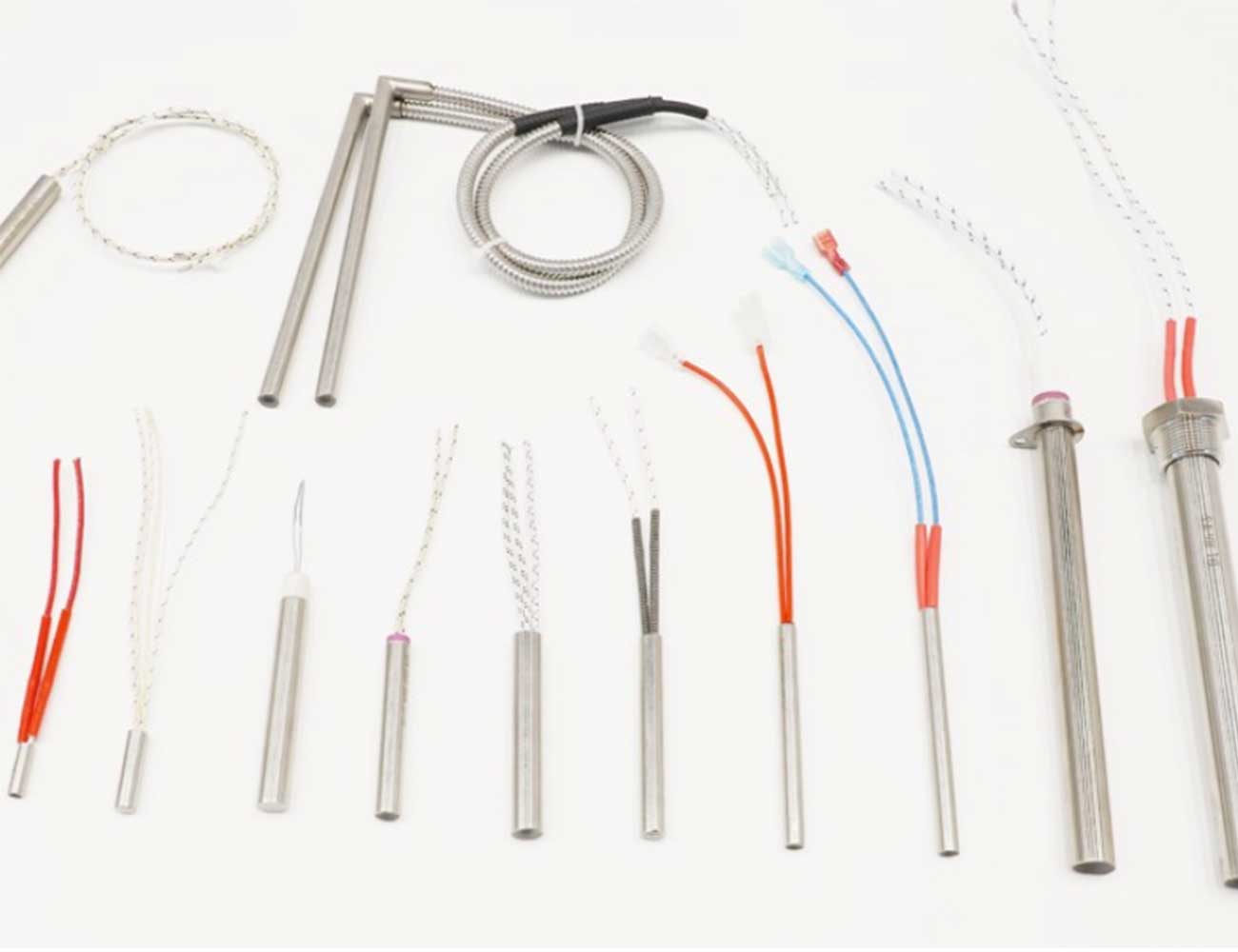
Quick Cartridge Heater Troubleshooting Guide
| Problem | Possible Cause | What to Check |
|---|---|---|
| No heat | Circuit or heating element problem | Power, voltage, wiring and resistance |
| Slow heating / cannot reach temperature | Insufficient power, heat loss or poor heat transfer | Wattage, watt density and installation fit |
| Temperature fluctuates | Temperature control or sensing problem | Controller, sensor position and connections |
| Frequent burnout | Excessive watt density or poor heat dissipation | Watt density, temperature and installation |
| Lead wire breaks | Vibration, bending, pulling or incorrect wire configuration | Lead position, wire type and connection |
| Electrical leakage / low insulation | Moisture, contamination or insulation damage | Insulation resistance, moisture and physical damage |
Cartridge Heater Troubleshooting: No Heat
If the cartridge heater produces no heat, first check the power supply, voltage, wiring, terminals and electrical connections.
Measure the heater’s resistance with a suitable multimeter. An open circuit or abnormal resistance reading may indicate a damaged heating element.
Before replacing the heater, confirm that the supplied voltage matches the heater rating and that the circuit is operating correctly.
Cartridge Heater Heats Slowly or Cannot Reach Target Temperature
If the heater works but heats too slowly or cannot reach the required temperature, check the rated wattage and watt density. Insufficient heating output can result from an undersized heater or an unsuitable power rating.
Also check the installation fit and heat transfer. Poor contact between the heater and the heated component can reduce heating efficiency.
For more information, see our Cartridge Heater Watt Density Guide.
Cartridge Heater Temperature Fluctuates
If the temperature repeatedly rises and falls, check the temperature controller, thermocouple, sensor position and electrical connections.
Poor sensor placement or an unsuitable temperature-control setup can cause unstable heating performance. For applications requiring integrated temperature sensing, a Cartridge Heater with Built-in Thermocouple may be suitable.
Cartridge Heater Burns Out Frequently
Frequent cartridge heater failure is often related to excessive watt density, insufficient heat dissipation, incorrect installation or excessive operating temperature.
Check whether the heater is properly fitted and whether heat can transfer efficiently into the surrounding material. A higher-power or high-density heater should only be selected when the application provides suitable heat-transfer conditions.
See our High-Density Cartridge Heater for applications requiring higher heating output.
Cartridge Heater Lead Wire Breaks
If the lead wire repeatedly breaks, inspect the installation for excessive vibration, bending, pulling or movement. The lead exit position and wire configuration should match the application.
For demanding installations, lead length, wire type, exit direction and connection design can be customized to better suit the equipment.
For application-specific requirements, see our Custom Cartridge Heater solutions.
Electrical Leakage or Reduced Insulation
If electrical leakage occurs or insulation resistance decreases, check for moisture, contamination, damaged insulation, sheath damage or electrical connection problems.
Check insulation resistance before continuing to operate a heater with suspected electrical leakage. Proper storage and installation can also help prevent insulation problems.
How to Choose the Right Cartridge Heater Replacement
After identifying the cause of failure, make sure the replacement heater matches the application. Check the following specifications before ordering:
| Specification | What to Check |
|---|---|
| Voltage | Match the equipment power supply |
| Wattage | Provide sufficient heating output |
| Diameter & Length | Match the available installation space |
| Watt Density | Match the material and heat-transfer conditions |
| Operating Temperature | Ensure the heater suits the required temperature |
| Lead Configuration | Check lead length, exit direction and wire type |
| Temperature Sensing | Determine whether a built-in thermocouple is required |
For a complete selection process covering voltage, wattage, temperature, watt density and heater configuration, see our Cartridge Heater Selection Guide.
You can also review our Cartridge Heater Voltage, Wattage & Temperature Guide when checking electrical and temperature specifications.
Still Cannot Find the Cause?
If this cartridge heater troubleshooting guide does not identify the problem, contact EaseWise with your heater specifications and application details.
Providing the voltage, wattage, diameter, length, operating temperature, application, failure symptoms and photos can help us recommend a suitable replacement or customized heater.
For standard and custom industrial heating solutions, visit our Cartridge Heater product page.
Email: [Amy-Easewise@tzheater.com](mailto:Amy-Easewise@tzheater.com)
WhatsApp: +86 188 8318 8154
Hanna – Sales
Email: [Hanna-Easewise@tzheater.com](mailto:Hanna-Easewise@tzheater.com)
WhatsApp: +86 173 5163 6811