
How to Select an Industrial Thermocouple: Temperature, Probe Size & Mounting
Industrial thermocouple selection depends on four main factors: temperature range, probe diameter and length, mounting method, and operating environment. Choosing these correctly helps ensure suitable measurement performance, installation compatibility, and service life.
Use this guide to identify the right configuration, then review the relevant product page or contact EaseWise for a custom solution.
1. Select the Thermocouple Type for Your Temperature Range
Start by identifying the minimum and maximum process temperatures, including temperature fluctuations and thermal cycling. The required accuracy, atmosphere, and expected service life also affect the choice.
| Application Requirement | Selection Direction |
|---|---|
| General industrial temperature measurement | Type K is a common starting point. Confirm the temperature range and operating environment before selection. |
| High-temperature measurement | Choose the thermocouple type and construction according to temperature, atmosphere, accuracy, and service-life requirements. |
| Corrosive or harsh environments | Check sheath material, protection requirements, and compatibility with the process environment. |
For a comparison of Type K, J, T, E, N, S, R, and B, see our Thermocouple Types Selection Guide. It provides more detail on the characteristics and applications of each type.
2. Choose the Right Probe Diameter and Length
Thermocouple sheath diameter affects installation clearance, mechanical strength, and response speed. A smaller probe may respond faster under comparable conditions, while a larger diameter may provide greater mechanical strength. Actual performance also depends on the sensing junction, sheath material, installation depth, and process conditions.
| Requirement | Suitable Configuration |
|---|---|
| Limited installation space | Ultra-Thin Fine Diameter Sheathed Thermocouple |
| General industrial measurement | Sheathed Thermocouple |
| Greater mechanical protection | Consider a suitable larger probe diameter and sheath construction after checking installation clearance. |
Before ordering, confirm the probe outer diameter, insertion length, available installation space, and required connection. For detailed sizing guidance, see our Thermocouple Selection Guide.
3. Select the Right Probe and Mounting Method
The mounting method should match the equipment design and how the probe is positioned during operation. Use the following table to narrow down the configuration.
| Installation Requirement | Suitable Configuration |
|---|---|
| Compact probe or flexible installation | Sheathed Thermocouple |
| Spring-loaded contact against a surface | Spring-Loaded Thermocouple |
| Fixed threaded installation | Threaded Assembly Thermocouple |
| Adjustable insertion depth | Threaded Compression Fitting Thermocouple |
| Flange-mounted installation | Flange Mounted Assembly Thermocouple |
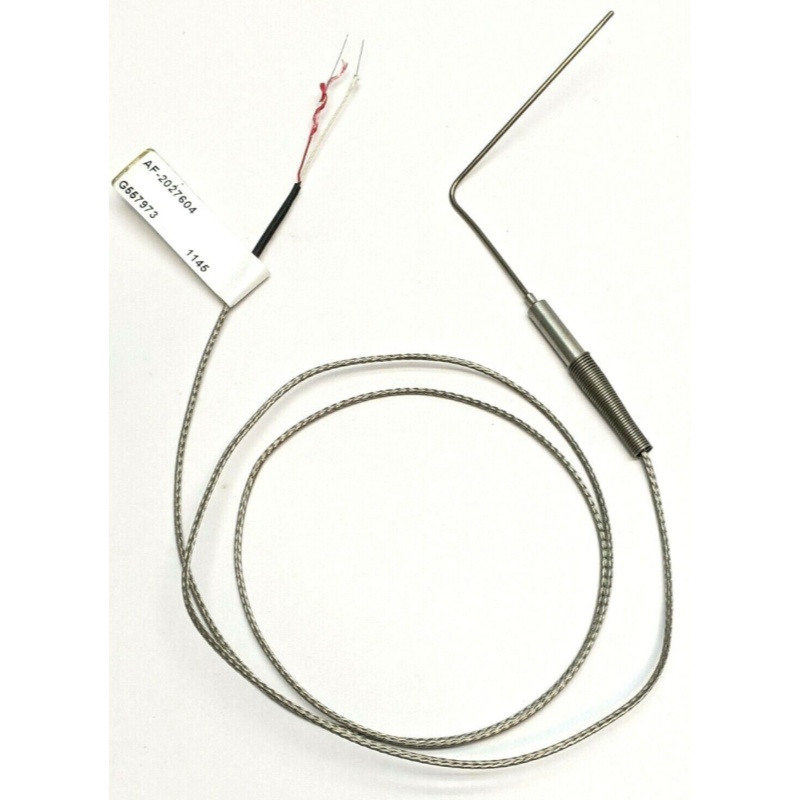
A spring loaded thermocouple uses a spring-loaded mechanism to help maintain contact between the sensing tip and the target surface in suitable installations. Check the mounting design, required contact force, operating temperature, and available travel before choosing this configuration.
4. When Do You Need a Thermocouple Assembly?
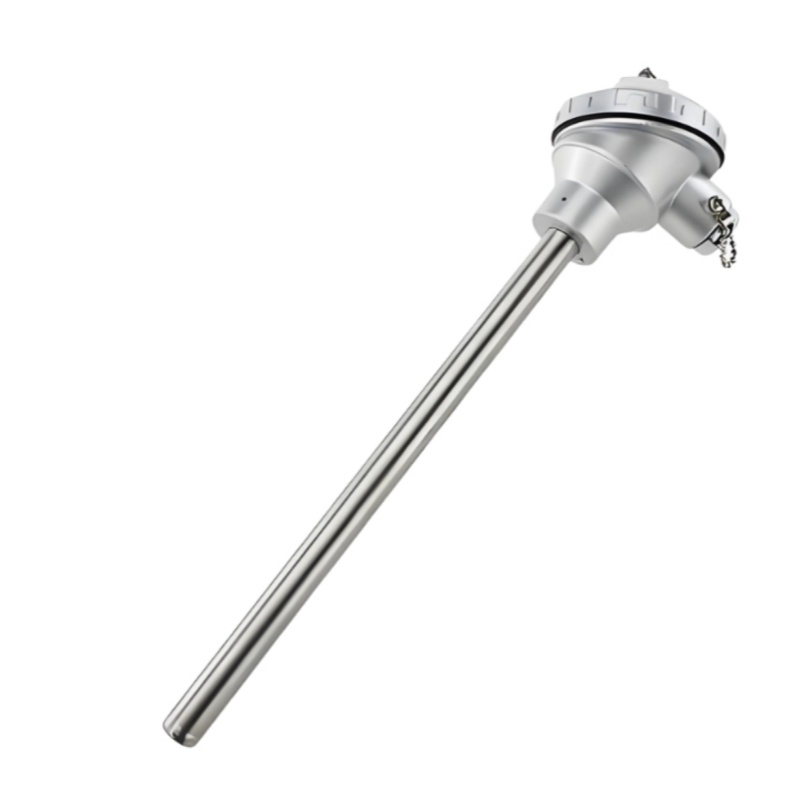
A thermocouple assembly combines the probe with a defined connection or mounting configuration for installation into industrial equipment. It is useful when the equipment requires a specific thread, flange, protection structure, or customized mounting arrangement.
Depending on your installation and operating conditions, review these configurations:
- Threaded Assembly Thermocouple – for compatible threaded ports.
- Flange Mounted Assembly Thermocouple – for flange-based installation.
- Threaded Compression Fitting Thermocouple – where adjustable insertion depth is required.
- Explosion-Proof Assembly Thermocouple – for applications requiring appropriately certified equipment.
- Wear-Resistant Assembly Thermocouple – for suitable wear-related operating conditions.
- Waterproof Anti-Corrosion Assembly Thermocouple – for applications requiring suitable moisture or corrosion protection.
- Platinum-Rhodium Assembly Thermocouple – for compatible high-temperature measurement requirements.
Confirm the actual process conditions and product specifications before selecting a specialized assembly.
5. Check Insertion Length and Thermowell Requirements
The required insertion length depends on the measurement location, process geometry, and probe construction. The sensing tip must be positioned appropriately for the process without interfering with equipment operation.
When a thermowell is used, thermowell insertion length and thermocouple probe insertion length are related but are not necessarily the same dimension. Check the thermowell’s installed dimensions, the probe’s usable insertion length, the sensing-tip position, and the equipment connection together.
For a thermowell installation, confirm the following before ordering:
- Thermowell connection and installation dimensions.
- Required insertion depth and sensing-tip location.
- Probe diameter and compatibility with the thermowell bore.
- Process temperature, pressure, and media compatibility.
- Any restrictions imposed by the equipment or installation drawing.
For probe diameter and insertion-length selection, consult the relevant sizing information in our Thermocouple Selection Guide. If your application uses a thermowell, provide its drawing or dimensions so the probe configuration can be checked against the actual installation.
6. Common Industrial Applications
Industrial thermocouples are used in many temperature-monitoring applications, including:
- Industrial ovens and furnaces.
- Injection molding machines.
- Plastic processing equipment.
- Process piping and tanks.
- Industrial heating equipment.
- Machinery and production lines.
The correct configuration depends on the actual temperature, installation space, mounting method, environment, and measurement requirements.
7. Industrial Thermocouple Selection Checklist
Before requesting a quotation, prepare the following information:
- Temperature: minimum and maximum operating temperature.
- Thermocouple type: Type K, J, T, E, N, R, S, B, or another specified type.
- Probe dimensions: outer diameter, length, and required insertion depth.
- Mounting: threaded, flange, compression fitting, spring-loaded, or another configuration.
- Operating environment: process media, pressure, corrosion, vibration, and other relevant conditions.
- Quantity: prototype, sample, or production order quantity.
- Drawing: provide a technical drawing when dimensions or connections must match existing equipment.
These details help narrow down the suitable thermocouple type and construction without unnecessary back-and-forth.
Need Help Selecting an Industrial Thermocouple?
Send EaseWise your operating temperature, thermocouple type, probe diameter and length, mounting requirements, application conditions, and quantity. If available, include a drawing in PDF or DXF format so the required dimensions and connections can be reviewed.
Get a Thermocouple Quote from EaseWise
Amy – Sales
WhatsApp: +86 188 8318 8154
Email: amy-EaseWise@tzheater.com
Hanna – Sales
WhatsApp: +86 173 5163 6811
Email: Hanna-EaseWise@tzheater.com