
Thermocouple Probe Diameter and Insertion Length Selection Guide
Choosing the correct thermocouple probe diameter and insertion length is important for accurate temperature measurement, fast response, and reliable installation. The right dimensions depend on the measuring point, available space, temperature range, medium, and mounting method.
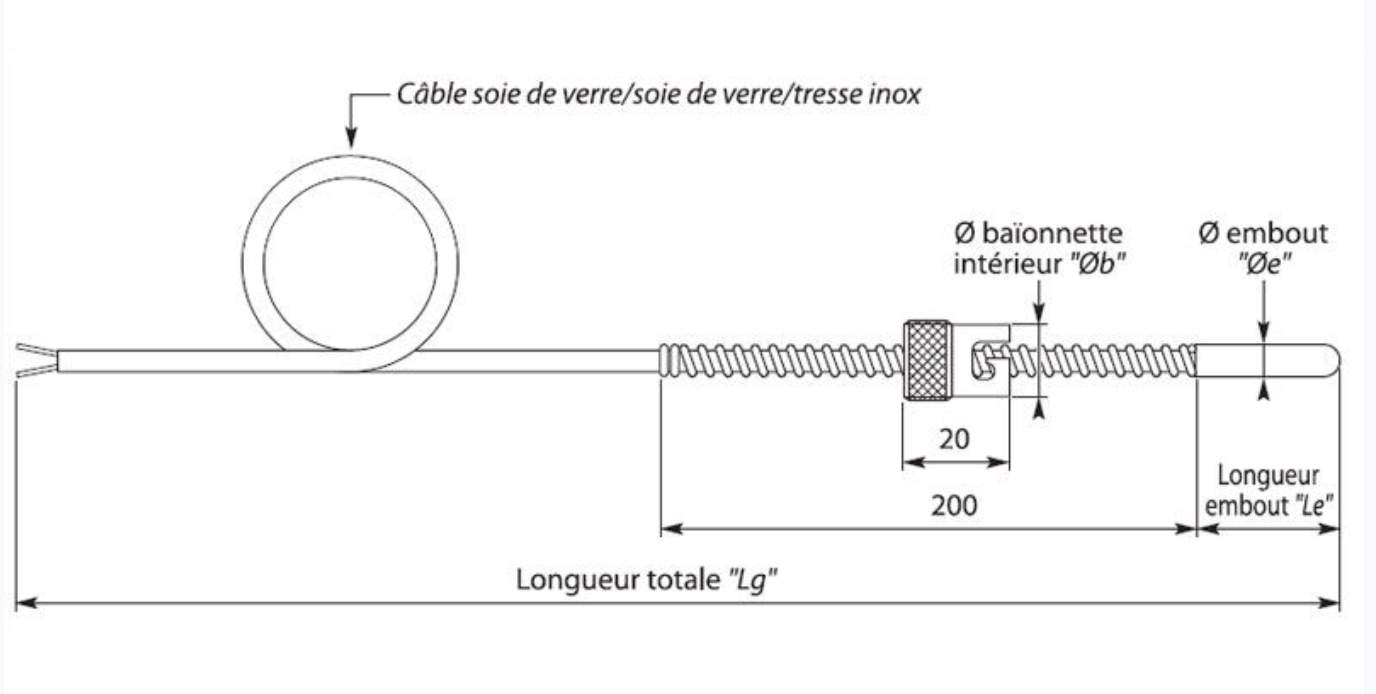
How to Choose Thermocouple Probe Diameter
Probe diameter affects installation space, mechanical strength, and response characteristics. A smaller probe is generally suitable for compact installations and applications where faster response is important, while a larger probe can provide greater mechanical strength.
- Limited space: Choose a smaller diameter when compact installation and fast response are important.
- General industrial use: Select a diameter that balances response characteristics and mechanical strength.
- Harsh environments: Consider a more robust probe when the sensor is exposed to vibration, mechanical impact, or demanding operating conditions.
- Existing thermowell: Match the probe diameter to the thermowell internal diameter and required clearance.
Depending on the configuration, EaseWise thermocouple probes can be customized by probe diameter, length, sheath material, mounting thread, cable, and connector.
What Is Thermocouple Insertion Length?
Insertion length is the distance from the mounting point to the sensing end of the thermocouple probe. It determines how far the sensing junction extends into the measured medium or process.
The sensing junction should reach a representative measuring point. If the probe is too short, it may mainly measure the temperature near the equipment wall rather than the actual process temperature. An unnecessarily long probe can also make installation more difficult.
How to Choose Thermocouple Insertion Length
The correct insertion length depends on the equipment, measuring location, and installation method.
- Pipes: The sensing junction should extend sufficiently into the process area to measure the process temperature rather than mainly the pipe wall.
- Tanks: Consider liquid level, flow direction, mixing, and the location where temperature needs to be measured.
- Machines and molds: The probe should reach the measuring zone without interfering with moving or heated components.
- Thermowells: Match the probe length to the thermowell depth so the sensing junction reaches the intended position.
- Furnaces and ovens: Select a length that places the sensing junction in the required temperature zone while keeping the connection and cable away from excessive heat where possible.
Thermocouple Probe Diameter and Insertion Length Selection
Diameter and insertion length should be considered together. A long, thin probe can reach narrow or deep measuring points, but it may require additional mechanical support in applications with vibration, pressure, or process flow.
A practical selection should balance response time, mechanical strength, available space, measurement location, and installation method.
| Requirement | Recommended Approach |
|---|---|
| Fast response | Consider a smaller probe diameter and suitable sensing position. |
| Limited installation space | Use a compact diameter and the shortest length that reaches the measuring zone. |
| High mechanical stress | Consider a stronger probe construction and suitable diameter. |
| Deep measuring point | Use sufficient insertion length to position the sensing junction correctly. |
Other Thermocouple Specifications to Consider
Probe diameter and insertion length are only part of the selection process. The thermocouple type, sheath material, junction construction, mounting method, cable insulation, and connector should also match the application.
For accuracy classes and thermocouple tolerances, see the official IEC 60584-1 thermocouple standard.
Read our Thermocouple Types Selection Guide to compare common thermocouple types and their typical applications.
When Should You Use a Sheathed Thermocouple?
A sheathed thermocouple provides additional protection for the sensing element in applications exposed to mechanical damage, vibration, contamination, or demanding operating conditions.
For protected metal-sheathed temperature measurement, see our Sheathed Thermocouple product range.
Custom Thermocouple Probe Dimensions
Standard dimensions do not always match the equipment. EaseWise can customize thermocouple probe diameter, insertion length, overall length, sheath material, thread, compression fitting, cable length, and connector according to the application.
For general industrial temperature measurement solutions, explore our Industrial Thermocouples product range.
See practical examples in our Thermocouple Applications guide.
Need Help Selecting the Right Thermocouple Probe?
Send us the required thermocouple type, probe diameter, insertion length, temperature range, mounting method, sheath material, cable length, and connector. Our team can recommend a suitable configuration or develop a custom probe according to your drawing or specifications.
Amy – Sales
Email:
Amy-Easewise@tzheater.com
WhatsApp:
+86 188 8318 8154
Hanna – Sales
Email:
Hanna-Easewise@tzheater.com
WhatsApp:
+86 173 5163 6811